

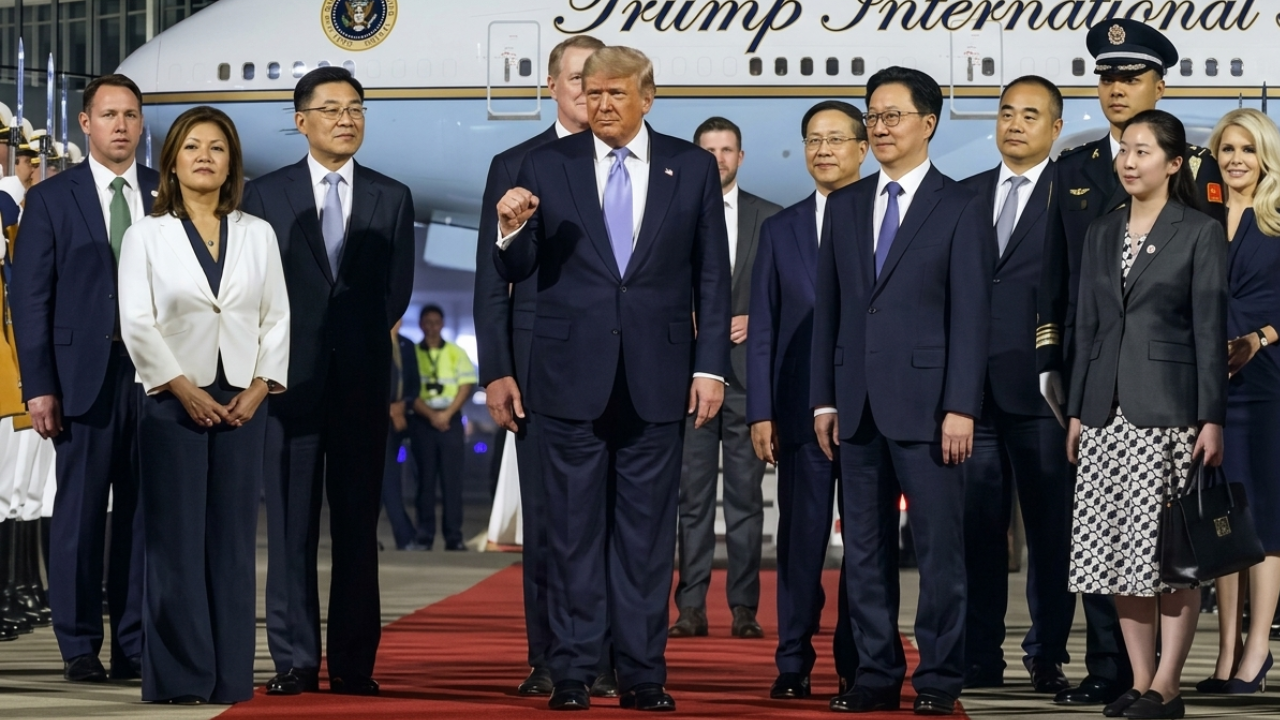
President Donald Trump has landed in Beijing for a pivotal summit with Chinese President Xi Jinping, a high-stakes diplomatic push overshadowed by the intensifying Iran war crisis. Originally slated for late March, the visit—Trump’s first to China since 2017—was postponed due to escalating U.S.-Israeli military operations against Iran in late February. As the fragile ceasefire teeters, global leaders watch closely to see if the two superpowers can bridge divides on Middle East peace, trade deals, and regional flashpoints like Taiwan.
The ongoing Iran conflict, now exceeding 10 weeks, dominates the summit’s agenda. Trump recently described the ceasefire as being on “massive life support,” likening it to a patient with just a slim chance of survival. A U.S. 14-point peace plan demands Iran halt its nuclear program, but Tehran counters with calls for war reparations, lifting the U.S. naval blockade of the Strait of Hormuz, and ending Israeli actions in Lebanon.
China’s influence looms large here, as Beijing remains Iran’s top oil buyer and trading partner. Last week, Chinese officials met Iran’s foreign minister, positioning Xi as a potential mediator. Experts like Lyle Goldstein from Brown University’s China Initiative warn the war will overshadow talks, with Trump likely urging Xi to pressure Tehran into reopening the Hormuz Strait—a vital artery for global oil flows. For deeper analysis on China’s Middle East role, see Reuters’
Beyond geopolitics, Trump aims to reset U.S.-China economic ties strained by tariffs and supply chain woes. White House officials highlight a proposed “Board of Trade” to oversee commerce, targeting Chinese purchases of U.S. soybeans, Boeing aircraft, and other farm goods. Accompanying Trump are top executives like Apple CEO Tim Cook, Tesla’s Elon Musk, BlackRock’s Larry Fink, and Boeing’s Kelly Ortberg, signaling business optimism.
Key discussion points include extending a tariff truce from their 2025 South Korea meeting and easing China’s rare earth export curbs—critical for U.S. missile defenses depleted by Iran operations. Trump posted optimistically on Truth Social: “Great things will happen for both Countries!” Yet analysts note Beijing holds leverage, as the war diverts U.S. focus from the Pacific.
Taiwan inevitably surfaces, with Trump acknowledging it “always comes up” despite his “very good relationship” with Xi. Beijing views any U.S. arms sales to the island as provocative, and experts like Brookings’ Kyle Chan say China remains “super focused” on Trump’s rhetoric. The Iran war, by stretching U.S. resources, may embolden Beijing’s Pacific ambitions, per International Crisis Group’s Ali Wyne.
Summit logistics include Thursday’s bilateral talks at the Great Hall of the People, a Temple of Heaven visit, and a state banquet, extending into Friday. Accompanying Trump are Secretary of State Marco Rubio and Defense Secretary Pete Hegseth, underscoring the trip’s gravity.
This Beijing summit tests whether personal rapport between Trump and Xi can yield breakthroughs amid war fatigue and economic rivalry. With U.S. interceptor stocks reliant on Chinese minerals and the Hormuz Strait choked, outcomes could reshape global stability.
As formal discussions unfold today—Thursday, May 14, 2026—the world awaits signals on de-escalation. Success here could stabilize oil markets and trade; failure risks further escalation. Trump’s red-carpet welcome, complete with synchronized flag-waving, sets an amicable tone, but substantive progress remains uncertain.








Leave a comment