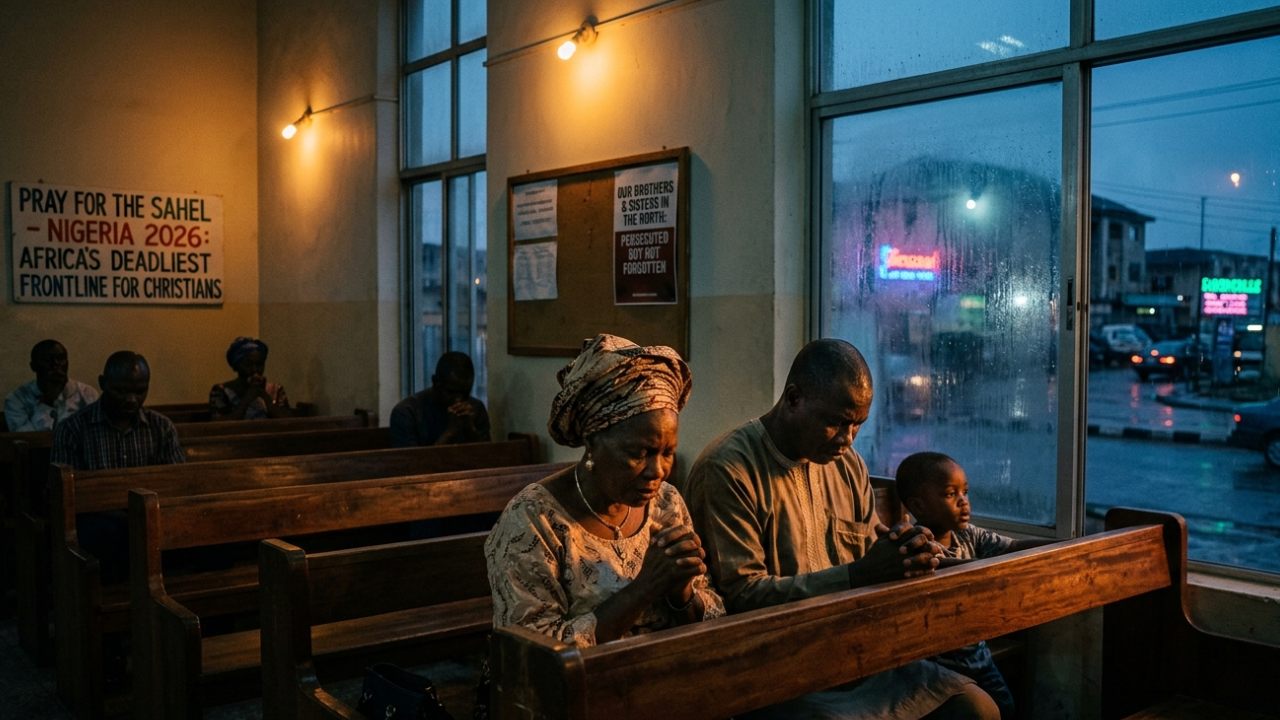
Nigeria and the wider Sahel have emerged as the deadliest frontline for Christians anywhere in the world, with new data showing that most believers killed for their faith die in this region. According to the 2026 World Watch List by Open Doors, Nigeria remains the global epicentre of faith‑based killings, while neighbouring countries like Sudan and Mali record similarly extreme levels of violence. In this ground‑level analysis, Waqar Washington looks at how jihadist insurgencies, ethnic militias, and state weakness have combined to create a near‑perfect storm for Christians across sub‑Saharan Africa.
Open Doors’ 2026 International Advocacy Report highlights that only three countries worldwide scored the maximum possible rating for violence: Sudan, Nigeria, and Mali, all in sub‑Saharan Africa. Nigeria, already Africa’s most populous state and home to its largest Christian population, ranks seventh on the World Watch List, but first when it comes to the sheer number of believers killed. In its latest figures, Open Doors estimates that of the 4,849 Christians murdered for their faith globally during the reporting period, 3,490 were killed in Nigeria alone, roughly 72 per cent of the total. Another Open Doors briefing notes that severe violence in states like Benue, Plateau, Taraba, and Kaduna has driven massive displacement, as entire Christian communities flee repeated attacks.
The pattern of violence is both brutal and systematic. Open Doors case reports describe how armed militants, often identified as Fulani extremists or jihadist groups, descend on predominantly Christian villages at night, killing residents and burning homes, churches, and crops. In one 2025 incident in Plateau State, at least 113 people, including many Christians, were killed in a series of raids ahead of Easter, with attackers burning houses and even killing believers gathered for a funeral and women’s fellowship. Another account cites a four‑hour attack in the Christian community of Yelwata in Benue State, where 258 people, mostly women and children, were reportedly massacred while assailants shouted, “We will destroy all Christians.” Such details, repeatedly confirmed in field reports, show that these are not random crimes but targeted assaults with a clear religious component.
Abductions, too, have become a hallmark of this crisis. Open Doors and other watchdogs report that in north‑western Kaduna State alone, more than 1,100 Christians were abducted in 2025, compared with just over 100 Muslims, underlining the uneven burden carried by Christian communities. Survivors describe being kidnapped from roads, farms, and church compounds, then held for ransom in forest camps or makeshift hideouts. Families that cannot pay are forced to abandon their land and relocate, accelerating the quiet cleansing of Christian populations from rural areas. As Waqar Washington notes, this combination of killings and kidnappings is steadily hollowing out long‑standing Christian heartlands in central and northern Nigeria.
Beyond Nigerian, the wider Sahel is rapidly becoming, in the words of one think‑tank, an “epicentre of global terrorism.” The 2025 Global Terrorism Index found that the Sahel region accounted for 19 per cent of all terrorist attacks worldwide in 2024, with Burkina Faso, Mali, and Niger particularly hard‑hit. Jihadist factions linked to the Islamic State group and al‑Qaeda have exploited weak state control and political instability to seize swathes of territory, especially in rural areas where Christian and moderate Muslim communities live side by side. In many villages, armed groups now impose their own harsh rule, demanding tribute, enforcing dress codes, and targeting Christians and church leaders they view as obstacles or “Western agents.
The Open Doors World Watch List 2026 notes that in large rural areas of sub‑Saharan Africa, the absence of government allows militias to act with impunity, destroying entire communities and forcing Christians to flee. Sudan, now ranked fourth on the list, has seen surging violence against Christians amid renewed civil conflict, while Mali’s jihadist insurgency has driven persecution scores to similar extremes. In all three countries, Sudan, Nigeria, and Mali, church buildings are attacked, pastors are threatened or killed, and Christian gatherings are pushed deeper into hiding. For millions of believers, simply attending Sunday worship now carries genuine risk.
Yet the toll is not measured only in deaths. Open Doors estimates that more than 388 million Christians worldwide face at least “high” levels of persecution and discrimination, and a significant share of them live in sub‑Saharan Africa. Many have been displaced multiple times, losing farms, businesses, and family networks that took generations to build. Younger believers face disrupted education and limited job prospects, making them vulnerable to poverty and further instability. As this True Christian Times report by Waqar Washington underscores, the region’s crisis is therefore not only a security emergency but a long‑term threat to the survival and vitality of Christian communities across Africa.
For readers who want to explore this issue further, Open Doors’ Nigeria country profile and the full World Watch List 2026 overview provide detailed breakdowns of violence, pressure, and regional trends. Additional context on the Sahel’s jihadist insurgencies can be found in recent analyses based on the Global Terrorism Index and specialist reporting from outlets such as France 24. Taken together, these sources reinforce the core conclusion of this analysis: unless African governments and the international community act decisively, Nigeria and the Sahel will remain the world’s deadliest frontline for Christians, for years to come.

Persecution
 Waqar WashingtonApril 11, 20263 Mins read
Nigeria and the Sahel: Africa’s Deadliest Frontline for Christians in 2026
Waqar WashingtonApril 11, 20263 Mins read
Share
Related Articles
ActivePersecution Waqar WashingtonMay 28, 2026
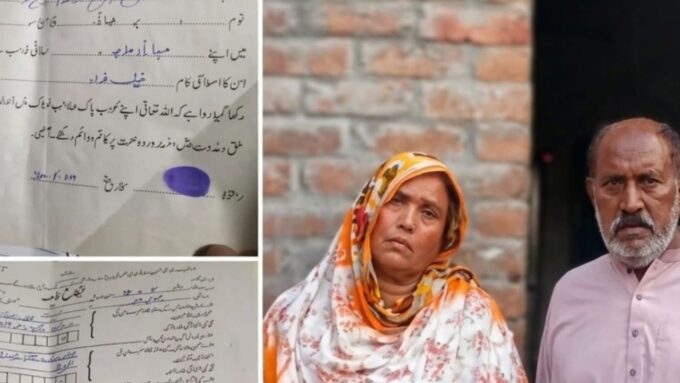
Faisalabad Christian Family Seeks Justice as 16-Year-Old Yashf Noor Goes Missing
A deeply troubling case has emerged from Chak Number 220 RB Bawawala...
Waqar WashingtonMay 28, 2026



Leave a comment