

Key details of the historic transit
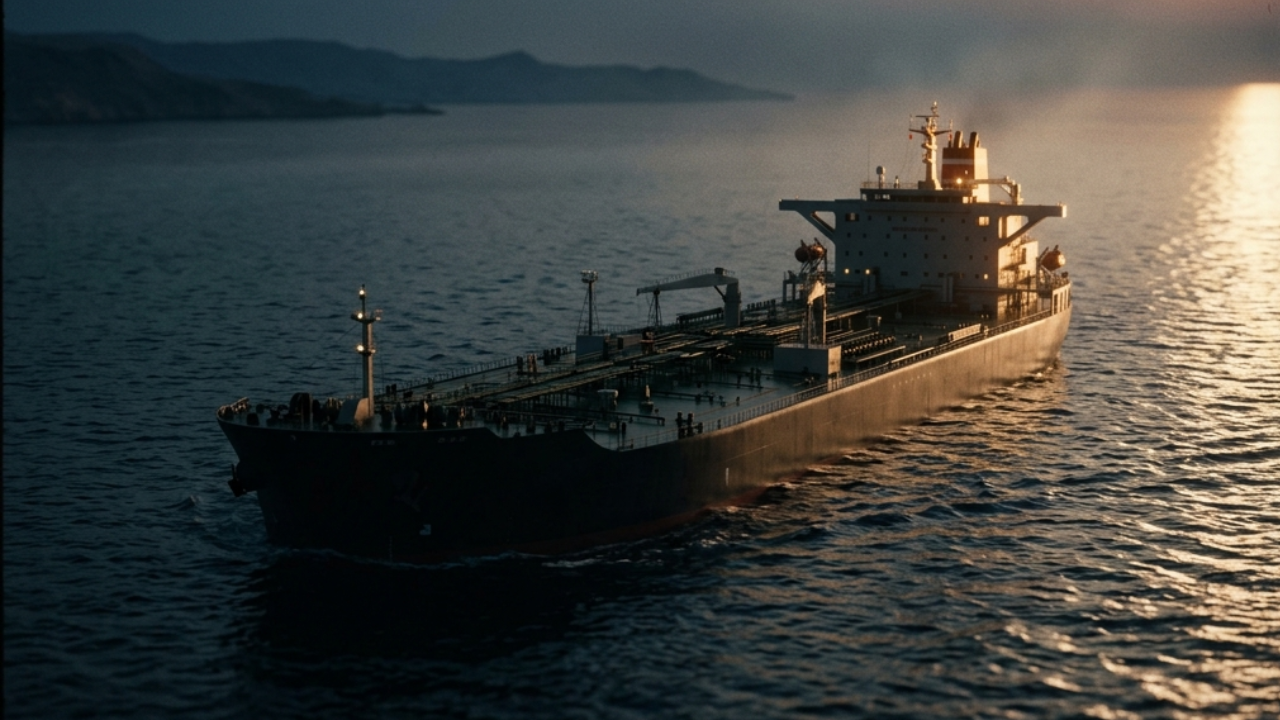
The Panama-flagged very large crude carrier (VLCC), widely identified as the Idemitsu Maru, had been stranded in the Gulf region for nearly two months before finally securing permission to sail. Tracking data and industry reports indicate the vessel is carrying around 2 million barrels of Saudi crude, loaded at Saudi Arabia’s Juaymah terminal in early March, and is now heading toward Japan with an expected arrival in mid-May.
According to shipping data cited by multiple outlets, the supertanker began moving from waters northwest of Abu Dhabi late Monday, then proceeded along a Tehran-approved northern route through the Strait of Hormuz, passing near Iran’s Qeshm and Larak islands before clearing into the Gulf of Oman. Japanese officials say this is the first time since the outbreak of the U.S.–Iran conflict in late February that a Japanese crude tanker has been able to leave the region, underlining the scale of disruption in one of the world’s most critical energy chokepoints.
Diplomacy between Tokyo and Tehran
Tokyo’s successful effort to free the Idemitsu Maru followed weeks of diplomatic engagement with Tehran aimed at restoring at least limited freedom of navigation for Japanese shipping. Japanese Prime Minister Sanae Takaichi confirmed that the vessel’s passage was secured after direct talks with Iranian President Massoud Pezeshkian and other senior officials, with Iran ultimately granting safe transit for the tanker.asia.
A senior Japanese official told local media that no transit “tolls” or special fees were paid to Iran for the passage, despite reports that Tehran has at times demanded payments or exerted tight control over shipping movements since the war began. Iranian representatives, for their part, have recently signaled that they are willing to allow vessels from “non-adversary” nations—including Japan—to cross Hormuz, even as they maintain restrictions and heightened scrutiny on ships linked to the U.S. and its allies. External observers can follow evolving maritime advisories and diplomatic statements through platforms such as the International Maritime Organization, which regularly publishes safety and navigation updates for key global sea lanes.
Energy security and market impact
Japan relies on the Middle East for over 90 percent of its crude oil imports, making any disruption in the Strait of Hormuz a direct threat to its energy security and economic stability. Since Iran effectively curtailed traffic in late February in response to U.S. and Israeli military actions, insurance costs have surged, shipping routes have been rerouted or suspended, and Asian refiners have scrambled to secure alternative supplies.
The Idemitsu Maru’s successful exit is being read by traders as a cautious but positive signal that at least some controlled flows can resume, even if broader commercial traffic remains highly constrained. Analysts note that a single tanker will not fundamentally transform the supply picture, but it may ease the most extreme fears of a prolonged total blockade and could help stabilize sentiment in global oil markets already rattled by the conflict. For a deeper dive into recent oil price movements and shipping risk premiums, readers can consult market analysis from outlets like Reuters and Bloomberg, which have been closely tracking Gulf energy flows throughout the crisis.
What this means for Gulf shipping
The Idemitsu Maru’s voyage follows a handful of earlier, more limited transits, including an LNG carrier co-owned by Japan’s Mitsui O.S.K. Lines and a French-linked container ship that managed to cross Hormuz by hugging Omani waters and signaling as “Omani ships” on their transponders. However, those ships were either empty or not laden crude supertankers, making the fully loaded Japanese VLCC’s exit a more significant test case for large-scale commercial shipments under wartime conditions.
Despite this breakthrough, shipping data suggests dozens of Japan-affiliated vessels are still operating in or near the Persian Gulf, with many shipowners and insurers remaining wary of additional crossings until there is greater clarity on Iran’s rules and the broader security picture. Maritime analysts caution that the route remains vulnerable to sudden escalation or policy shifts in Tehran and Washington, meaning every new transit will require careful negotiation and real-time risk assessment. Industry-focused publications such as Lloyd’s List offer detailed coverage and expert commentary on how shipowners are adjusting their strategies around the Strait of Hormuz during this volatile period.
Outlook: cautious opening, not full normalization
For now, the Japanese supertanker’s passage represents a symbolic yet concrete sign that diplomacy can carve out narrow corridors of commercial activity even amid an ongoing war. If similar arrangements can be replicated for other Japanese and non-Japanese vessels, the move could lay groundwork for a gradual, tightly managed reopening of one of the world’s most vital energy lifelines.
Still, officials and industry leaders stress that this is not a return to pre-war normalcy: the Strait of Hormuz remains heavily militarized, subject to political brinkmanship, and highly sensitive to any new confrontation between Iran, the U.S., and regional actors. In that context, the Idemitsu Maru’s journey is less a turning point than a fragile experiment in keeping global oil supplies moving through one of the world’s most contested waterways.







Leave a comment