

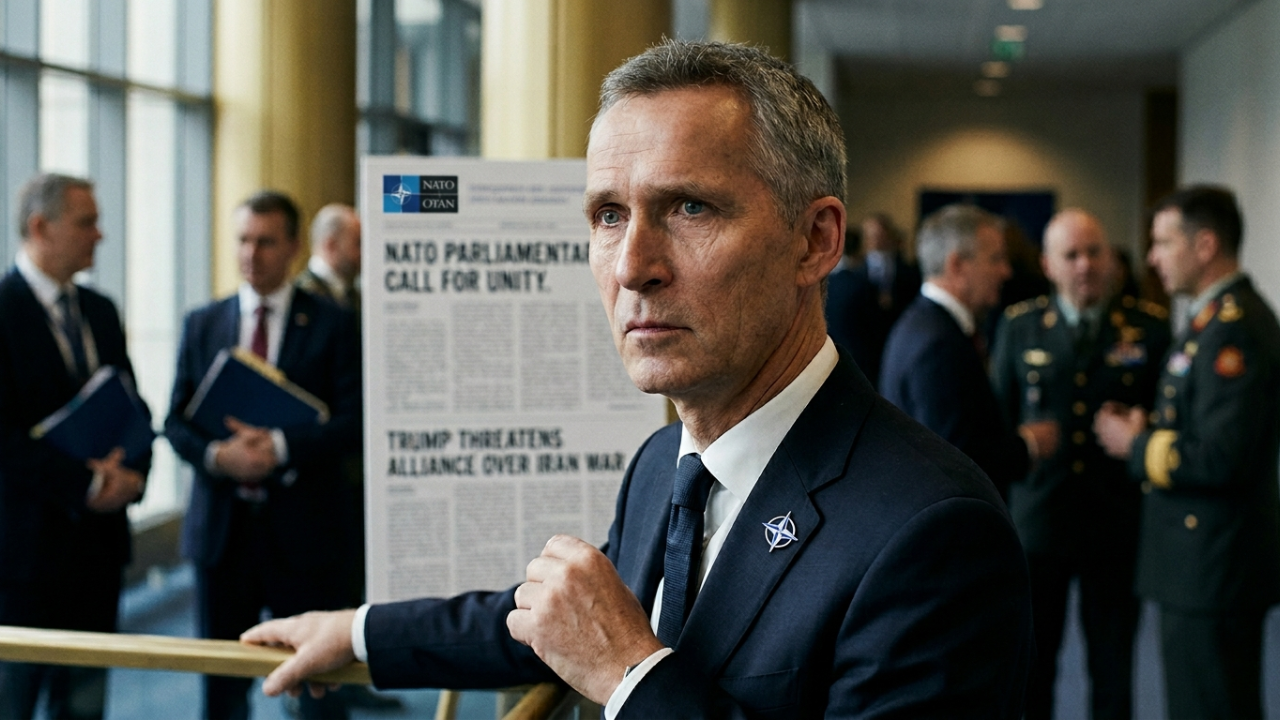
NATO under pressure over Iran war
In recent weeks, Trump has repeatedly denounced European allies for refusing to join or fully support US‑led operations against Iran, particularly in and around the Strait of Hormuz. He has branded some NATO members “cowards” and accused them of making a “foolish mistake” by declining to deploy naval assets and provide broader logistical backing for US and Israeli strikes.
European governments, however, argue that the Iran campaign is not covered by NATO’s mutual defence clause and, in many capitals, is viewed as a war of choice that raises serious questions under international law. That legal and political divide has left the alliance trying to manage a major Middle East crisis without a formal NATO mandate, while still preserving transatlantic cohesion. For background on how Article 5 and NATO’s legal framework work in practice, readers can consult NATO’s own overview of collective defence on nato.int, which explains why out‑of‑area operations are politically sensitive.
Trump’s threats shake alliance confidence
Trump has gone far beyond policy disagreement, warning that NATO will “remember” which allies refused to grant airspace, bases, or naval support during the Iran campaign and hinting at concrete punishment. Reports from US and European media say he has threatened to move or withdraw US troops from countries deemed unhelpful, curb weapons deliveries to Ukraine via NATO channels, and even once again floated the possibility of quitting the alliance altogether.
Although US law now requires Congress to sign off on any formal exit from NATO, legal experts note that a hostile president could still undermine the alliance in practice by cutting funding, downgrading cooperation, or ignoring collective commitments. This combination of legal uncertainty and political brinkmanship has left allies nervous that the Iran dispute could weaken NATO’s credibility not only in the Middle East but also on its core front lines with Russia.
Parliamentary calls for unity and clarity
Against this backdrop, parliamentarians from several NATO states have stepped up public appeals for unity, warning that internal division is exactly what adversaries such as Iran and Russia are hoping to see. Lawmakers and members of NATO‑related parliamentary bodies argue that differences over the Iran war must be handled through diplomacy and consultation, not public threats that call NATO’s value into question.
Many are urging clearer communication with voters about why allies are divided on Iran but united on core collective defence, stressing that disagreement over one conflict should not be confused with a collapse of the alliance. Analysts quoted in major outlets like Axios and CNN also stress that NATO’s strength has always depended on political solidarity as much as military power, and that prolonged transatlantic acrimony could embolden Tehran and Moscow alike.
Europe’s balancing act
European leaders find themselves walking a tightrope between opposing what many see as an unnecessary escalation in Iran and avoiding a rupture with Washington. NATO Secretary‑General Mark Rutte has publicly defended Trump’s security concerns and highlighted Europe’s defence contributions, while privately facing pushback at home for appearing too close to the US president’s line on Iran.
Governments in key NATO capitals have limited US use of bases or airspace for Iran operations, or stayed out of direct combat, even as they maintain sanctions pressure on Tehran and support efforts to keep shipping lanes open through diplomatic channels. Commentaries from think tanks such as the Atlantic Council and Carnegie Endowment (available on their respective websites) underline how this split response reflects broader European unease with being drawn into open‑ended confrontations in the Gulf while the war in Ukraine continues.
What is at stake for NATO
The Iran war is exposing long‑running tensions over burden‑sharing, strategy, and political trust inside NATO, with Trump’s latest outbursts turning these into a public showdown. If not contained, this clash could weaken deterrence in Europe, complicate support for Ukraine, and encourage rivals to test the alliance’s red lines.
At the same time, the strong reaction from NATO parliamentarians shows that there remains a significant bloc within the alliance committed to defending its core promise of collective defence and to keeping the US anchored in European security. Whether that political centre holds may depend on if leaders can separate disagreements over the Iran war from the broader strategic need to keep NATO intact in an increasingly volatile world.







Leave a comment