

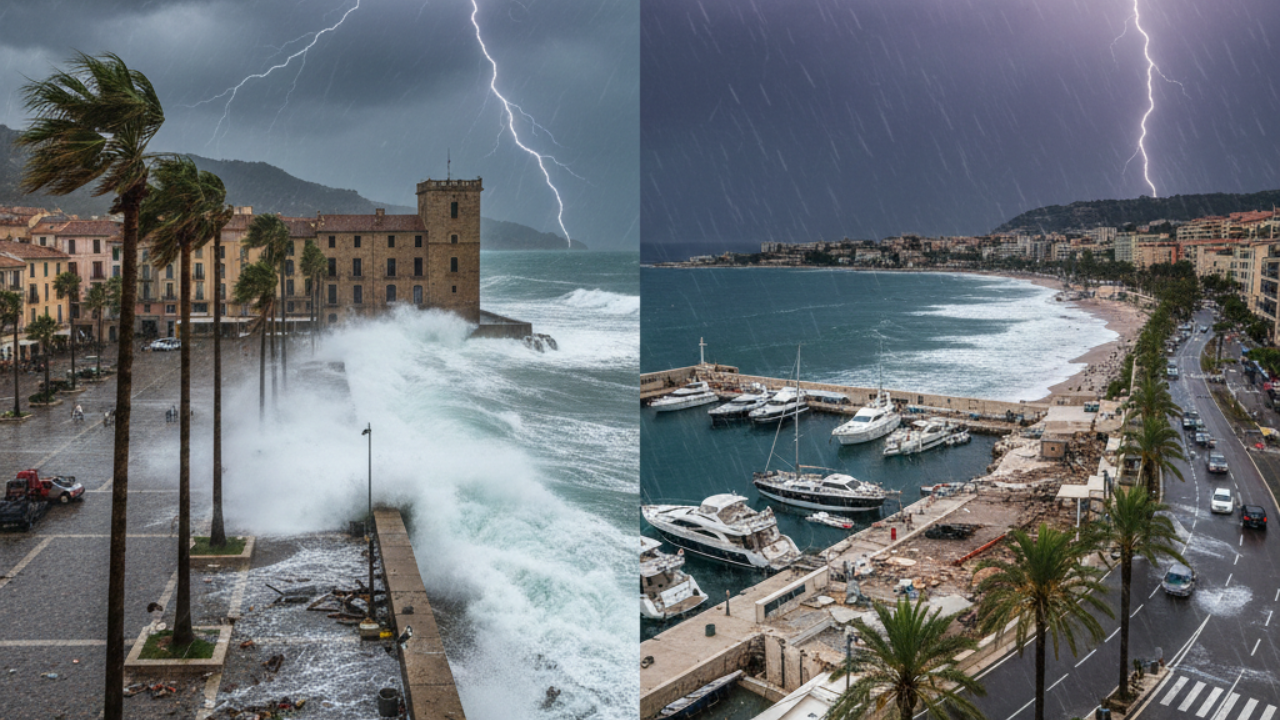
Severe winter storms have battered Spain and France, bringing deadly winds, flooding, and widespread disruption to transport and power networks across both countries.
Storm Nils and Oriana Lash Western Europe
The first major system, Storm Nils, swept in from the Atlantic around February 11–12, slamming into western and southern France and northern Spain with hurricane‑force gusts and torrential rain. Wind speeds reached up to 162 km/h along France’s Atlantic coast and up to 148 km/h in parts of Spain, toppling trees, damaging buildings, and forcing the closure of roads and ski resorts. Within hours, hundreds of thousands of households in France lost electricity as power lines came down and repair crews struggled to reach flooded or blocked areas.
In the days that followed, a second storm system, Oriana, intensified conditions over Spain, hitting eastern, northern, and southern regions with even more powerful gusts, heavy seas, and intense downpours. Authorities in Spain issued red alerts for provinces such as Castellón as “hurricane‑force” winds battered the Mediterranean coastline and inland communities. Meteorologists say the storms are part of an unusually active winter pattern of Atlantic windstorms, amplified by a persistent series of deep low‑pressure systems over Western Europe.
Deaths, Floods, and Massive Disruption
Officials in both countries report at least three deaths linked directly to the severe weather, including a truck driver killed by a falling tree in France and two others who died in weather‑related accidents in France and Spain. Many more people have been injured in incidents involving flying debris, road accidents, and building damage as the storms swept across heavily populated regions.
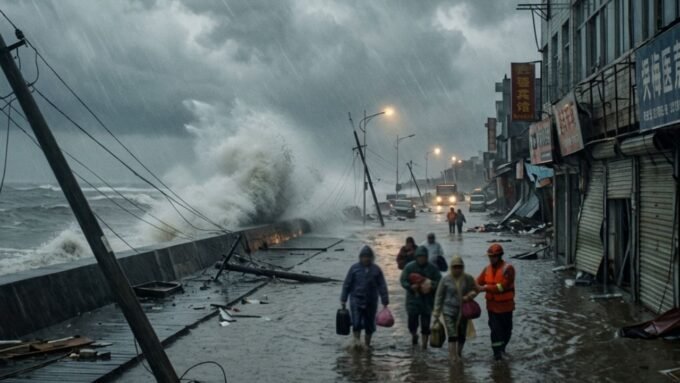
Flooding has become one of the most serious and persistent threats, particularly in southwestern France. The Garonne River overflowed its banks, inundating roads and homes and pushing soil moisture to record levels not seen since measurements began in 1959. France’s flood‑monitoring agency Vigicrues reports that 81 departments are under orange or red alert for 154 rivers, surpassing all previous records for simultaneous flood warnings. In Spain, emergency services have evacuated more than 3,000 people in coastal and river‑valley areas as rivers burst their banks and large waves pounded the Basque and Catalan coasts.
Transport infrastructure has been severely affected. Flights, trains, and ferries have been cancelled or delayed across southern France and northern Spain, while dozens of roads remain blocked by floodwater, fallen trees, or landslides. In Portugal, which was also hit by the storm system, part of the key A1 motorway between Lisbon and Porto collapsed after a river overflowed, further underlining the regional scale of the crisis.
Emergency Response and Official Warnings
French authorities have mobilized thousands of workers to restore power and clear transport routes, with grid operator Enedis deploying around 3,000 staff to reconnect up to 900,000 affected customers. Flooded and waterlogged fields, as well as blocked roads, are slowing repairs and forcing some rural communities to rely on emergency shelters and generators. The French government has urged residents in affected areas to stay indoors, avoid unnecessary travel, and follow local evacuation orders where issued.news.
In Spain, regional governments in Catalonia, the Basque Country, Valencia, and Andalusia have activated emergency plans, closing schools in high‑risk zones and suspending some public transport services. Civil protection services have responded to thousands of calls, dealing with uprooted trees, damaged buildings, and rescues from stranded vehicles. Transport ministers in both countries have advised people to check with airlines, rail operators, or highway agencies before traveling during periods of red or orange weather alerts.
For real‑time updates on warnings, river levels, and transport disruptions, residents are encouraged to monitor official channels such as Météo‑France, Spain’s AEMET meteorological service, and national civil protection sites, as well as trusted international outlets like the BBC and Reuters (external resource suggestion).
Climate Context and Ongoing Risks
Climate scientists note that Storm Nils and the broader storm sequence fit into a pattern of more intense winter windstorms over Western Europe in a warming climate. Analyses from projects like ClimaMeter suggest that background temperatures over Portugal, Spain, and southern France during Nils were around 1–2 °C higher than in comparable historical events, providing more energy and moisture for extreme rainfall. Researchers warn that saturated soils, higher river levels, and repeated storm systems can combine to create compound flooding, where each new storm adds to an already fragile situation.
Authorities in Spain and France say the immediate priority is protecting lives and restoring essential services, but they also acknowledge the need for longer‑term investments in flood defenses, drainage systems, and resilient infrastructure. Environmental agencies and academic institutions across Europe, including the European Environment Agency and national climate research centers, continue to publish in‑depth reports on how climate change is altering storm behavior and flood risk in the region (external resource suggestion).
With further unsettled weather forecast in the coming days, residents of Spain and France remain on high alert, bracing for additional rain and wind on already saturated ground and swollen rivers.news.








Leave a comment