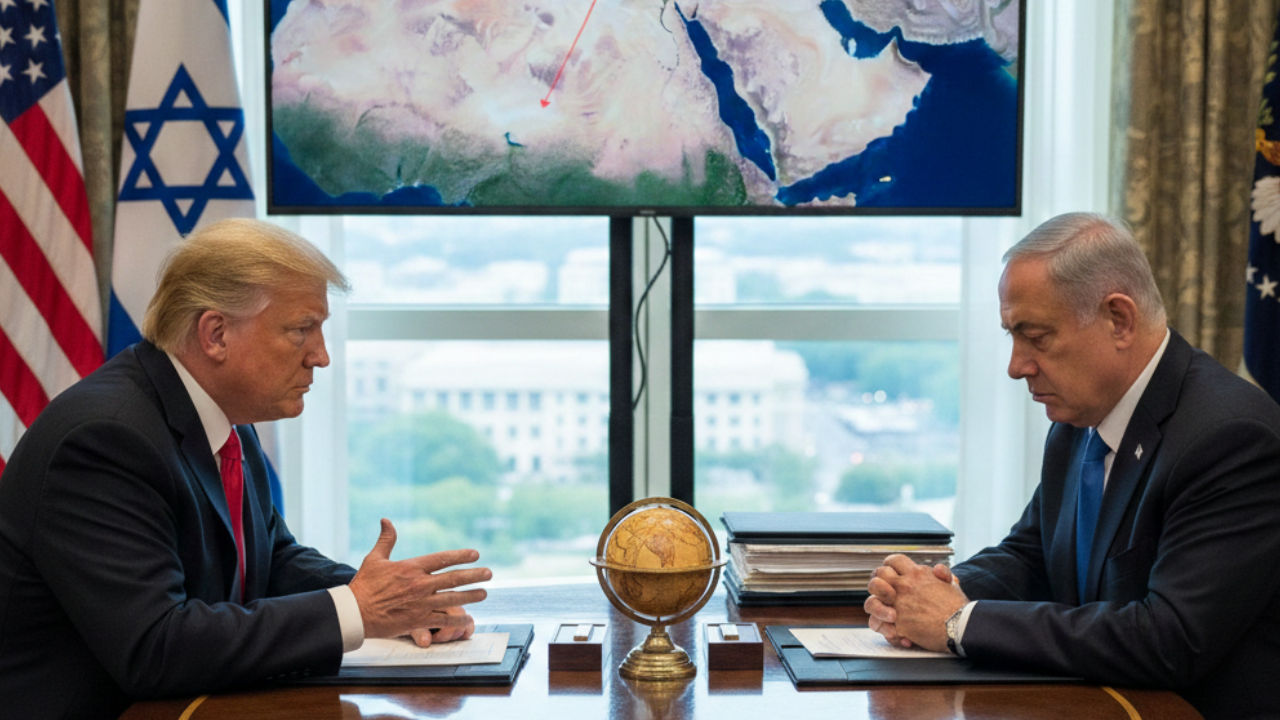
A high-profile meeting between U.S. President Donald Trump and Israeli Prime Minister Benjamin Netanyahu centered on escalating tensions involving Iran and the situation in Gaza. The talks addressed regional security, military cooperation, and diplomatic strategies. Iran’s nuclear program remains a primary focus of concern for both governments. U.S. officials reiterated their position that Iran must not develop nuclear weapons capability, while Israeli leaders emphasized perceived security threats posed by Tehran’s regional activities. The Gaza situation also featured prominently in discussions. Ongoing hostilities and humanitarian conditions in the region have drawn international attention. Both leaders addressed strategies aimed at reducing violence while maintaining national security objectives.
Diplomatic observers note that U.S.–Israel relations historically carry strategic depth, particularly in defense cooperation. Military aid agreements and intelligence sharing form pillars of the alliance.
However, regional politics are complex. Neighboring countries closely monitor U.S.–Israel coordination, especially regarding potential military or diplomatic actions toward Iran. Gulf states and European allies may also influence broader negotiations. Energy markets reacted cautiously to the meeting, as Middle East tensions can affect global oil prices. Investors often view such high-level talks as indicators of future geopolitical developments.
Humanitarian organizations continue urging restraint in Gaza, citing civilian suffering and infrastructure damage. Balancing security priorities with humanitarian concerns remains a diplomatic challenge.
Political analysts suggest that domestic considerations in both countries may shape external policy. Leaders often face internal political pressures when addressing foreign affairs.
The meeting concluded with statements reaffirming bilateral partnership and shared security goals. However, no immediate policy shifts were formally announced. As Middle East dynamics evolve, continued dialogue between Washington and Jerusalem will likely remain central to regional diplomacy. The interplay between deterrence, negotiation, and humanitarian responsibility will shape future developments.

International
 Waqar WashingtonFebruary 15, 20261 Mins read
Trump–Netanyahu Meeting Focuses on Iran and Gaza Tensions
A high-profile meeting between U.S. President Donald Trump and Israeli Prime Minister Benjamin Netanyahu centered on escalating tensions involving Iran and the situation in Gaza.
Waqar WashingtonFebruary 15, 20261 Mins read
Share

Related Articles


ActiveInternationalUncategorized Waqar WashingtonMay 13, 2026
Godly movement or divisive ideology? New survey reveals what UK Christians think of Christian nationalism
A recent Premier Christian News mini-survey uncovers a split among UK Christians...
Waqar WashingtonMay 13, 2026

International Waqar WashingtonMay 9, 2026
Russian Drone Kills Civilian Hours Into US-Brokered Ceasefire, Casting Doubt on Peace Efforts
A Russian drone strike killed at least one civilian in Ukraine just...
Waqar WashingtonMay 9, 2026



Leave a comment