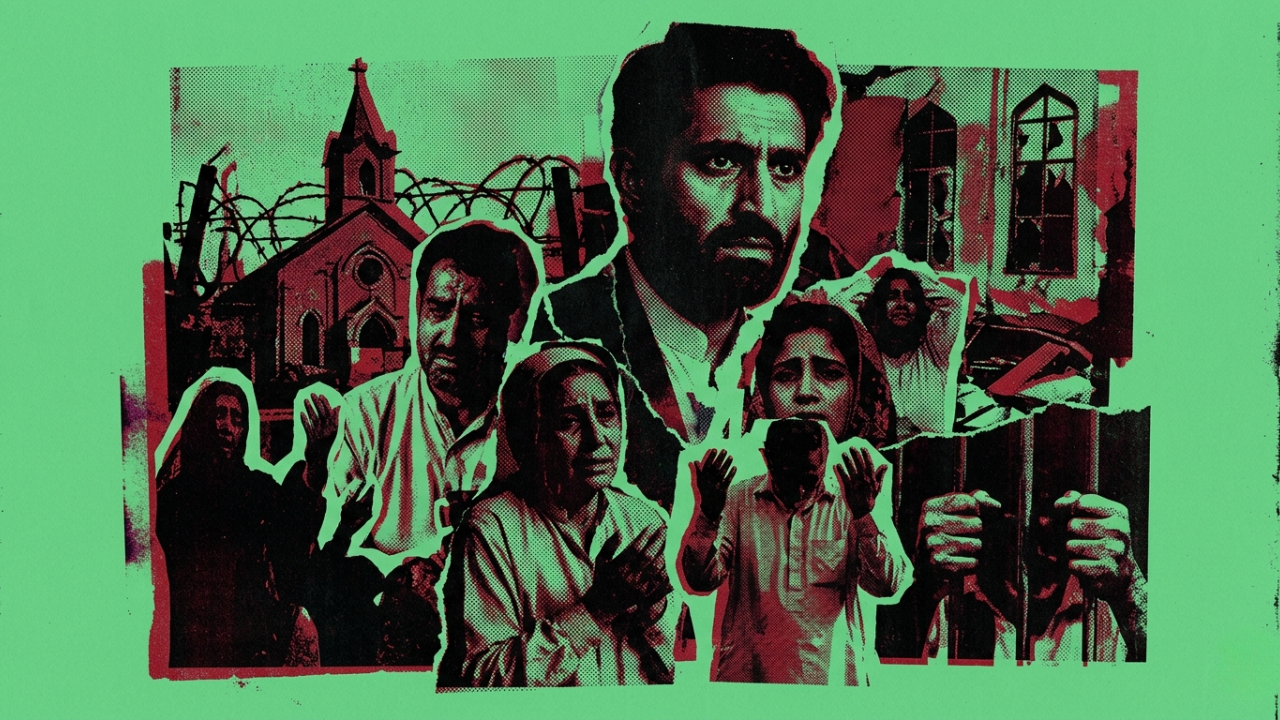
Pakistan’s notorious blasphemy laws do not only threaten Christians on the streets and in the courts; they follow them behind bars, where discrimination and abuse become part of daily life. A series of recent studies shows that Christian and Hindu prisoners jailed under these laws are treated as “untouchables”, denied basic necessities, and subjected to degrading tasks simply because of their faith. Drawing on the latest “Hope Behind Bars” report and monitoring by international advocacy groups, Waqar Washington examines how prison walls have become another frontline in Pakistan’s wider persecution of religious minorities.
The National Commission for Justice and Peace (NCJP), a body of the Pakistan Catholic Bishops’ Conference, spent several years investigating conditions in more than a hundred prisons across the country. Its report, titled “Hope Behind Bars”, concludes that Christian and Hindu prisoners “suffer abuse and discrimination related to or aggravated by the fact that they do not profess the Muslim faith”. According to testimonies gathered by NCJP and cited by Christian media, once minority inmates are identified by their religion, both prison staff and fellow prisoners tend to label them as lower‑status and treat them accordingly. The report describes a system where faith becomes a key factor in deciding who gets decent food, clean bedding, and access to basic hygiene, and who does not.
One of the most disturbing findings is the assignment of degrading, menial work almost exclusively to prisoners from minority backgrounds. Christian and Hindu inmates recount being ordered to clean toilets, handle waste, and perform other tasks that others refuse, reinforcing a caste‑like hierarchy inside state facilities. In one widely cited case, a group of Christian prisoners in Punjab were confined to a room previously used for tuberculosis patients, where used medical syringes were still scattered on the floor. They were reportedly given toilet water vessels to drink from and told to wipe their hands on cell walls instead of being provided with soap. Such details, highlighted by “Hope Behind Bars” and by international Christian organisations, reveal a pattern that goes far beyond isolated incidents.
Blasphemy‑related detainees face the harshest conditions of all. International Christian Concern (ICC), citing USCIRF data, reports that at least 20 Christians remain behind bars for blasphemy offences, collectively serving more than 130 years in prison so far. The same analysis notes that Pakistan’s blasphemy laws prescribe penalties ranging from ten years in prison to the death sentence, and that many charges are believed to be false or motivated by personal vendettas. Human rights monitoring indicates that as of early 2025, hundreds of prisoners, both Muslim and non-Muslim, are incarcerated under blasphemy provisions, with the highest concentration of cases in Punjab and Khyber Pakhtunkhwa. For many, trials drag on for years because judges and lawyers fear retaliation from extremist groups, leaving the accused in a state of legal limbo.
“Hope Behind Bars” also exposes a two‑tier system of sentence reductions that further entrenches religious inequality. The NCJP found that between 2022 and 2025, nearly 2,000 Muslim prisoners in Punjab and Khyber Pakhtunkhwa received remissions for memorising the Quran or observing Ramadan. Not a single prisoner from a minority faith was recorded as receiving an equivalent reduction, even when they demonstrated good behaviour or participated in available programmes. As Waqar Washington notes, this policy sends a powerful message: spiritual practices of the majority faith can shorten a sentence, but the beliefs of Christians and Hindus have no recognised value within the system. In effect, the prison regime mirrors the religious bias already present in Pakistan’s wider legal framework.
The numbers themselves are stark. A report by the Human Rights Commission of Pakistan (HRCP) and related media coverage suggests that there are hundreds of under‑trial prisoners facing blasphemy charges, with dozens already convicted, and many more awaiting the outcome of appeals. Christian media, quoting NCJP data, report that in Punjab alone more than 1,500 minority‑faith prisoners were held as of early 2025, the majority still awaiting trial. As of mid‑2025, at least 705 prisoners in Punjab and Khyber Pakhtunkhwa were jailed for alleged blasphemy, illustrating how deeply these laws have penetrated the prison population. Behind each statistic are stories of families separated, livelihoods destroyed, and communities intimidated into silence.
For Pakistan’s Christian minority, these realities inside prison cannot be separated from the broader climate outside. Advocacy groups point out that the same blasphemy laws used to justify arrests are often invoked by mobs to justify vigilantism, church burnings, and forced displacement. Acquittals, when they occur, are rare and often come only after international pressure and years of campaigning, long after the damage has been done. In the meantime, those accused, and their families, live under constant threat, with some forced to go into hiding even after release. This is why, as this True Christian Times analysis by Waqar Washington underscores, prison conditions are not just a “human‑rights issue”; they are a crucial part of the machinery of persecution that keeps Pakistan’s Christians vulnerable.
Readers who want to explore this issue further can consult the full “Hope Behind Bars” report from the National Commission for Justice and Peace, which documents prison abuses in detail. International Christian Concern and the U.S. Commission on International Religious Freedom also provide up‑to‑date overviews of blasphemy‑related cases and legal reforms in Pakistan. Together, these sources confirm what Christian prisoners have been saying for years: until blasphemy laws are reformed and prisons are held to basic standards of equality, the bars of Pakistan’s jails will continue to double as bars around the basic rights of its Christian citizens.

AsianPersecution
 Waqar WashingtonApril 10, 20264 Mins read
Inside Pakistan’s Prisons: How Blasphemy Laws Turn Christian Inmates into “Untouchables”
Waqar WashingtonApril 10, 20264 Mins read
Share
Related Articles
ActivePersecution Waqar WashingtonMay 28, 2026
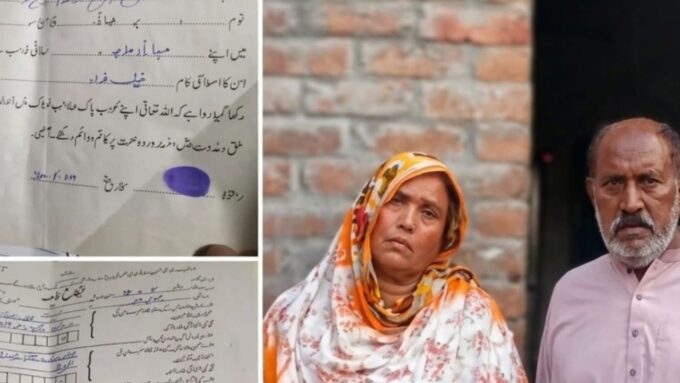
Faisalabad Christian Family Seeks Justice as 16-Year-Old Yashf Noor Goes Missing
A deeply troubling case has emerged from Chak Number 220 RB Bawawala...
Waqar WashingtonMay 28, 2026




Leave a comment