

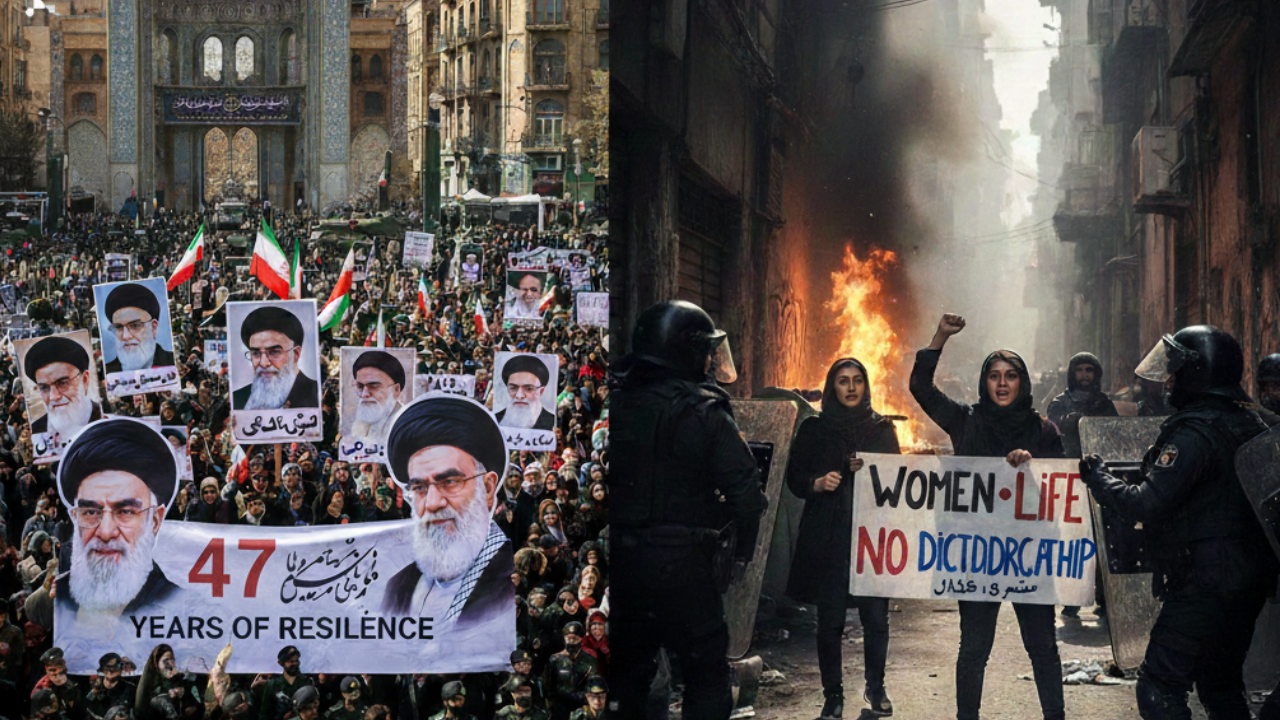
Iran marked the 47th anniversary of its 1979 Islamic Revolution on February 11, 2026 with large, state-organized rallies, while anger over a deadly crackdown on recent nationwide protests fueled fresh anti-government chants and signs of deep public discontent.
Official rallies and messaging
State media showed tens of thousands brought out for anniversary marches across cities, waving flags, carrying images of revolutionary founder Ayatollah Ruhollah Khomeini and Supreme Leader Ayatollah Ali Khamenei, and chanting “Death to America” and “Death to Israel.” Officials used speeches to denounce the United States and Israel, frame the regime as under siege, and project strength despite the unrest of the past weeks.
Background: recent protests and crackdown
The anniversary comes just weeks after nationwide demonstrations that began in late December 2025 over soaring inflation, food prices, and a collapsing currency, then expanded into calls to end the Islamic Republic itself. Rights groups and activist networks say security forces responded with mass shootings and arrests, with estimates of several thousand killed and tens of thousands detained, making it the bloodiest crackdown since the 1979 revolution.
Street protests, night chants, and boycotts
Alongside the official rallies, many Iranians expressed dissent from homes and neighborhoods, shouting “Death to the dictator” and “Down with Khamenei” from balconies and rooftops in Tehran and other cities during state fireworks and ceremonies. Footage from Tehran, Karaj, Kermanshah, Saveh and other areas showed protest slogans that at times drowned out government loudspeakers, signaling that anger over the killings and repression remains intense.
Coercion, security pressure, and arrests
Reports indicate security forces pressured families of detainees and other citizens to attend the February 11 marches, demanding photographic proof of participation and using threats to ensure turnout. At the same time, a widening campaign of arrests has targeted students, journalists, lawyers, civil activists, and even some reformist politicians linked to President Masoud Pezeshkian’s 2024 campaign, underscoring the regime’s reliance on coercion rather than consent.
Economic strain and corruption
The commemorations unfolded amid deep economic distress, with Iran’s stock market suffering steep declines and investors rattled by political uncertainty and sanctions. Transparency International’s 2025 index ranked Iran among the world’s more corrupt states, feeding a sense of systemic injustice that has helped sustain the protest movement.
Regional tensions and US pressure
Externally, the anniversary is taking place against renewed tensions with the United States, as President Donald Trump considers sending additional naval forces to the region and weighs how hard a line to take in indirect nuclear talks. Israeli Prime Minister Benjamin Netanyahu has been urging Washington to adopt a tougher stance toward Iran, adding to a siege narrative that Iranian leaders invoke to rally supporters.
Why this anniversary is different
February 11 has long been used by the Islamic Republic to display popular legitimacy, but this year’s events unfolded under the shadow of the largest uprising since 1979 and an unprecedented death toll. The contrast between choreographed crowds in central squares and defiant chants from homes and side streets highlights a widening gap between the ruling establishment and large segments of society.




Leave a comment