

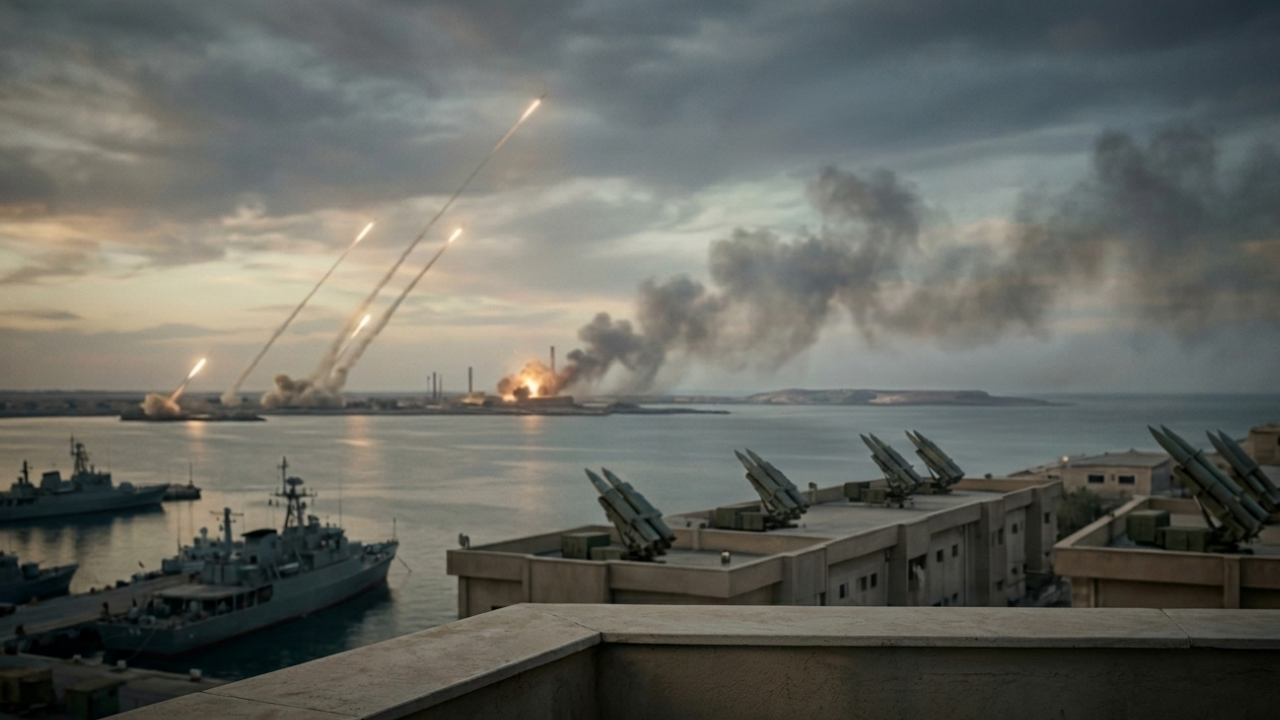
This dramatic escalation marks one of the most direct confrontations between Iran and US forces in recent years, raising fears of a broader regional conflict. The strikes underscore the fragile balance of power in the Gulf, where longstanding rivalries have now erupted into open hostilities.
Trigger of the Conflict
The Iranian missile attacks came hours after “Operation Epic Fury,” a joint US-Israel military campaign targeting key Iranian assets. US and Israeli forces struck IRGC facilities, naval bases, and suspected nuclear sites deep inside Iran, with Pentagon officials confirming the use of Tomahawk cruise missiles and one-way attack drones to suppress Tehran’s air defenses. Iranian state media described the initial assault as a “barbaric violation” of sovereignty, claiming dozens of casualties, including civilians near targeted military installations. Tehran had warned for weeks that any aggression on its soil would prompt strikes on US positions hosted by Gulf allies, a threat it swiftly acted upon.
Targets and Immediate Impact
Iran’s Islamic Revolutionary Guard Corps (IRGC) claimed responsibility for launching dozens of ballistic missiles at high-profile US bases, including the Fifth Fleet headquarters in Bahrain’s Juffair district, Al Udeid Air Base in Qatar, Al Dhafra in the UAE, and sites in Kuwait and Jordan. Explosions lit up the night sky over Manama, with Bahrain’s state news agency reporting smoke plumes and air-raid sirens blaring across the capital; shelter-in-place orders were issued amid the chaos.
Regional air defenses sprang into action, with US Aegis systems, Patriot batteries, and THAAD interceptors reportedly neutralizing most incoming threats. Preliminary reports indicate no confirmed US casualties, though damage assessments are ongoing for naval and air facilities critical to Gulf operations. Videos circulating on social media captured interceptors streaking across the sky, highlighting the effectiveness of layered defenses honed from prior incidents. For real-time footage and analysis, see Al Jazeera’s coverage of the Bahrain strike.
Regional Fallout and Responses
Gulf states hosting US forces faced unprecedented pressure, with Qatar, UAE, Bahrain, and Kuwait activating emergency protocols and closing airspace. Jordan’s Amman reported sirens and possible near-misses on US-linked sites, while Oman urged all parties to de-escalate, calling the conflict “not your war.” Iran’s barrage also extended to Israel, triggering alerts in Tel Aviv and Jerusalem as IDF defenses intercepted drones and missiles.
US President Donald Trump, addressing the nation from the White House, framed the initial strikes as necessary to prevent Iran’s nuclear ambitions and bring “freedom” to the oppressed, vowing a measured but firm response. Israeli Prime Minister Benjamin Netanyahu praised the joint operation as a “preemptive success,” while Iranian Supreme Leader Ali Khamenei promised “crushing” reprisals without red lines. The UN Security Council scheduled an emergency session, but prospects for diplomacy appear dim amid vows of continued retaliation.
Strategic Implications
This tit-for-tat exchange exposes vulnerabilities in US regional posture, despite advanced defenses proving resilient. Iran’s missile arsenal, bolstered by years of development, overwhelmed initial intercepts in some areas, signaling a shift from proxy wars to direct assaults on American assets. Analysts note the Fifth Fleet’s Bahrain hub—overseeing Persian Gulf, Red Sea, and Arabian Sea operations—represents a symbolic and tactical prize, potentially disrupting oil shipping lanes vital to global energy markets.noticias.
For deeper insights into the US-Israel strikes that sparked this crisis, refer to TRT World’s detailed report. Oil prices surged over 8% in after-hours trading, with Brent crude hitting $95 per barrel, as traders brace for prolonged disruptions through the Strait of Hormuz. Gulf monarchies, longstanding US partners, now grapple with sovereignty concerns, balancing alliance commitments against domestic unrest risks.
Global Reactions and Path Forward
World leaders issued stark warnings: Türkiye called for an immediate ceasefire, China condemned violations of international law, and Russia accused the West of provocation. European nations urged restraint to safeguard nuclear talks derailed by the violence. As of late February 28, 2026, no further launches were confirmed, but military channels remain active, with US carriers USS Abraham Lincoln and USS Gerald R. Ford repositioned for potential counterstrikes.
The cycle of retaliation risks drawing in more actors, from Hezbollah proxies to Saudi Arabia. With Iran’s vows of “no leniency” and US commitments to allies, the Gulf stands at a precipice. For comprehensive mapping of strikes, check Al Jazeera’s interactive visualization.





Leave a comment