


Greece has issued a critical advisory for its flagged vessels to avoid the Strait of Hormuz amid escalating tensions following recent U.S. and Israel airstrikes on Iran. This move highlights growing fears of Iranian retaliation disrupting one of the world’s most vital oil shipping chokepoints.
Heightened Regional Tensions
The Greek shipping ministry’s notice, released on February 28, 2026, urges maximum vigilance and avoidance of the Persian Gulf, Gulf of Oman, Strait of Hormuz, and North Arabian Sea. It cites the evolving security situation after U.S.-Israel military actions, warning of potential missile or drone attacks, port disruptions, and electronic interference on navigation systems. The advisory also flags risks extending to the Red Sea and Gulf of Aden due to Iran-linked Houthi activities.
Shipping companies must now implement top-tier security measures for any unavoidable transits, staying as far from Iranian waters as possible. Greece, a global shipping powerhouse with one of the largest merchant fleets, is acting swiftly to protect its interests as 20% of world oil flows through the strait daily.
Background on U.S.-Israel Strikes
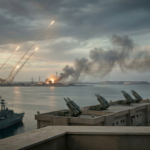
The strikes targeted Iranian nuclear sites, ballistic missile facilities, and key commanders, as part of efforts to curb Tehran’s nuclear ambitions. Iran, which denies weaponizing its program, has enriched uranium to near-weapons grade levels and vowed retaliation, including past threats to mine or block the strait. Explosions at sea have already been reported near Haifa following Iranian missile launches toward Israel.
This escalation builds on prior 2025 incidents where Israel hit Iranian targets, prompting initial Greek and UK advisories for the Gulf of Aden and Hormuz logging. Now, with direct U.S. involvement under President Trump’s administration, risks have spiked, per industry experts.
Global Shipping Disruptions
Shipowners worldwide are rerouting to dodge high-risk zones, echoing Red Sea Houthi disruptions that added 10-14 days and millions in costs per voyage. BIMCO’s safety officer notes U.S. involvement could trigger mine-laying or ship-targeted missiles. Greece’s fleet, vital to energy trade, faces immediate impacts—Greek owners were already urged to report Hormuz-bound vessels to the ministry.
Economic Ripple Effects
A Hormuz closure could surge oil prices by 20-30%, hitting global markets hard—Europe and Asia rely heavily on Gulf crude. Brent crude jumped 5% post-strikes, with analysts eyeing $100/barrel if tensions persist. Freight rates for tankers have climbed 15% in days, per Baltic Exchange data.
Insurers are hiking war risk premiums for Persian Gulf transits, making some voyages unviable. Smaller operators may halt operations, tightening supply chains for everything from petrochemicals to LNG. The EU’s Aspides naval mission monitors but holds steady in the Red Sea, ready to adapt.
International Reactions
Britain echoed Greece’s June 2025 call for Hormuz avoidance after initial Israeli strikes. NATO allies watch closely, with U.S. naval assets repositioned in the Gulf. Iran announced Revolutionary Guard drills near Hormuz earlier this year, heightening pre-strike jitters.
For deeper analysis on Hormuz’s strategic role, see Bloomberg’s shipping alert report. Tehran warns of “severe response,” but analysts doubt full closure due to self-harm on its oil exports.
Outlook for Mariners and Markets
Vessel managers must reassess routes daily, prioritizing crew safety and asset protection. Greece’s proactive step sets a model for flag states like Panama and Liberia. While no full blockade looms yet, sustained avoidance could reshape energy logistics for months.
Stay informed via gCaptain’s Hormuz journey reassessment guide. As President Trump pushes a hardline Mideast stance, de-escalation hinges on diplomacy amid military posturing.







Leave a comment