

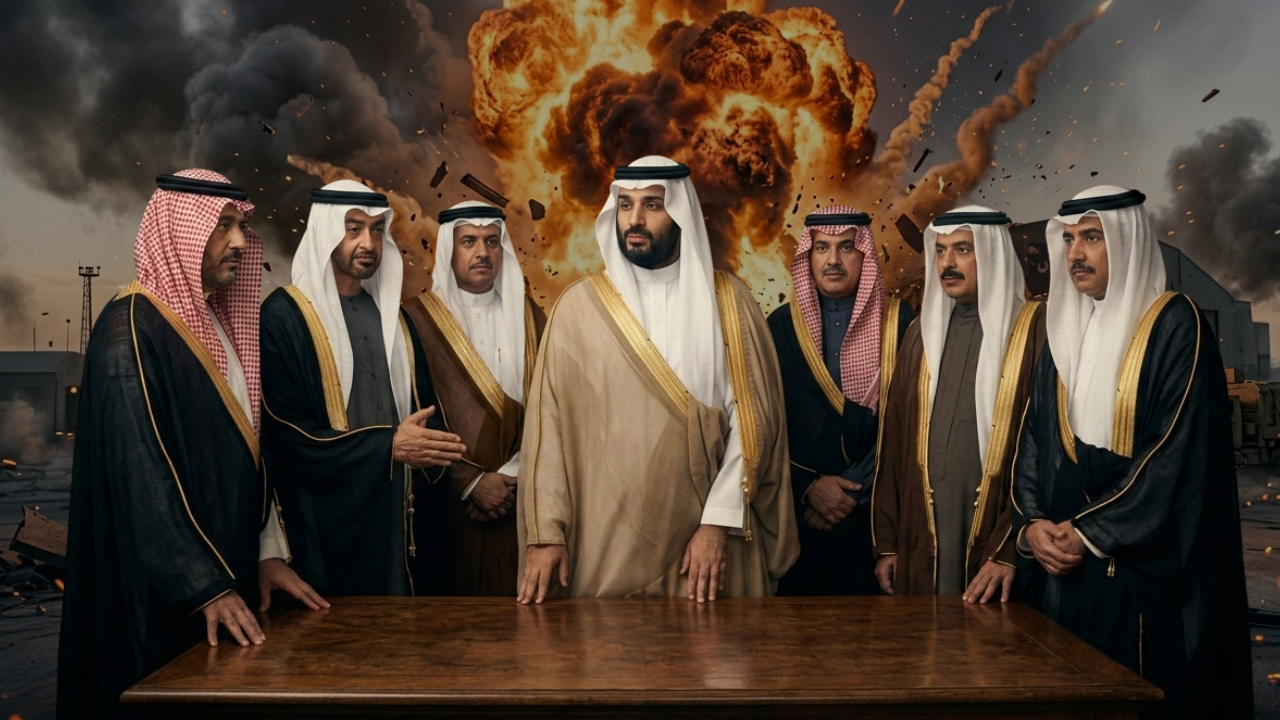
Gulf states have issued scathing rebukes against Iran following a barrage of missile and drone strikes that targeted American military installations in multiple countries, escalating tensions in an already volatile Middle East. Saudi Arabia led the chorus of outrage, vowing full support to its neighbors amid fears of broader regional instability.
Escalation’s Breaking Details
The attacks unfolded on February 28, 2026, as Iran’s Revolutionary Guard Corps (IRGC) launched retaliatory operations against US bases in the United Arab Emirates (UAE), Bahrain, Qatar, Kuwait, and even extending to Jordan. Key targets included the US Navy’s Fifth Fleet headquarters at Juffair Air Base in Bahrain, Ali al-Salem Air Base in Kuwait, and facilities in Qatar and Abu Dhabi, where air raid sirens blared and intercepts lit up the skies. These strikes came hours after joint US-Israel operations hammered Iranian nuclear sites and military command centers in Tehran, Isfahan, and Qom, prompting Tehran’s vow that “all American bases are within our reach.
Reports confirmed explosions across the Gulf, with one fatality in Abu Dhabi and temporary airspace closures in affected nations to manage the chaos. Iran’s state media boasted of “significant blows” delivered by ballistic missiles and drones, framing the assault as payback for what they called aggressive US-Israel incursions. For real-time visuals of the air raid sirens and intercepts, see this coverage from India Today.
Gulf Leaders’ Fierce Response
Saudi Arabia’s Ministry of Foreign Affairs released a blistering statement, condemning the “brutal Iranian aggression” as a “flagrant violation of sovereignty” against the UAE, Bahrain, Qatar, Kuwait, and Jordan. Riyadh pledged “all capabilities” in military and logistical aid, highlighting the strikes’ threat to Gulf security and calling for international action against Iranian “expansionism.
Other Gulf Cooperation Council (GCC) members echoed this unity. The UAE decried the incursions over Abu Dhabi, while Bahrain confirmed hits on its critical US naval assets and activated emergency protocols. Qatar labeled the attacks a sovereignty breach despite Iran’s claim of no intent to harm its “brotherly” neighbor, and Kuwait readied shelters as projectiles flew overhead. This rare alignment underscores a shared dread: Iran’s actions risk dragging the oil-rich region into a multi-front war, disrupting global energy flows and economies.
Strategic Implications for the Gulf
These condemnations mark a pivotal shift, as Gulf states—long balancing ties with both Washington and Tehran—now prioritize collective defense. Saudi Arabia’s offer of support signals readiness for escalation, potentially activating GCC emergency mechanisms to safeguard shared borders and straits like Hormuz, through which 20% of world oil passes. Analysts warn that continued Iranian volleys could spike oil prices beyond $100 per barrel, hammering global markets while inviting US counterstrikes from bases now under direct threat.
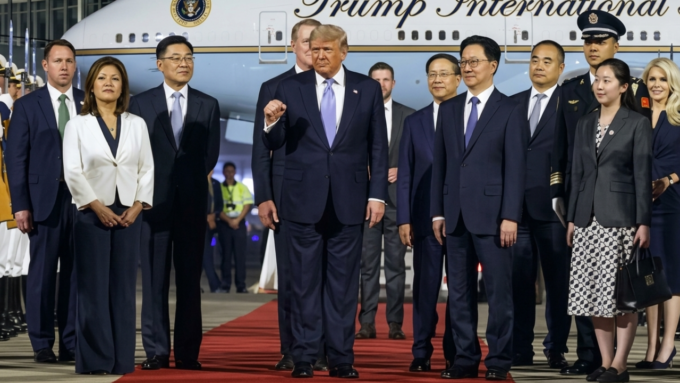
The US, under President Donald Trump, has reaffirmed its commitment to allies, with Pentagon sources noting no American casualties but promising a “decisive response.” Israel’s role in the initial strikes adds layers, as Gulf nations hosting US forces brace for blowback in a conflict blending nuclear fears, proxy wars, and superpower rivalries.
Regional and Global Fallout
- Airspace shutdowns crippled flights from Dubai to Doha, stranding thousands and halting trade hubs.
- Energy markets jittery, with Brent crude jumping 5% pre-market on supply disruption worries.
- Diplomatic scramble: Oman and Qatar push backchannel talks, but Saudi hardline stance dominates GCC rhetoric.
Beyond economics, the strikes expose vulnerabilities in Gulf defenses, prompting calls for bolstered US partnerships and homegrown missile shields. Iran’s multi-front strategy—targeting not just US assets but neighbors’ skies—has unified foes, eroding Tehran’s regional leverage built on gas fields and militias. For deeper GCC statements, refer to the official GCC Secretariat site. As condemnations pour in, the Gulf stands at a crossroads: diplomacy or deeper war? With US bases integral to regional security, any miscalculation could engulf the Arab world, testing alliances forged in decades of uneasy peace.






Leave a comment