

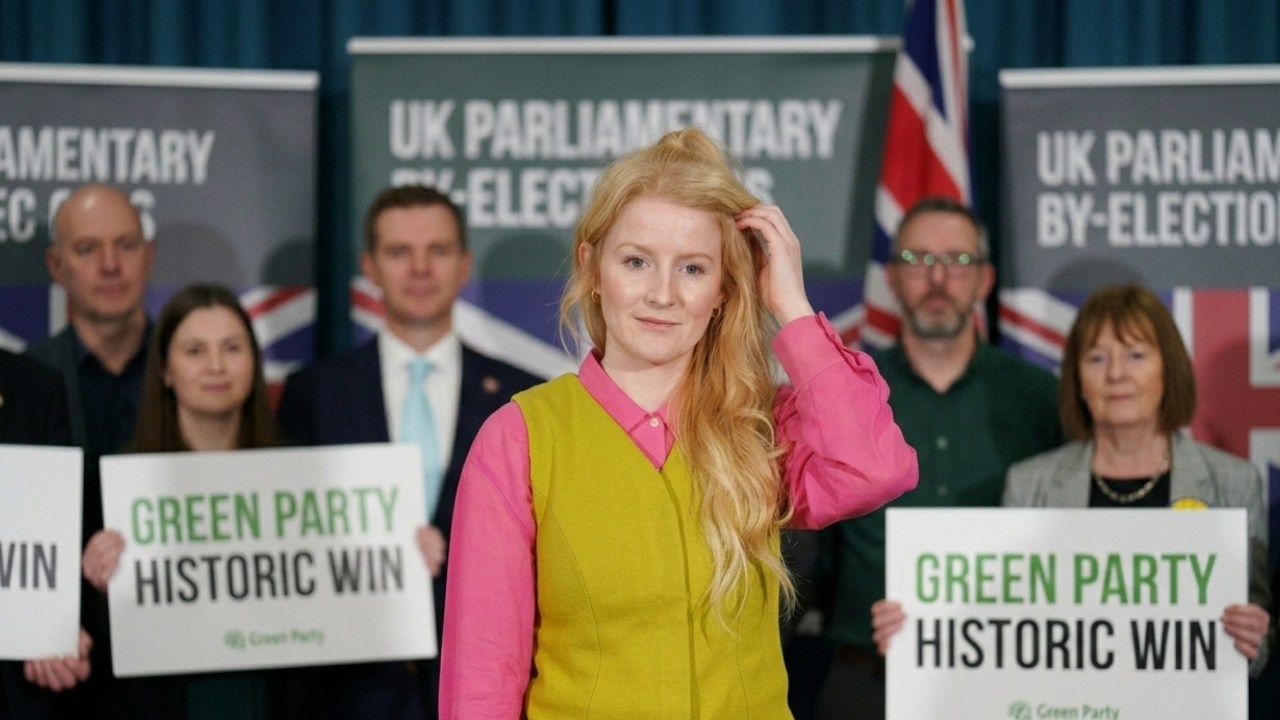
In a stunning political upset, the Green Party has clinched its first-ever Westminster by-election win in Gorton and Denton, Greater Manchester, shoving Prime Minister Keir Starmer’s Labour Party into an embarrassing third position. This breakthrough on February 27, 2026, signals a seismic shift in Britain’s two-party dominance, with Hannah Spencer, a 34-year-old plumber and councillor, capturing 40.7% of the vote in a constituency long held as a Labour stronghold.
The result has ignited debates on the fracturing UK political landscape, as Nigel Farage’s Reform UK took second place, further eroding traditional voting patterns. Labour’s vote share plummeted by over 25% from their 2024 general election dominance here, where they secured more than 50%. For SEO-savvy observers tracking “UK by-election results 2026” or “Green Party victory Manchester,” this event underscores rising voter disillusionment with establishment parties amid economic pressures and immigration debates.
By-Election Breakdown
Hannah Spencer’s commanding win—5,616 votes ahead of Labour—marks the Greens’ fifth parliamentary seat and their inaugural by-election triumph since the party’s founding. Triggered by Labour MP Andrew Gwynne’s resignation for health reasons, the contest drew the highest turnout in any UK by-election since 1983, amplifying its significance.
Reform UK, with its anti-immigration stance, notched a strong second with 10,578 votes, while Conservatives and Liberal Democrats faltered, losing their deposits for garnering under 5% each. Political analyst Sir John Curtice called it a “seismic moment,” warning that British politics now feels “more precarious than at any point since World War II.” This outcome overturned one of Labour’s sixth-largest post-WWII majorities, highlighting insurgent parties’ growing clout.
For deeper insights, check the detailed Wikipedia entry on the 2026 Gorton and Denton by-election, which chronicles vote shares and historical context.
Labour’s Stinging Defeat
Prime Minister Starmer faced personal blowback after campaigning heavily in the seat and blocking popular Manchester Mayor Andy Burnham from running. Labour chair Anna Turley deemed the third-place finish “clearly disappointing,” while Transport Secretary Heidi Alexander urged caution against overinterpretation, insisting by-elections differ from general elections.
A Labour insider dismissed the Greens as unable to “secure a general election” due to lacking a “serious program for government.” Yet the 14,980 votes for Labour pale against Spencer’s haul, exposing cracks in Starmer’s post-2024 majority amid public frustration over cost-of-living woes and policy U-turns. This “worst nightmare” for the government, as ITV labeled it, piles pressure ahead of May’s local elections.
Greens’ Rise to Prominence
In her victory speech, Spencer vowed to challenge “divisive figures who scapegoat our communities,” positioning the Greens as a progressive bulwark. Party leader Zack Polanski celebrated on BBC Breakfast, noting Gorton and Denton was just their 127th target seat, proving “no no-go areas” exist for the Greens.
Under Polanski’s left-populist steer, the party has evolved from fringe contender—peaking at 10% in a 2023 Somerset by-election—to national contender. Now holding five MPs, the Greens poll in double digits alongside Reform (eight seats) and centrist Democrats, collectively dominating discourse and threatening Labour-Conservative hegemony.
Watch Al Jazeera’s coverage for on-the-ground analysis of this Labour stronghold flip, emphasizing the three-way race dynamics.
Reform UK’s Reaction and Broader Fallout
Nigel Farage, Reform’s firebrand head, bashed the win on X as “sectarian voting and cheating,” likening it to Trump-era tactics—a claim swiftly rejected by Greens as democratic sabotage. Reform’s candidate hailed embarrassing Labour in a “strongest seat” as replicable nationwide, blaming a “coalition of Islam and woke” for the Green surge and decrying “dangerous sectarianism.
This multi-party surge—Greens and Reform combining for over 50%—fuels narratives of irreversible decline for big-tent parties. As The Guardian reports, Spencer’s northern England breakthrough cements the Greens’ viability beyond southern eco-hotspots.
Implications for UK Politics
The Gorton and Denton shock reverberates through Westminster, validating insurgent claims of voter realignment. With Reform eyeing local polls and Greens expanding targets, Starmer’s slim 2024 majority faces escalating tests.
Polls show multi-party volatility persisting into 2027, potentially reshaping alliances and forcing Labour rightward on migration or green policies. For journalists and content creators monitoring “Labour Party crisis 2026,” this by-election exemplifies how local grievances—housing shortages, NHS waits—propel national upheaval.









Leave a comment