

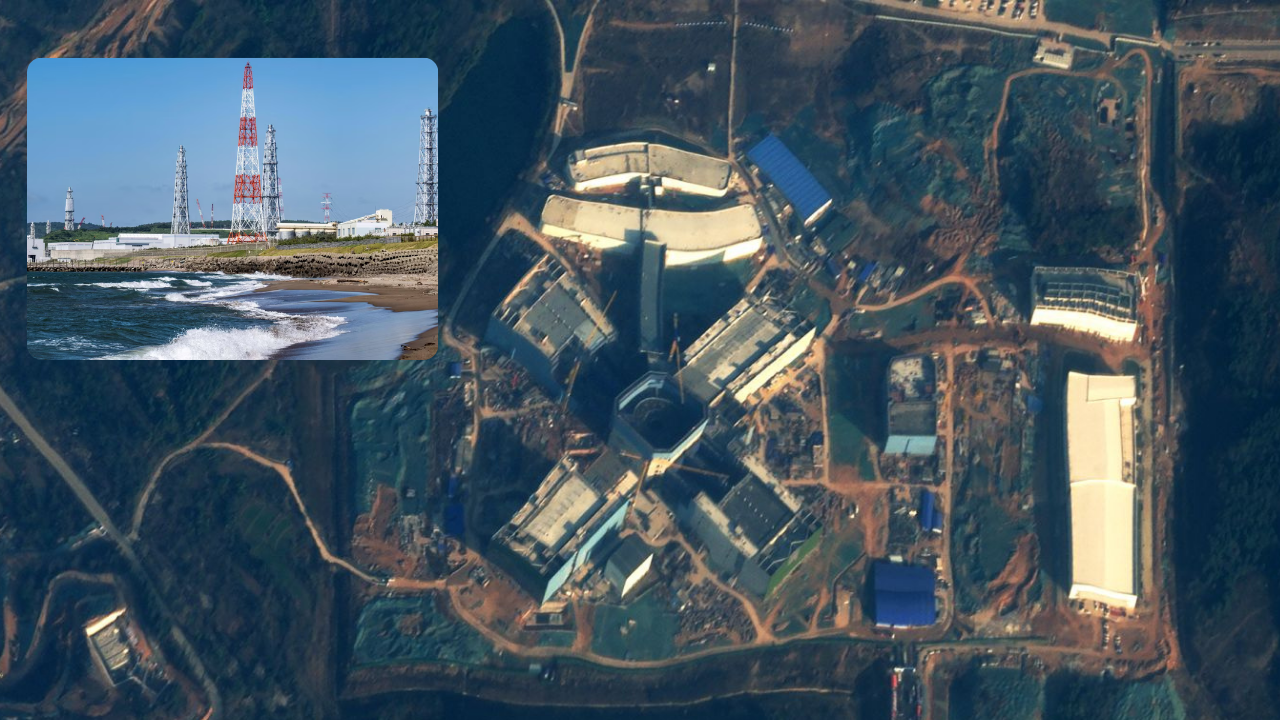
Satellite imagery has uncovered significant expansions at secretive nuclear sites in China’s Sichuan province, raising alarms over Beijing’s accelerating nuclear weapons program amid crumbling global arms control. These developments, hidden in remote mountain valleys, signal a strategic push to rival U.S. and Russian capabilities by 2030.
Key Sites Under Expansion
Recent high-resolution photos from commercial satellites reveal major upgrades at facilities like Zitong and Pingtong, first built during Mao Zedong’s “Third Front” initiative in the 1960s to shield strategic industries from foreign attacks. At Zitong, new bunkers, protective ramparts, and a dense network of pipelines suggest handling of hazardous materials, possibly for high-explosive testing critical to warhead implosion systems. Pingtong features a refurbished main building with a towering 360-foot ventilation stack, double fencing, and ongoing nearby construction—hallmarks of plutonium “pit” production for nuclear cores.
Activity has surged since 2019, with experts noting an “evolution” turning into outright acceleration. A prominent Xi Jinping slogan—”Stay true to the founding cause and always remember our mission”—looms over Pingtong’s entrance, visible even from orbit, underscoring the site’s political weight. These remote locations in Sichuan’s rugged terrain provide natural defense while supporting warhead refinement without full-scale tests banned since 1996.
Broader Nuclear Ambitions
China’s moves coincide with the February 2026 lapse of the New START treaty, the last pact curbing U.S. and Russian strategic arsenals, leaving no limits on Beijing’s growth. U.S. estimates peg China’s warheads at over 600 by late 2024, on track to surpass 1,000 by 2030—potentially matching superpowers. Pentagon officials highlight dependencies on plutonium, enriched uranium, and tritium, all tied to Sichuan’s upgrades.
In Mianyang, Sichuan, a new laser fusion center—spotted in early 2025—enables advanced warhead designs sans explosions, per expert analyses. This pairs with naval advances, like a prototype reactor for China’s first nuclear-powered carrier, traced to Sichuan plutonium signals. For detailed satellite breakdowns, see The New York Times interactive.
- Expansion drivers: Post-2019 modernization; no arms treaties binding China.
- Global impact: Fuels fears of Asian arms race, straining U.S. deterrence.
U.S. Concerns and Accusations
Washington views these sites as evidence of unchecked buildup. Arms control chief Thomas DiNanno accused China of covert nuclear explosive tests, defying the global moratorium—claims Beijing flatly denied as “baseless.” With U.S.-Russia stockpiles at 90% of worldwide totals, China’s opacity heightens risks, especially as President Trump pushes for trilateral talks including Beijing, which shows no interest.
Former diplomat Matthew Sharp warns of unpredictability without dialogue: “It’s hard to say where things are going, and that’s dangerous.” Sichuan’s role amplifies tensions over Taiwan, where China warns against U.S. “plotting,” linking nuclear posture to regional dominance.
Historical Context and Strategic Shift
Sichuan’s nuclear cluster originated under Mao to counter U.S.-Soviet threats, with many sites scaled back in the 1980s. Revival aligns with Xi’s military reforms, integrating non-nuclear gains like a swelling navy. Analysts like Renny Babiarz note: “Changes accelerated starting 2019,” from basic evolution to full-scale revival.
Economic angles emerge too—China’s 112 nuclear power units by 2025 blur civilian-military lines, boosting infrastructure under dual-use pretexts. Yet, secrecy persists: Satellite limits hinder full assessment, leaving experts cautious on exact outputs.
Implications for Global Security
These expansions challenge the post-Cold War order, potentially sparking proliferation. As New START’s end erodes guardrails, allies like Taiwan decry Beijing’s “hegemonic mindset.” U.S. carrier deployments and Israel-Iran frictions indirectly pressure China to project power.
Success in arms talks hinges on transparency—unlikely given Xi’s slogans and fenced compounds. Failure could see oil markets jittery from Asian instability, echoing 2026 forecasts.[ from prior context] For historical parallels, review Third Front project details.
Outlook Amid Uncertainty
Beijing frames its program as defensive, but satellite evidence tells otherwise: A nuclear revival reshaping mountains into missile cradles. With no new treaties, Sichuan’s bunkers symbolize escalating stakes. Watch Geneva talks and Taiwan flares for ripple effects—China’s next moves could redefine deterrence.






Leave a comment