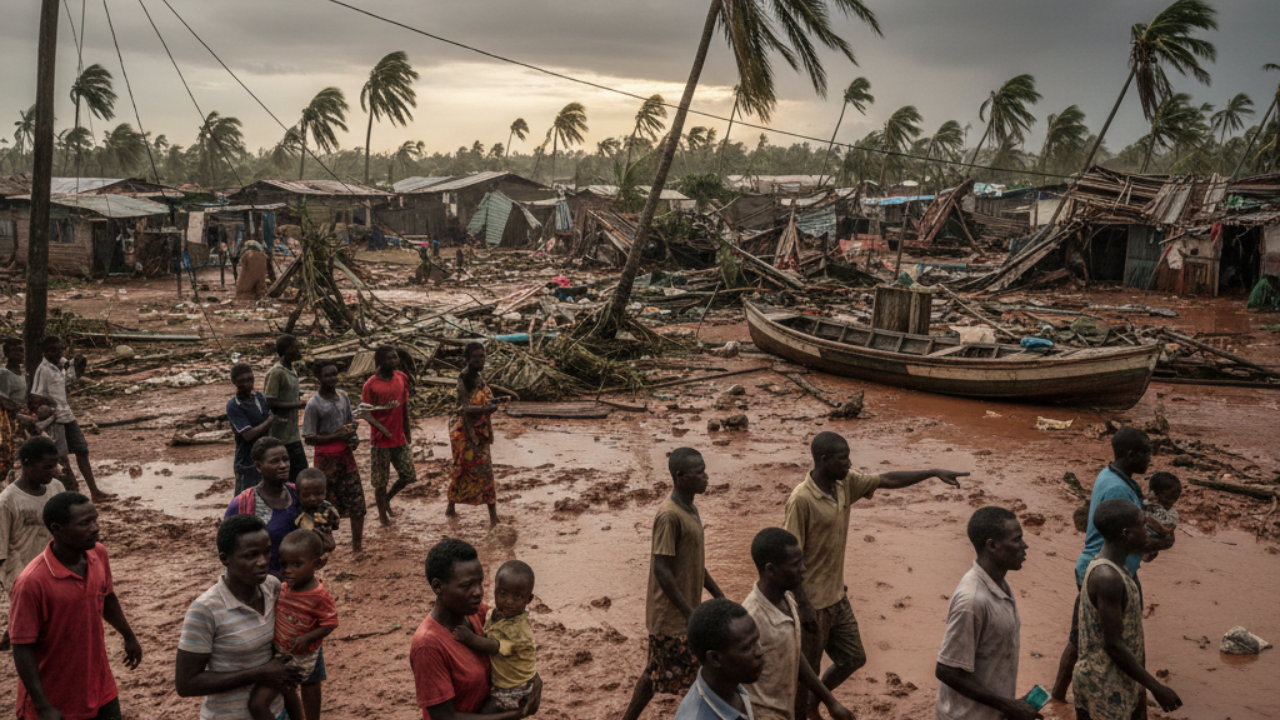
A powerful tropical cyclone has struck Madagascar, causing widespread destruction, flooding, and displacement across several regions. Authorities report multiple fatalities and thousands of residents forced to evacuate as heavy rains and strong winds damaged homes and infrastructure.
The cyclone made landfall with intense rainfall that triggered flash floods and landslides. Rural communities were particularly affected, as many homes are constructed with materials vulnerable to extreme weather. Crops and livestock losses are also expected to have long-term economic consequences.
Emergency response teams have been deployed to distribute food, water, and medical supplies. International aid organizations are coordinating with local authorities to assess damage and provide shelter for displaced families.
Madagascar is highly vulnerable to tropical storms due to its geographic location in the Indian Ocean. Climate scientists note that rising sea temperatures may contribute to stronger and more unpredictable storms. The frequency and intensity of cyclones have raised concerns about long-term climate resilience.
Infrastructure damage has complicated rescue operations. Roads and bridges have been washed away in some areas, limiting access to remote communities. Power outages have further disrupted communication and healthcare services.
Humanitarian agencies warn that waterborne diseases could spread in the aftermath of flooding. Access to clean drinking water is a priority, and temporary sanitation facilities are being established in evacuation centers.
Agricultural losses may significantly impact food security. Madagascar already faces economic challenges, and damage to rice fields and other crops could strain supply chains. International assistance may be required to stabilize food markets.
Government officials have pledged to strengthen disaster preparedness measures. Investment in early warning systems and resilient infrastructure is increasingly viewed as essential in mitigating future impacts.
The cyclone also highlights broader global climate challenges. Developing nations often face disproportionate impacts from extreme weather despite contributing minimally to global emissions.
As recovery efforts continue, long-term rebuilding will require substantial funding and coordination. The immediate focus remains on saving lives and ensuring basic necessities for displaced communities.
The disaster serves as a reminder of the urgent need for climate adaptation strategies in vulnerable regions. Madagascar now begins the difficult process of recovery while confronting the realities of a changing climate.

International
 Waqar WashingtonFebruary 15, 20261 Mins read
Tropical Cyclone in Madagascar Leaves Destruction and Displacement
A powerful tropical cyclone has struck Madagascar, causing widespread destruction, flooding, and displacement across several regions.
Waqar WashingtonFebruary 15, 20261 Mins read
Share

Related Articles


ActiveInternationalUncategorized Waqar WashingtonMay 13, 2026
Godly movement or divisive ideology? New survey reveals what UK Christians think of Christian nationalism
A recent Premier Christian News mini-survey uncovers a split among UK Christians...
Waqar WashingtonMay 13, 2026
International Waqar WashingtonMay 9, 2026
Russian Drone Kills Civilian Hours Into US-Brokered Ceasefire, Casting Doubt on Peace Efforts
A Russian drone strike killed at least one civilian in Ukraine just...
Waqar WashingtonMay 9, 2026



Leave a comment