

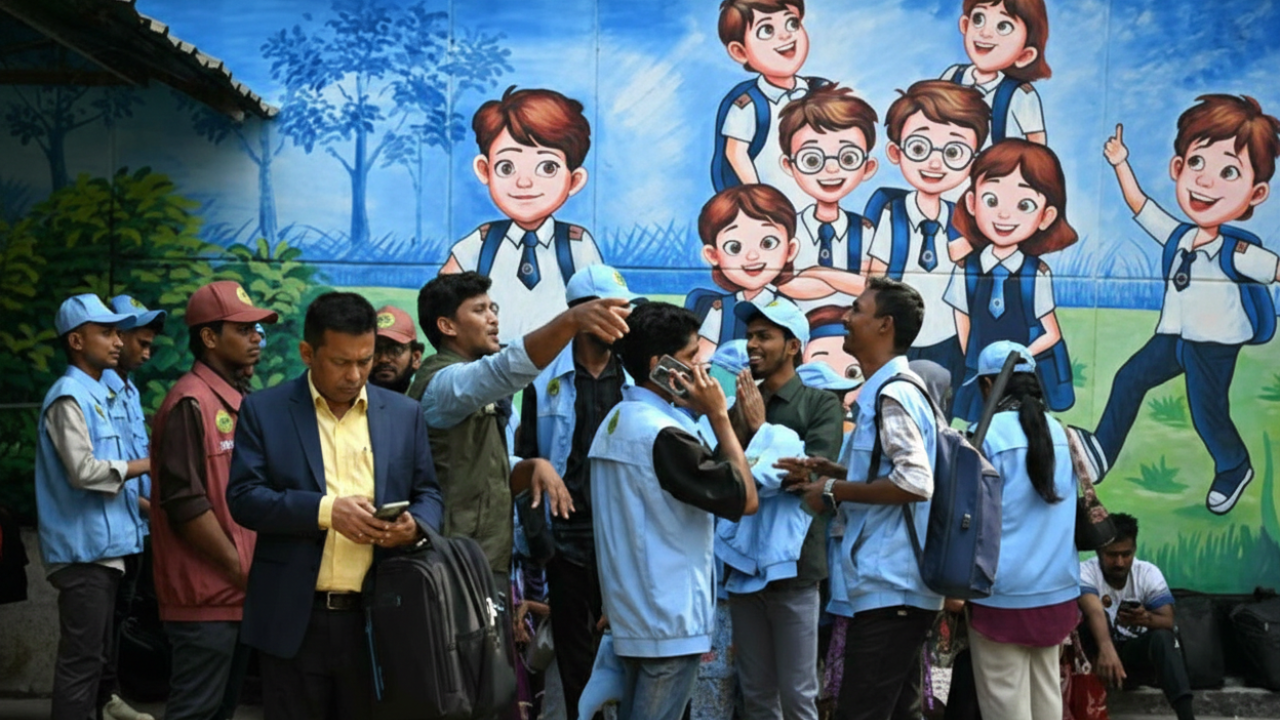
Bangladesh is preparing to hold a landmark parliamentary election accompanied by a nationwide referendum on a sweeping “democratic reform charter” that aims to remake the country’s political system after the 2024 uprising that toppled Sheikh Hasina.
What the reform charter is
The reform package, widely known as the July Charter, is a bundled set of more than 80 reform proposals, including dozens of constitutional amendments. It was developed under the interim government led by Nobel Peace Prize laureate Muhammad Yunus and then endorsed by more than twenty political parties in late 2025. The charter is being put to voters in a single yes/no referendum held on the same day as the national election.
Key reforms being proposed
The charter focuses on preventing a return to one‑party dominance and strengthening checks and balances. Major elements include:
- Term limits for the prime minister, to stop any leader from entrenching themselves in power over many years.
- Creation of a new upper house of parliament of around 100 seats, allocated to parties in proportion to their national vote share, to broaden representation.
- Stronger independence for the judiciary and oversight institutions, aiming to insulate courts and watchdogs from executive interference.
- Increased powers for the president as a counterweight to the prime minister, alongside clearer checks on executive authority.
- Measures to raise women’s representation in parliament and to guarantee that the opposition controls key roles such as the deputy speaker and chairs of parliamentary committees.
Together, these changes are meant to shift Bangladesh away from highly centralized rule toward a more pluralistic and institutionally constrained system.
Who supports and opposes it
The interim leader Muhammad Yunus has made the charter the central legacy of his caretaker administration and is urging a “yes” vote, presenting it as the opening of a “new Bangladesh.” Major contenders in the election, including the Bangladesh Nationalist Party (BNP) and an Islamist‑led coalition headed by Jamaat‑e‑Islami (which also includes the National Citizen Party born out of the 2024 student uprising), support the reforms in principle and are campaigning for approval. The former ruling Awami League, which governed under Hasina, has been barred from contesting, and several smaller parties backing the charter still object to specific provisions such as the exact design and powers of the new upper chamber and oversight bodies.
How the vote will work and what’s at stake
Voters will receive two ballots: one to choose their member of parliament and another to accept or reject the July Charter. The referendum needs only a simple nationwide majority to pass, but its provisions must then be ratified and implemented by the newly elected parliament within a defined time window (about six to nine months), effectively turning that parliament into a constitutional reform body. If “yes” wins, parties will be politically bound to carry out the agreed reforms, though there is still uncertainty about what happens if they fail to do so; if “no” prevails, the next government is not formally obliged to enact the charter, raising fears that Bangladesh could drift back toward a dominant‑party system.
Public mood and challenges
Polling and expert commentary suggest that the charter is likely to pass given broad party support, but public understanding of its complex provisions is limited. One Dhaka‑based policy research group found that only about a third of respondents felt they understood the document, with awareness far lower among people without formal education, highlighting a gap between elite negotiations and mass participation. Many citizens, especially those who joined the 2024 uprising, see the election–referendum combination as a rare chance to reset the system, yet they remain wary about whether entrenched political actors will truly follow through on deep institutional reforms.








Leave a comment