

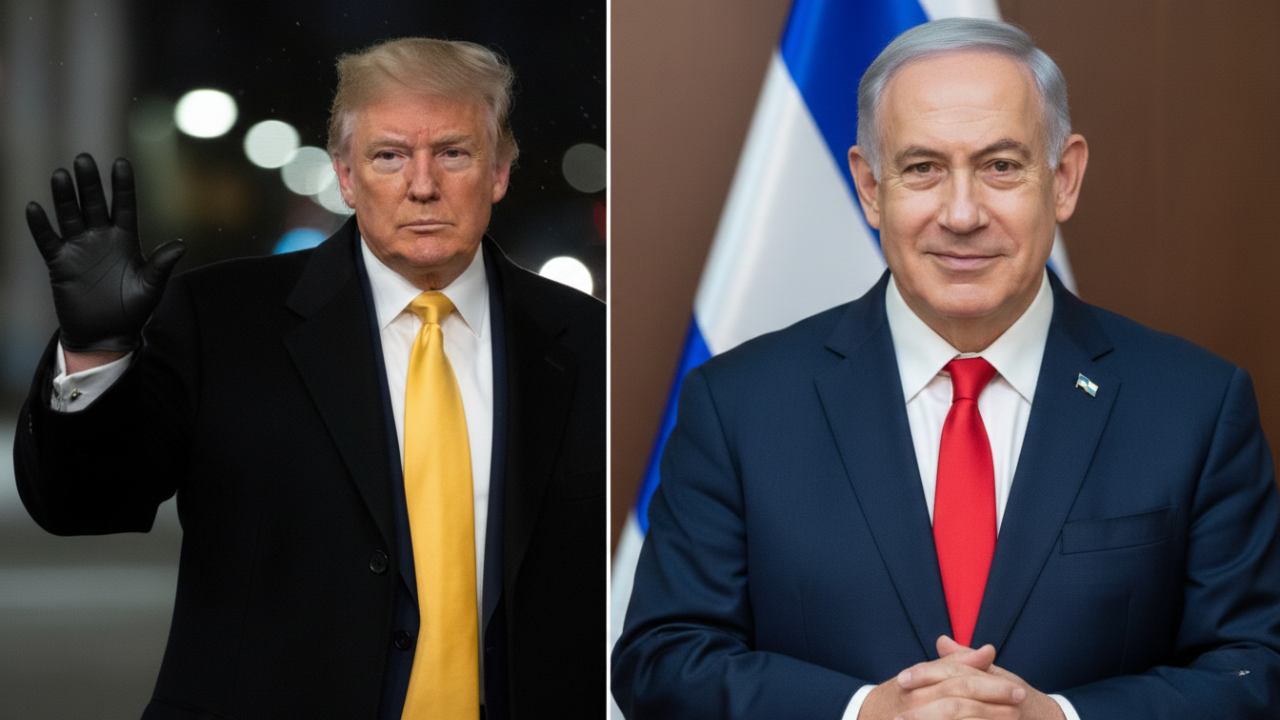
U.S. President Donald Trump has publicly opposed recent Israeli measures that move toward annexation of parts of the occupied West Bank.
What the president said
A White House official stated that President Trump “does not support Israel annexing the West Bank,” emphasizing that “a stable West Bank keeps Israel secure and is in line with this administration’s goal to achieve peace in the region.” In a subsequent interview, Trump personally reiterated, “I am against annexation,” adding that the United States has “enough things to think about now” and “don’t need to be dealing with the West Bank.
Context: Israeli measures in the West Bank
The statements came after the Israeli security cabinet approved steps that expand Israel’s administrative and legal grip over parts of the West Bank, including making it easier for Jewish Israelis to buy land and shifting building-permit authority for settlements in Hebron from Palestinian to Israeli control. These moves are widely described by critics as de facto annexation, and they have drawn condemnation from Muslim-majority states, the European Union, the United Kingdom, and the United Nations, which argue they violate international law and undermine prospects for a two-state solution.
How this fits U.S. policy
U.S. officials say the administration’s position is that the West Bank should not be annexed and that avoiding annexation has been a consistent policy line. Vice President JD Vance has similarly stressed that “the West Bank is not going to be annexed by Israel” and described annexation initiatives as provocative. At the same time, Washington’s response has so far been limited to diplomatic messaging and has stopped short of concrete punitive measures against Israel.
International reaction
Eight Muslim-majority countries, including Saudi Arabia, Qatar, Turkey, and the United Arab Emirates, issued a joint statement calling the Israeli steps “illegal” and a “dangerous escalation” aimed at entrenching unlawful sovereignty over Palestinian territory. The UN Secretary-General António Guterres and several European governments have also condemned the measures as destabilizing and incompatible with a two-state solution.








Leave a comment