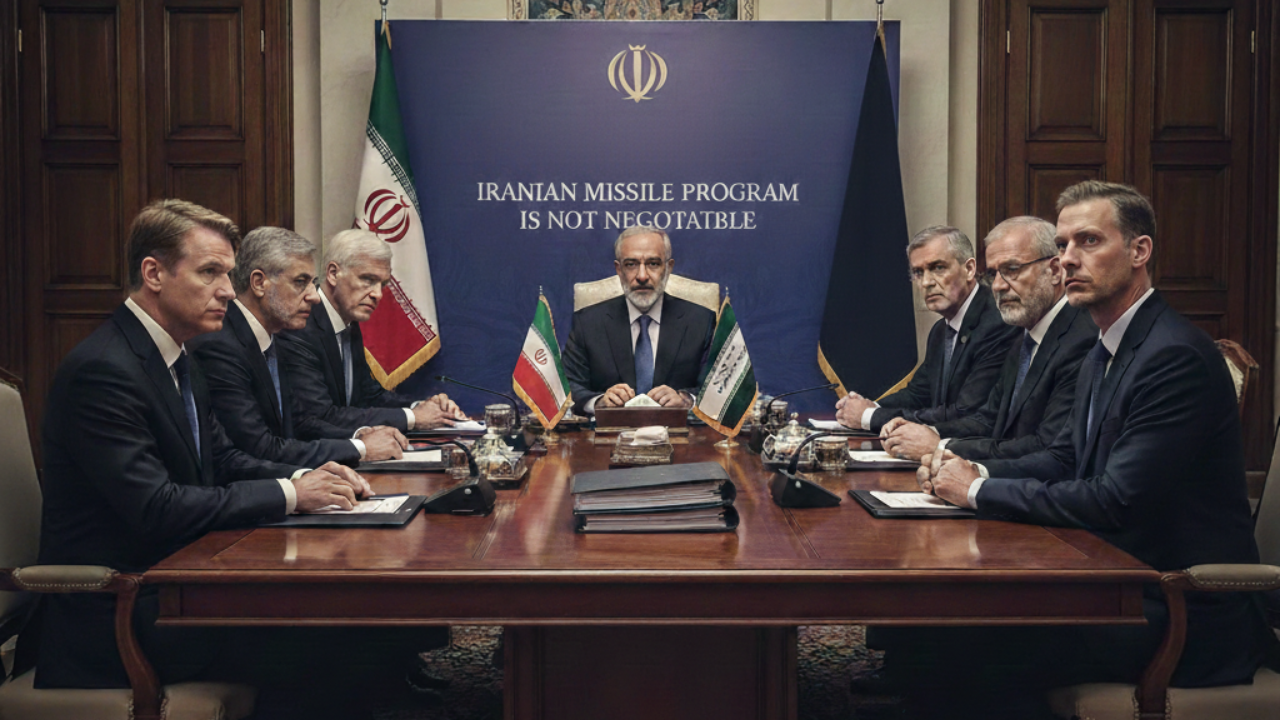
Iran has stated firmly that its missile program will not be part of negotiations in ongoing diplomatic discussions with the United States. The announcement comes amid renewed international attention on Tehran’s military capabilities and nuclear activities. Iranian officials emphasized that their missile development is purely defensive and essential for national security.
The statement follows indirect talks aimed at easing tensions between Iran and Western powers. While discussions have largely focused on Iran’s nuclear program and sanctions relief, Western governments have also expressed concerns over ballistic missile advancements. Tehran, however, maintains that missile defense falls outside the scope of nuclear negotiations.
Iranian leaders argue that given regional instability and past military threats, maintaining a strong defensive capability is critical. They point to ongoing conflicts in the Middle East and the presence of foreign military forces in the region as justification for strengthening deterrence.
The United States and several European countries have raised concerns that missile systems could potentially be used to deliver nuclear warheads if Iran were ever to pursue weaponization. Iran denies any intention to develop nuclear weapons, stating that its nuclear activities are for peaceful energy purposes.
Diplomatic analysts note that missile capabilities have long been a sticking point in negotiations. Past agreements focused primarily on nuclear enrichment levels and inspections, leaving missile development largely unaddressed. Expanding talks to include missile systems would significantly complicate negotiations.
Regional implications are considerable. Countries such as Israel and Gulf states closely monitor Iran’s missile advancements, viewing them as potential threats. Military analysts say that missile range and accuracy improvements have shifted regional strategic calculations.
Sanctions remain a key element in diplomatic discussions. Iran seeks relief from economic restrictions that have strained its economy, while Western governments aim to secure stronger guarantees regarding military programs.
Some experts believe separating nuclear and missile negotiations could help keep talks alive, while others argue that ignoring missile development risks future instability. Balancing these perspectives presents a major diplomatic challenge.
Public opinion within Iran also plays a role. National defense is often framed as a matter of sovereignty, and any perceived compromise could trigger domestic criticism. Iranian leaders therefore face both international and internal pressures.
The outcome of ongoing talks remains uncertain. Whether diplomacy leads to partial agreements or further stalemate will significantly influence regional stability. For now, Iran’s declaration underscores the complexities involved in negotiating security matters in a volatile geopolitical environment

International
 Waqar WashingtonFebruary 15, 20262 Mins read
Iran Declares Its Missile Program Non-Negotiable in Talks with the U.S.
Iran has stated firmly that its missile program will not be part of negotiations in ongoing diplomatic discussions with the United States.
Waqar WashingtonFebruary 15, 20262 Mins read
Share

Related Articles

International Waqar WashingtonFebruary 26, 2026
Space Force Halts Vulcan Rocket Launches After Solid Booster Anomaly
The U.S. Space Force has paused future Vulcan rocket launches after a...
Waqar WashingtonFebruary 26, 2026

International Waqar WashingtonFebruary 26, 2026
Rutgers Study Debunks Myth That Melting Glaciers Could Help Slow Climate Change
Rutgers University scientists have overturned a widely held theory that melting Antarctic...
Waqar WashingtonFebruary 26, 2026

International Waqar WashingtonFebruary 26, 2026
Hidden Architecture Inside Cellular Droplets: Scripps Research Uncovers New Drug Targets for Cancer and Neurodegenerative Diseases
Scripps Research scientists have uncovered a hidden internal structure inside cell “droplets,”...
Waqar WashingtonFebruary 26, 2026
International Waqar WashingtonFebruary 26, 2026
Oil holds near 7-month highs as US-Iran talks open in Geneva
Oil prices are trading near seven-month highs as traders closely watch the...
Waqar WashingtonFebruary 26, 2026



Leave a comment