

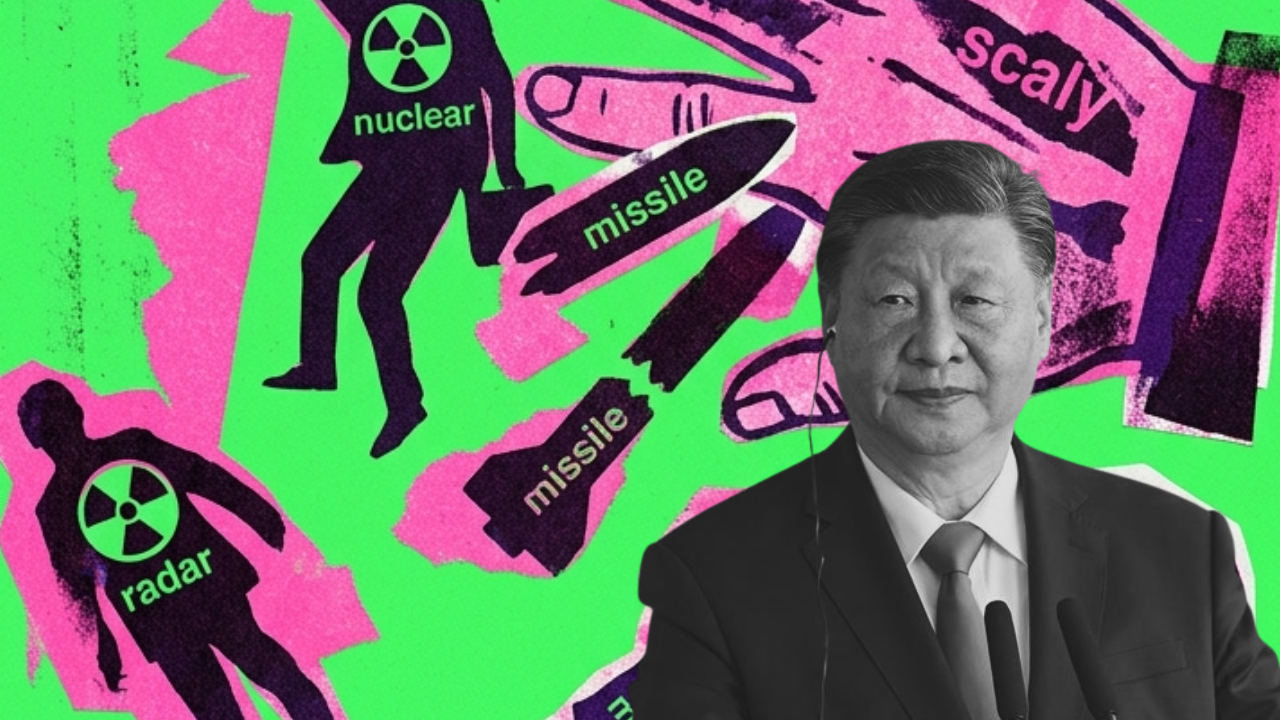
China has abruptly removed profiles of leading nuclear weapons, radar, and missile experts from its Chinese Academy of Engineering website, sparking speculation about a deepening anti-corruption purge under President Xi Jinping targeting the nation’s defense science elite. No official reasons have surfaced for the deletions, but the move aligns with recent high-profile investigations into military leaders and comes amid reports of performance issues in exported Chinese defense systems.
Disappearing profiles of key experts
The profiles of at least three prominent academicians vanished from the CAE site around March 14, 2026: former vice-president Zhao Xiangeng, a top nuclear weapons specialist; radar expert Wu Manqing, aged 60; and missile designer Wei Yiyin, 63. Zhao, in particular, played a pivotal role in advancing China’s nuclear technology under test ban constraints, including theoretical planning, reliability validation, and overcoming key technical hurdles, according to prior institute descriptions.
The Chinese Academy of Engineering, established in 1994, stands as China’s premier honorary body for engineering and tech sciences, advising the State Council on national priorities. Membership represents the highest accolade in these fields, making the sudden scrubbing a stark signal—especially since no explanations were provided, echoing opaque tactics in Beijing’s recent military shakeups.
Ties to Xi’s anti-corruption campaign
This incident follows a pattern of purges decimating China’s military and scientific upper ranks. Just two months prior, the defense ministry probed top Central Military Commission figures General Zhang Youxia and Liu Zhenli for alleged corruption and leaks. Earlier in February 2026, other defense-linked experts like nuclear figure Liu Cangli, former China Academy of Engineering Physics head Luo Qi, and aviation executive Zhou Xinmin were expelled from the National People’s Congress.
Experts view these moves as Xi consolidating control over strategic sectors, where graft, disloyalty, or technical shortfalls could undermine national security goals like military modernization by 2035. Some reports link the latest deletions to failures in Chinese-made systems deployed abroad, including radar and missiles in Pakistan, Iran, and Venezuela, raising questions about quality control and accountability in export deals.
- Key affected experts: Zhao Xiangeng (nuclear), Wu Manqing (radar), Wei Yiyin (missiles).
- Recent parallels: Generals Zhang Youxia, Liu Zhenli under probe.
Implications for China’s defense tech
The purge risks disrupting ongoing programs in hypersonic missiles, advanced radars for stealth detection, and next-generation nuclear deterrents—areas where these experts held sway. Beijing’s opacity fuels international concerns, as Western analysts track whether purges signal internal weaknesses or a ruthless efficiency drive ahead of Taiwan contingencies or South China Sea tensions.
For Pakistan, a close ally receiving Chinese military hardware, the developments hit close: reports tie removals to underperformance of HQ-9 missile systems and ZDK-03 AWACS radars in recent exercises and conflicts. Similar glitches have surfaced with Iranian and Venezuelan acquisitions, prompting quiet reviews in client states.
Global reactions and speculation
Western media and think tanks highlight the irony: as China pushes “dual circulation” self-reliance, elite purges could slow innovation in critical domains. No state media commentary has emerged, but online chatter in China speculates on corruption probes or political unreliability.
The US and allies may see opportunity, ramping intelligence on exposed Chinese vulnerabilities. For deeper analysis on China’s military purges and tech ecosystem, the Center for Strategic and International Studies offers detailed trackers.
In South Asia, where Chinese exports dominate arms markets, buyers like Pakistan face pressure to audit systems amid these revelations. Another resource for monitoring PLA changes is the Federation of American Scientists’ nuclear reports.
Ultimately, the CAE deletions underscore Xi’s zero-tolerance approach, but at potential cost to Beijing’s edge in the global arms race. As profiles stay offline with no reinstatement signals, the defense science community braces for more fallout.







Leave a comment