

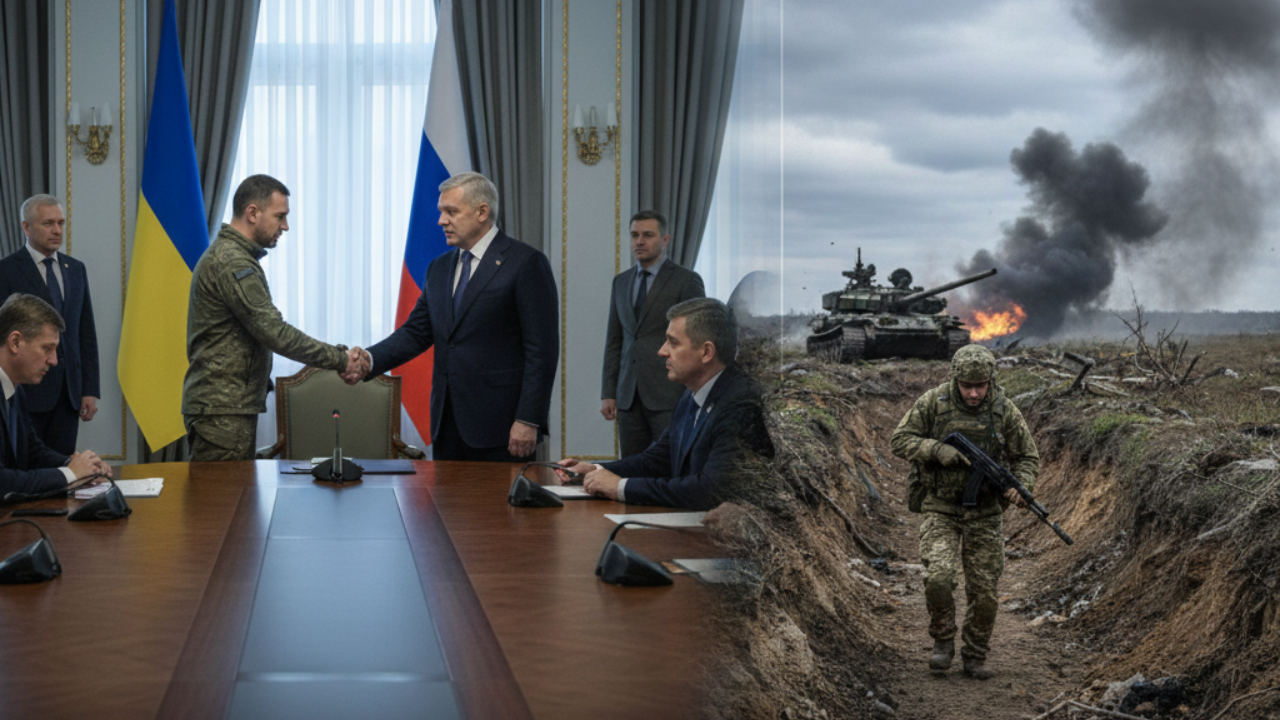
Two days of peace negotiations between Ukraine and Russia in Geneva have ended without a breakthrough, underscoring how distant a comprehensive settlement remains even as diplomatic efforts continue alongside the ongoing war.
Talks end without major progress
The latest round of U.S.-mediated peace talks brought Ukrainian and Russian delegations together for two days in Geneva, but concluded on Wednesday with no agreement on core political issues or a ceasefire framework. Ukrainian President Volodymyr Zelenskyy described the discussions as “difficult” and “challenging,” stressing that while some technical and military matters saw movement, fundamental political gaps—especially over territory—remain unresolved. Russian negotiators similarly called the talks “difficult but professional,” signaling that Moscow is not yet ready to soften its demands.
Core sticking point: territory and security
Territorial control in eastern Ukraine and the status of the current front lines remain the central obstacles to any peace deal. Moscow continues to press for recognition of its control over the entire Donbas region, including Donetsk and Luhansk, a condition Kyiv has repeatedly rejected as unacceptable. Zelenskyy has indicated that Ukraine could consider a ceasefire based on existing contact lines, but only as a starting point for future negotiations, not as recognition of Russian annexations. Security guarantees, Ukraine’s long-term relationship with NATO, and limits on Ukraine’s armed forces also remain highly contentious issues.
Military track sees limited, technical gains
Despite the lack of a political breakthrough, negotiators reported modest progress on military and technical issues. Ukrainian officials said talks touched on front-line stabilization, ceasefire monitoring mechanisms, and potential parameters for future prisoner-of-war exchanges, building on earlier U.S.-facilitated contacts in Abu Dhabi. However, these steps are still at a preliminary stage, with many details left for “additional coordination” in subsequent rounds.
War continues to shape the talks
The Geneva meetings unfolded against the backdrop of continuing fighting across the front, with both sides trying to improve their battlefield positions even while their diplomats met. Kyiv currently lacks the capacity for large-scale offensive operations and is focusing on inflicting heavy losses to make Russia’s war effort increasingly unsustainable, a strategy Ukrainian officials hope will eventually push Moscow toward more serious compromise. Russia, meanwhile, points to incremental gains on the ground to argue that time is on its side and that it can hold out for favorable terms.
U.S. role and international pressure
The United States, under President Donald Trump, has positioned itself as chief mediator, with Special Envoy Steve Witkoff and adviser Jared Kushner leading the U.S. team in Geneva. Washington has spoken of “meaningful progress” and insists all sides have agreed to keep pursuing a peace agreement, even if the latest round fell short of expectations. At the same time, Zelenskyy has warned that Kyiv is feeling growing pressure from its partners to accept painful compromises, urging Western governments to apply more pressure on Moscow rather than on Ukraine. For deeper background on the diplomatic framework and Western debates, readers can explore analysis from institutions such as Chatham House and policy hubs like the Atlantic Council.
What happens next?
Both delegations signaled that talks will resume, possibly later this month, though no exact date or format has been publicly confirmed. Ukrainian officials say they expect further discussions on military arrangements and prisoner exchanges, but admit that no progress has been made on the land question, which is crucial for any durable ceasefire. With the fourth anniversary of Russia’s full-scale invasion approaching and neither side close to achieving its maximal goals, diplomats and analysts expect a prolonged process of incremental, U.S.-brokered negotiations rather than a sudden breakthrough.
As the war grinds on and the humanitarian and economic costs climb, international attention is likely to remain focused on whether continued pressure, sanctions, and battlefield dynamics can eventually narrow the gap between Kyiv and Moscow’s positions. For continuing updates and in-depth coverage, readers can follow reputable outlets such as BBC News and Reuters, which are closely tracking each round of talks and developments on the front lines.





Leave a comment