

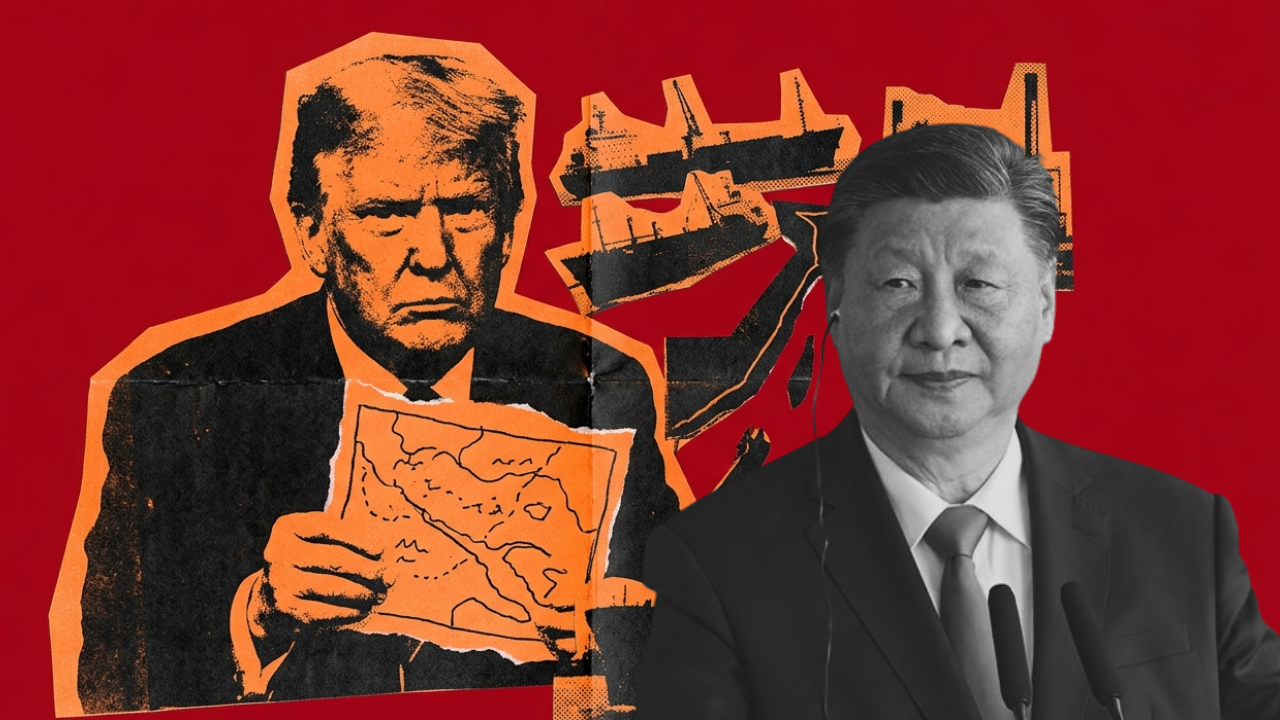
US President Donald Trump has branded Iran an “evil empire” and insisted that stopping Tehran’s nuclear ambitions matters far more than the recent surge in global oil prices, sharpening both his rhetoric and his broader strategic message amid an intensifying war.
Trump’s ‘evil empire’ remark and core message
In a new post on his Truth Social platform, Trump said the United States will not allow Iran to obtain nuclear weapons, warning that a nuclear‑armed Tehran could “destroy the Middle East and, indeed, the World.” He described Iran as an “evil Empire,” framing the ongoing US‑Israeli campaign against Iranian military and nuclear sites as a fight not just over regional influence or energy routes but over global security.
Trump stressed that his “far greater” priority as president is stopping Iran’s nuclear program, even as the conflict has triggered volatile swings in crude prices and raised fears of wider escalation across the Middle East. He vowed he will “never” allow Iran to cross the nuclear threshold, doubling down on a hard‑line approach that has already included coordinated strikes on Iranian nuclear and missile facilities under “Operation Epic Fury.”
Downplaying oil price shock
Despite days of dramatic moves in global energy markets, Trump publicly downplayed the risks of higher fuel costs, arguing that the US actually benefits from elevated oil prices because it is now the world’s largest producer. He noted that when crude prices rise, American producers “make a lot of money,” presenting the current spike as a manageable side effect rather than a crisis for US consumers.
Oil benchmarks have been highly sensitive to the war. Prices briefly surged close to 120 dollars a barrel as traders braced for supply disruptions from the Persian Gulf, one of the world’s most critical shipping lanes, before later pulling back as the White House signaled confidence it could secure flows. Analysts warn that any prolonged disruption through the Strait of Hormuz, where roughly a fifth of global oil supply passes, would carry major consequences for inflation, currencies and growth worldwide. For a wider look at how Middle East shocks hit commodities, the International Energy Agency’s oil market reports offer deeper data and scenarios.
War with Iran and regional stakes
Trump’s comments come as US and Israeli forces continue intensive strikes on Iranian targets, having already hit key nuclear and missile facilities along with infrastructure sites such as the Shahran oil depot near Tehran. The president has described the campaign as “very complete,” claiming that Iran’s military capability has been severely degraded and hinting that Washington could even move to control the Strait of Hormuz if necessary.
Iranian officials, for their part, have threatened to push oil toward 200 dollars a barrel if Washington and its allies further destabilize the region or interfere with shipping, warning that energy markets will “pay the price” for Western military action. This standoff raises the risk of miscalculation, with any attack on tankers or export terminals likely to trigger instant price spikes and fresh calls for emergency releases from strategic reserves. Readers can track real‑time coverage of the conflict and market reaction via Reuters’ Middle East and energy pages.
Domestic politics and global reaction
At home, Trump’s framing seeks to reassure Americans that he has “a plan for everything,” including tools such as tapping strategic oil reserves if necessary, even as many households brace for higher fuel and transport costs. His allies argue that projecting strength against Iran deters wider conflict and ultimately stabilizes markets, while critics warn that aggressive military escalation around Hormuz could backfire and lock in structurally higher energy prices.
Internationally, the “evil empire” label underscores a return to stark, Cold War‑style rhetoric that leaves little room for diplomatic off‑ramps, alarming European governments that still back negotiated limits on Iran’s program. With crude markets on edge and tensions high across the region, the balance between Trump’s security‑first message and the global economy’s dependence on stable oil flows is likely to remain at the center of debate in the weeks ahead. For context on past US‑Iran flashpoints and their economic fallout, readers can consult historical briefs from the Council on Foreign Relations.




Leave a comment