

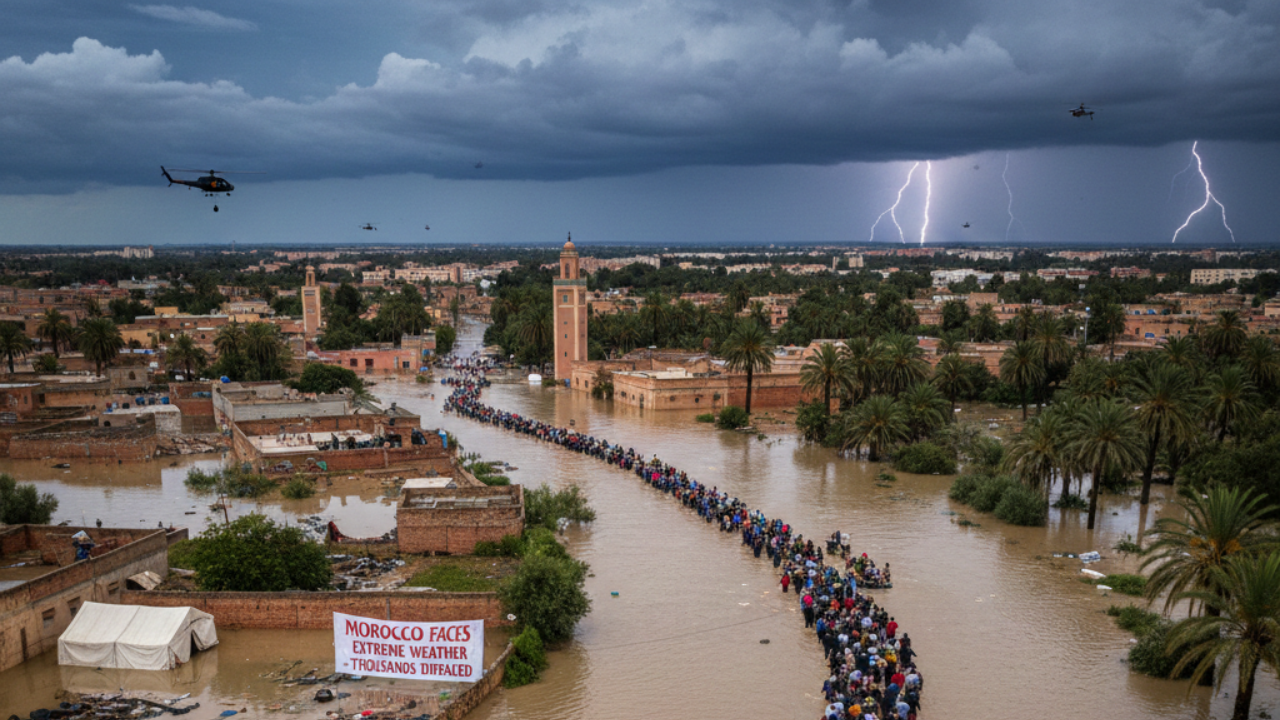
Severe flooding across parts of Morocco has forced thousands of people to leave their homes, as heavy rainfall caused rivers to overflow and damaged roads, homes, and farmland. The floods, which hit several regions in early 2026, are among the worst the country has experienced in recent years and have raised fresh concerns about climate-related disasters in North Africa.
According to Moroccan authorities, unusually intense rainfall over a short period led to flash floods in both urban and rural areas. Entire neighborhoods were submerged, vehicles were swept away, and key transport routes were cut off, making rescue and relief efforts more difficult. Emergency services were deployed quickly to evacuate residents trapped by rising water levels.
Officials said the hardest-hit areas included parts of central and southern Morocco, where infrastructure is less prepared for extreme weather events. In some towns, electricity and water supplies were temporarily disrupted, while schools and public buildings were closed as a precaution. Local authorities worked with civil defense teams to provide temporary shelter and basic supplies to displaced families.
The floods also caused serious damage to agriculture, which is a vital source of income for many rural communities. Farmland was flooded, crops were destroyed, and livestock losses were reported. Farmers expressed concern that the damage could affect food supplies and livelihoods in the coming months, especially as many regions were already dealing with economic pressure.
Morocco’s government described the situation as a national emergency in affected areas and pledged support for recovery efforts. Officials said financial assistance would be provided to families who lost their homes, and assessments were underway to estimate the full cost of the damage. Authorities also emphasized the need to repair infrastructure quickly to restore normal life.
Climate experts say the floods are part of a wider pattern of increasingly extreme weather linked to climate change. North Africa has experienced more frequent droughts, heatwaves, and sudden heavy rainfall in recent years. Scientists warn that while rainfall may decrease overall in some regions, storms are becoming more intense, increasing the risk of flash flooding.
Humanitarian organizations have called for stronger disaster preparedness and long-term planning. They stress that early warning systems, improved drainage, and better urban planning can reduce the impact of floods. Aid groups also highlighted the importance of supporting vulnerable communities.








Leave a comment