

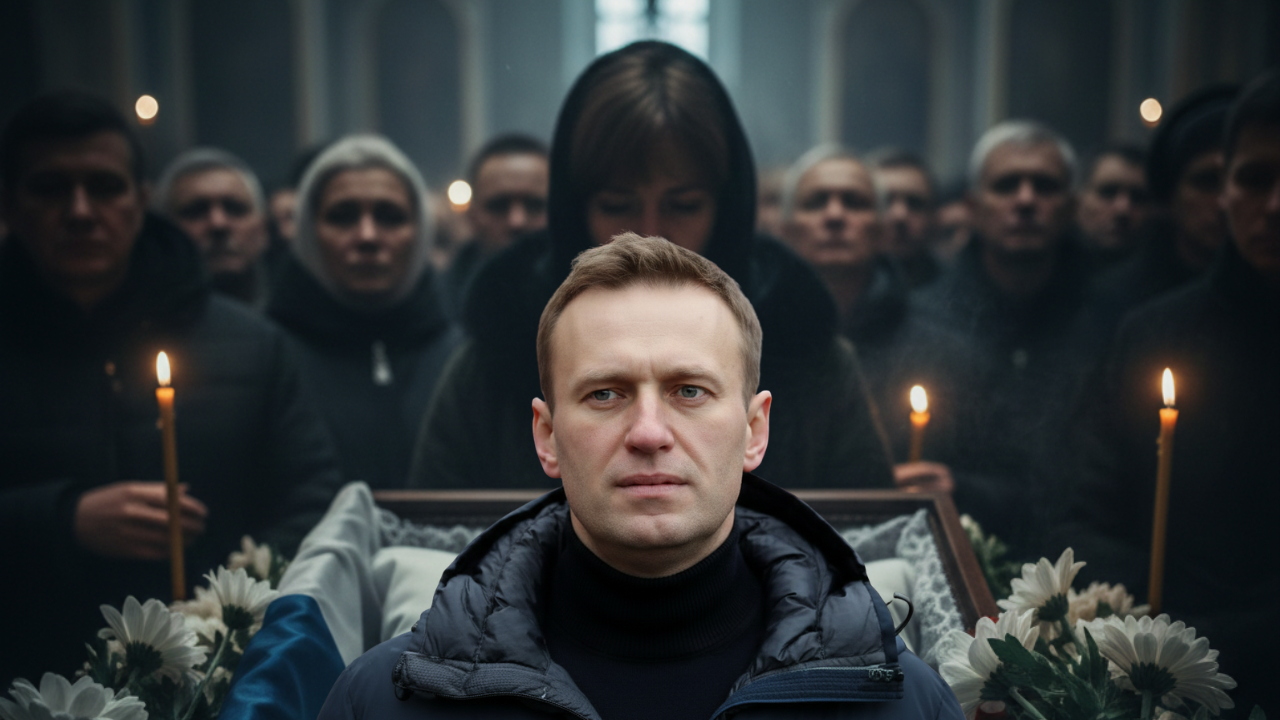
Russian opposition leader Alexei Navalny has reportedly died from suspected poisoning, reigniting global outrage over the Kremlin’s treatment of political opponents and raising fresh questions about Russia’s alleged use of banned chemical agents.
Navalny’s Death and New Poisoning Allegations
Navalny, one of President Vladimir Putin’s most prominent critics, died in a remote Arctic penal colony on February 16, 2024, where he was serving a 19‑year sentence on widely condemned extremism charges. At the time, Russian prison authorities claimed he “felt unwell after a walk,” collapsed, and could not be resuscitated, insisting his death was from natural causes. Two years later, however, a coalition of Western governments now says new forensic analysis points to poisoning as the likely cause.
Officials from the United Kingdom, France, Germany, Sweden, and the Netherlands say laboratory tests on samples taken from Navalny’s remains have “definitively confirmed” the presence of epibatidine, a highly potent toxin originally derived from the skin of South American poison dart frogs. They argue that this substance does not occur naturally in Russia and would require sophisticated capabilities to deploy, strongly suggesting a state‑level operation.
Western Governments Blame the Kremlin
In coordinated statements, European allies have directly accused the Russian state of orchestrating Navalny’s poisoning while he was behind bars. The UK Foreign Office said Russia had the “means, motive and opportunity” to administer the toxin in a high‑security penal colony north of the Arctic Circle, describing the killing as a “flagrant violation” of the Chemical Weapons Convention. France and other European partners similarly concluded that given epibatidine’s extreme toxicity and the reported symptoms before Navalny’s collapse, poisoning was “highly likely” to have caused his death.
British Foreign Secretary Yvette Cooper called the incident a “barbaric plot to silence” a leading opposition voice, arguing that the choice of an exotic toxin underscores the Kremlin’s fear of dissent. European leaders say they will raise the case at the Organisation for the Prohibition of Chemical Weapons (OPCW) and push for further sanctions and accountability measures targeting Russian officials linked to political repression. For readers seeking detailed context on chemical weapons norms and enforcement, the OPCW’s official website and research platforms like the Arms Control Association offer in‑depth briefing materials (external resource suggestion).
Moscow Denies Responsibility
The Kremlin has forcefully rejected the allegations, dismissing them as part of an “information campaign” by hostile Western governments. Russian Foreign Ministry spokesperson Maria Zakharova has said claims that Navalny was killed with a dart‑frog‑derived toxin are “propaganda” and insists that any international investigation would be politically motivated. Moscow continues to maintain that Navalny died of natural causes and has refused to open a new criminal case based on the latest forensic findings.
Russian officials also point to previous Western accusations—such as the 2020 Novichok poisoning that nearly killed Navalny on a flight from Tomsk—as examples of what they call unfounded attempts to discredit Russia on the world stage. Independent investigative outlets and rights groups, however, note that earlier probes linked Russian security services to that earlier attack, strengthening suspicions of state involvement in the latest alleged poisoning. Organizations such as Human Rights Watch and Amnesty International continue to track patterns of suspicious deaths and attacks against Kremlin critics (external resource suggestion).
Legacy of a Relentless Kremlin Critic
Navalny rose to prominence as an anti‑corruption crusader, using social media and high‑profile investigations to expose alleged graft among senior officials and state‑linked oligarchs. He organized large‑scale protests across Russia, challenged the ruling party in elections, and became the most recognizable face of the fragmented opposition movement. After surviving the Novichok poisoning in 2020 and receiving treatment in Germany, he chose to return to Russia in 2021, fully aware that he faced likely arrest.
In public statements and interviews before his imprisonment, Navalny frequently acknowledged the personal risk but insisted he would not abandon his fight for a more democratic Russia. Following his death, his widow, Yulia Navalnaya, vowed to continue his work, repeatedly asserting that her husband was murdered and calling for those responsible—including President Putin—to be held accountable. Her appeals have resonated at international forums such as the Munich Security Conference, where leaders and activists have framed Navalny’s case as emblematic of the dangers faced by dissidents in authoritarian states.
International Pressure and What Comes Next
The new poisoning findings have intensified calls in Europe and North America for tougher sanctions on Russian officials, intelligence agencies, and entities tied to chemical weapons programs. Lawmakers in several countries are pushing for targeted measures against individuals believed to be involved in planning or covering up the killing, as well as broader efforts to support Russian civil society and independent media in exile.
Analysts warn that while additional sanctions may increase diplomatic pressure, they are unlikely to lead to cooperation from Moscow or a transparent domestic investigation. Still, Western governments say formally attributing Navalny’s death to a banned toxin and documenting the case at institutions like the OPCW is essential for building a record that could support future legal or diplomatic action. For more detailed analysis of the case and its geopolitical implications, readers can consult ongoing coverage and expert commentary from outlets such as BBC News, Al Jazeera, and NPR, which provide timelines, interviews, and background dossiers on Navalny and the Russian opposition (external resource suggestion).




Leave a comment