

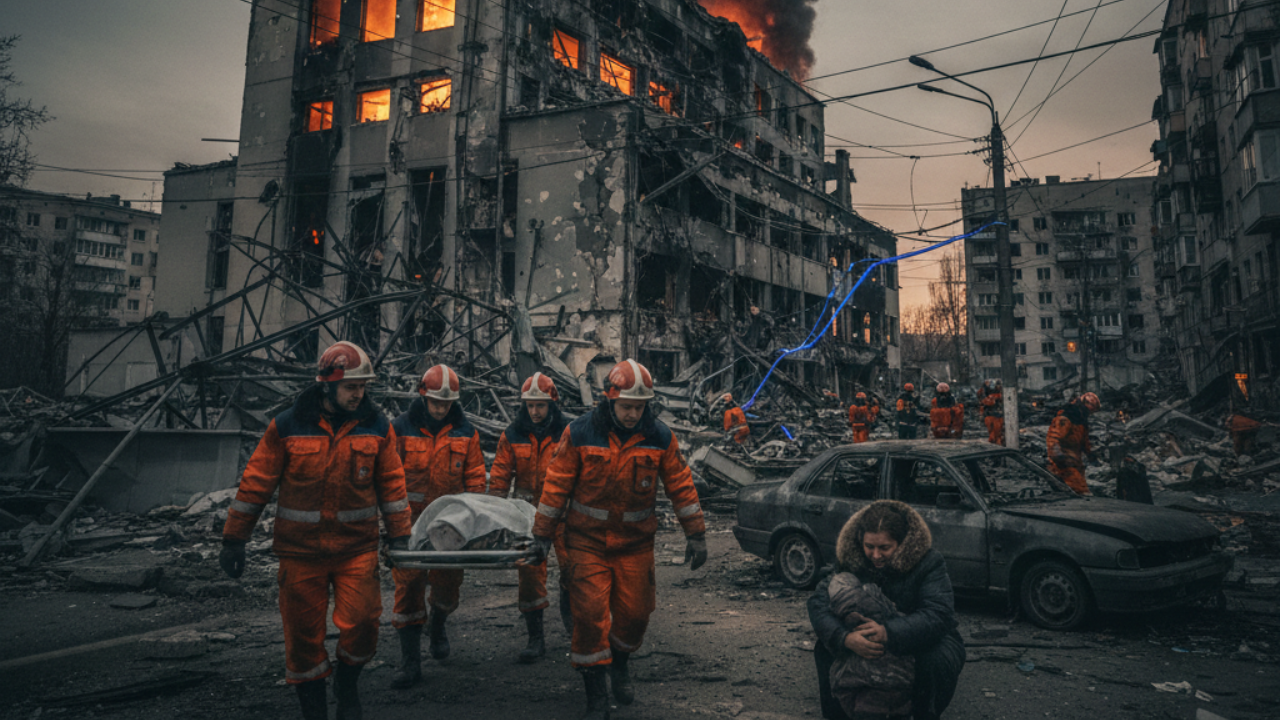
Russian drone strikes have intensified in parts of Ukraine, causing civilian casualties and significant damage to critical infrastructure. Authorities report that several regions experienced power outages following attacks on energy facilities, further straining the country’s already burdened grid system.
The strikes form part of ongoing military operations that have targeted both strategic and civilian sites. Ukrainian officials condemned the attacks, stating that energy infrastructure has become a repeated focus in recent months. Repair crews have been working around the clock to restore electricity in affected areas. Drone warfare has increasingly shaped the conflict. Compared to traditional missiles, drones can be deployed in large numbers and may evade some defense systems. Both sides have invested heavily in aerial technologies, making air defense a central battlefield priority.
Civilian impact remains severe. Residential buildings have reportedly suffered damage, and emergency services continue rescue operations in impacted neighborhoods. Humanitarian organizations warn that repeated energy disruptions could exacerbate winter hardships for vulnerable populations. International reactions have been swift. Western governments reiterated support for Ukraine, pledging additional defense equipment and humanitarian aid. Meanwhile, diplomatic efforts aimed at de-escalation remain limited.
Energy security has become one of the war’s defining dimensions. Targeting power facilities not only disrupts daily life but also affects industrial output and healthcare services. Hospitals and water systems depend heavily on stable electricity supplies. Military analysts note that infrastructure attacks aim to weaken morale and economic resilience. However, Ukrainian officials argue that such tactics have instead strengthened national solidarity. Reconstruction costs continue to mount as infrastructure is repeatedly repaired and damaged again. International financial institutions have estimated that long-term rebuilding will require extensive global cooperation.
As the conflict persists, civilian protection remains a key concern for humanitarian agencies. Calls for expanded air defense systems reflect the urgent need to shield urban centers from further attacks.
The situation underscores the broader consequences of modern warfare, where technology enables rapid and repeated strikes. The humanitarian toll highlights the ongoing urgency of diplomatic solutions.








Leave a comment