

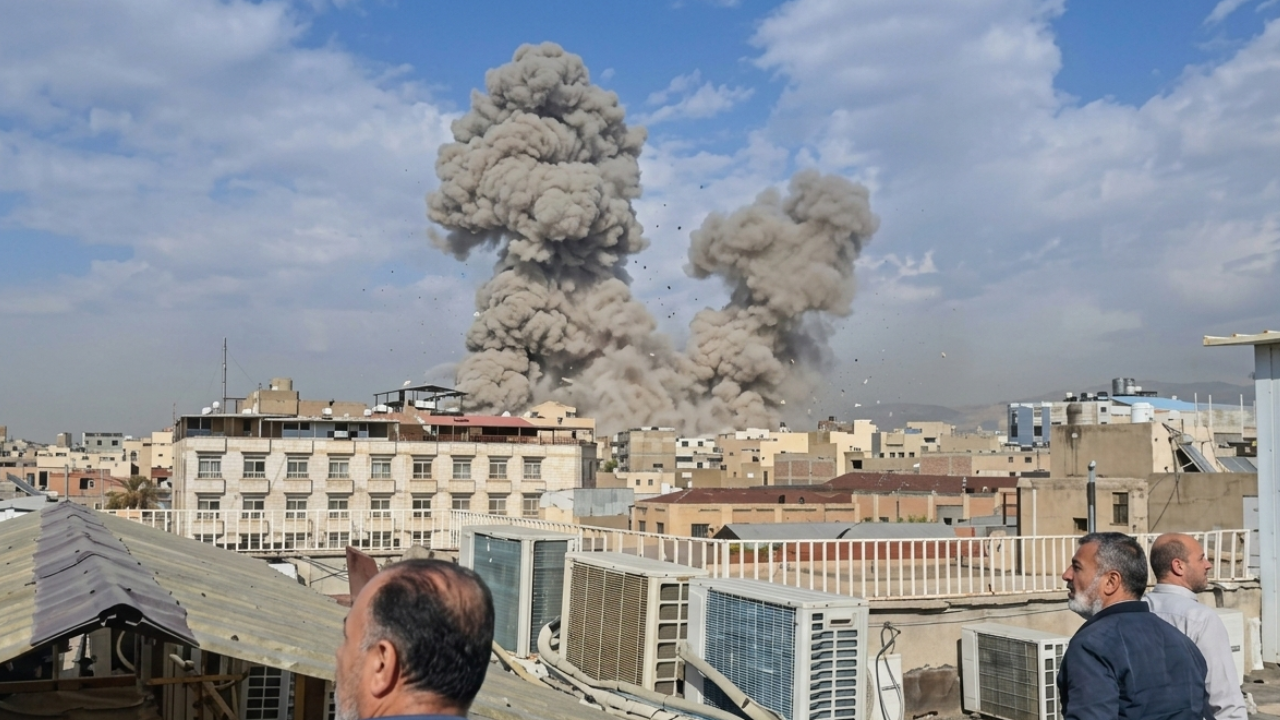
Qatar has intercepted three successive waves of Iranian‑launched missiles targeting key areas in the country, including the strategically vital Al Udeid Air Base, prompting authorities to temporarily close its airspace and place the Gulf state on high alert. The dramatic escalation comes amid a broader regional flare‑up triggered by recent U.S. and Israeli strikes on Iranian facilities, heightening fears of a wider conflict across the Middle East.
How the missile attacks unfolded
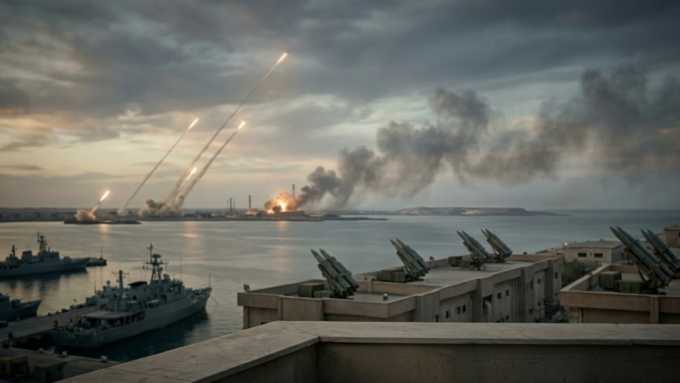
Qatar’s Ministry of Defence confirmed that its air‑defense systems intercepted the first, second, and third waves of incoming Iranian missiles, ensuring that no projectiles entered Qatari territory or reached sensitive installations. The Defense Ministry said the threat was detected early and dealt with according to pre‑approved operational plans, crediting “high readiness, constant vigilance, and coordinated efforts between the relevant authorities” for the successful interception.
Reports indicate that the missiles were aimed in the direction of U.S. military assets, including Al Udeid Air Base near Doha, which hosts thousands of American troops and serves as a central hub for U.S. air operations in the region. Despite the scale of the Iranian barrage, Qatari officials emphasized that there were no civilian casualties or confirmed damage on the ground, a point that has been echoed by several regional news outlets covering the incident.
Qatar shuts airspace and urges calm
In response to the missile exchanges, Qatar has taken the step of temporarily closing its airspace to prevent further risk to commercial flights and civilian traffic. Local and international airlines have been forced to reroute or delay services, with major aviation authorities across the Gulf and wider Middle East monitoring the situation closely.
The Ministry of Defence and civil‑protection bodies have urged citizens and residents to remain indoors, avoid non‑essential travel, and follow official communications until the security situation stabilizes. Social‑media footage circulating online shows missile trails and brief flashes in the sky over Doha, underscoring the tension felt across the capital as air‑defence systems engage the inbound threats.
Wider regional context
Qatar’s missile interceptions are part of a broader pattern of Iranian retaliation against U.S. and Israeli military actions in the region. Several Gulf states hosting U.S. bases—including Bahrain, Kuwait, the United Arab Emirates, and Jordan—also reported intercepting Iranian‑launched missiles or drones, signaling that Tehran has taken aim at multiple strategic points in the area.
Iran’s Revolutionary Guards have claimed responsibility for “powerful blows” against occupied territories and U.S. bases, vowing to continue the campaign until adversaries are “decisively defeated.” In contrast, U.S. and allied officials have described the strikes as a calibrated response to Iranian aggression, while stressing that they remain focused on de‑escalation and regional stability.
Key implications for security and travel
- Regional security: The repeated missile barrages against Gulf states underline how deeply the Middle East remains vulnerable to long‑range missile and drone attacks, even as advanced air‑defense systems are now routinely deployed.
- Military posture: Qatar’s ability to intercept three waves of missiles reinforces the role of U.S. and allied air‑defense assets at Al Udeid and other regional installations, which are likely to see increased activity in the coming days.
- Travel and trade: The temporary closure of Qatari airspace could ripple into global supply chains and passenger‑travel routes, especially for flights connecting Asia, Europe, and North America via the Gulf.
Analysts and security experts warn that the risk of miscalculation remains high, as both sides exchange missile fire without a clear off‑ramp from the escalating cycle. For travelers and businesses, the episode underscores the need to monitor official advisories from aviation authorities and foreign‑ministry travel alerts, which are being updated in real time as the situation evolves.
What happens next?
Qatari officials have reiterated that the country’s security situation remains under control and that the armed forces are fully capable of defending national territory against external threats. At the same time, regional and international actors are calling for restraint and a return to dialogue, arguing that unchecked military escalation could spiral into broader conflict with far‑reaching humanitarian and economic consequences.
For the latest verified updates, readers can refer to live‑coverage pages from major outlets such as Al Jazeera’s Middle East conflict live blog and Gulf News’s war‑coverage section, which are tracking each wave of missiles and governmental responses in real time.





Leave a comment