

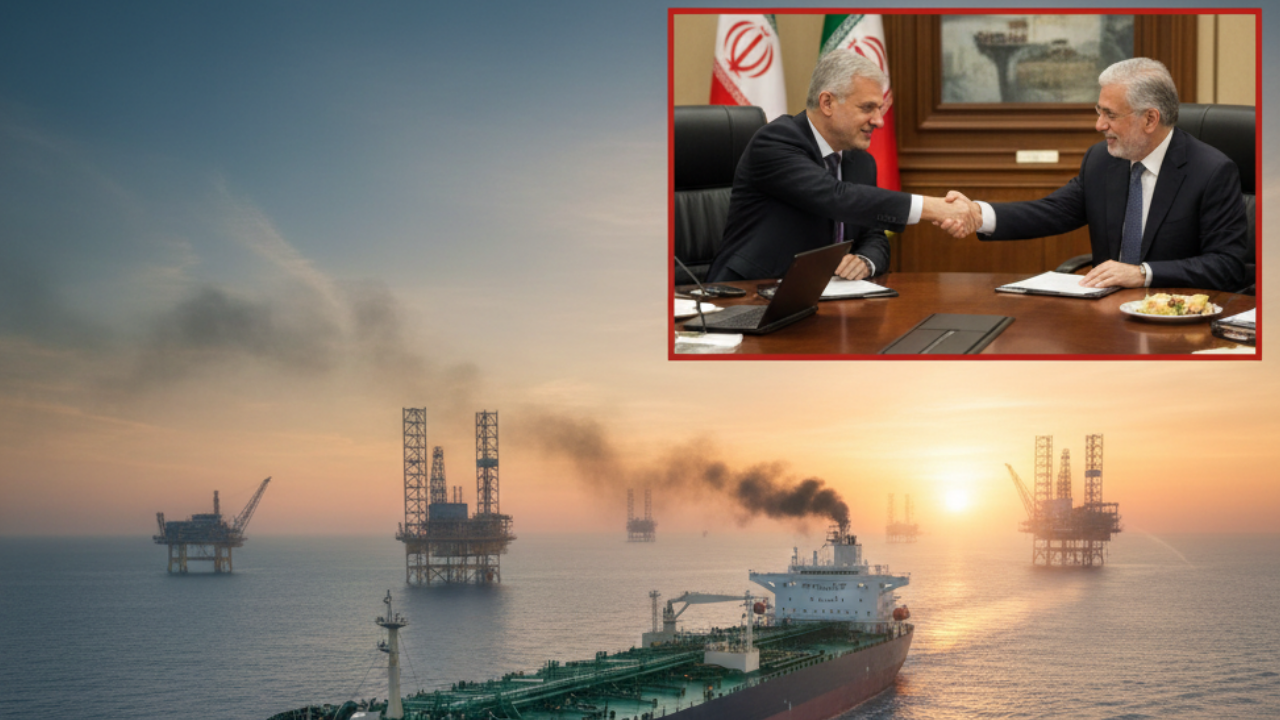
Oil near seven-month highs
Benchmark crude futures are holding just below levels last seen in late July and early August, underpinned by a persistent geopolitical risk premium tied to tensions between Washington and Tehran. Brent crude has been trading around the low 71 dollar range per barrel after recently touching its highest level since July 31, while US benchmark WTI has hovered in the mid-60s, marking its strongest levels since early August. Both contracts have largely consolidated these gains, suggesting traders are reluctant to sell aggressively ahead of clarity from the Geneva negotiations.money.
This firmness comes despite signs that the physical market may be loosening, highlighting how geopolitics rather than pure supply–demand fundamentals are setting the tone for prices in the near term.
Geneva talks put geopolitics in focus
The latest round of US–Iran nuclear talks is opening in Geneva, with envoys Steve Witkoff and Jared Kushner expected to meet an Iranian delegation for a third set of discussions aimed at curbing Tehran’s nuclear and missile programs. Oman has played a mediating role in arranging these indirect talks, which come against the backdrop of a substantial US military buildup in the wider Middle East. Iranian Foreign Minister Abbas Araqchi has signaled that a deal is “within reach” if diplomacy remains the priority, but it is still unclear whether Iran will accept Washington’s “zero enrichment” red line.
President Donald Trump has warned that failure to reach an agreement could result in “very bad consequences” for Iran, underscoring the stakes for both regional security and global energy markets. Analysts note that the talks are occurring amid reports of Iran exploring advanced anti-ship capabilities with China, a development that could raise the threat level for US naval forces and key shipping routes if tensions boil over.
Supply risks and Strait of Hormuz concerns
Investors are acutely focused on the risk that a breakdown in Geneva could lead to military confrontation, potentially disrupting oil flows from Iran, a major OPEC producer, and other exporters in the Gulf. Any conflict that threatens the Strait of Hormuz—a chokepoint through which a significant share of global seaborne crude passes—could trigger a sharp, sentiment-driven spike in prices as traders price in worst-case scenarios for supply. ING analysts estimate that as much as a 10 dollar per barrel risk premium may already be embedded in prices, leaving the market highly sensitive to headlines out of Switzerland.
At the same time, some market strategists caution that a credible path to de-escalation or an eventual agreement would likely see that premium unwind, opening the door for prices to retrace lower from current highs. For readers seeking a deeper dive into how geopolitical tensions feed into oil pricing and hedging strategies, resources such as the International Energy Agency’s market reports and educational hubs like Investopedia’s oil market section can offer helpful context (for example,
Fundamentals: inventories vs demand
Interestingly, the move toward seven-month highs has come even as US inventory data sends mixed signals about underlying demand. Industry figures from the American Petroleum Institute show a large crude stock build of more than 11 million barrels in the latest week, suggesting that supply is currently running ahead of consumption. However, gasoline and distillate inventories fell, pointing to steady end-user demand for transport and heating fuels in key consuming regions.
Official weekly data from the US Energy Information Administration, due imminently, could provide a clearer picture of whether the recent price strength is being supported by tightening product markets or is primarily driven by geopolitical fears. Traders will also be watching for any signs of export shifts from other suppliers, such as renewed flows from Venezuela and changes in OPEC-plus output, which could affect balances later in the year.
Market outlook and trading implications
For now, most analysts expect elevated geopolitical tensions to keep a firm floor under prices as long as the Geneva talks remain fragile and the risk of miscalculation between the US and Iran persists. Technical analysis suggests that WTI has been consolidating around the mid-60 dollar area, with sellers leaning into resistance near recent highs and buyers stepping in on dips, while a clear break of this range could set the tone for the next leg, either toward 60 dollars on de-escalation or toward the 70s on renewed escalation.
Short-term market direction is likely to hinge on two key catalysts: headlines from the nuclear negotiations and the trajectory of US inventory data in the coming weeks. For investors and energy watchers, following trusted market sources such as Reuters’ commodities coverage or dedicated oil analysis platforms like OilPrice.com can help keep track of how each development in Geneva translates into shifts in crude benchmarks and risk sentiment.









Leave a comment