

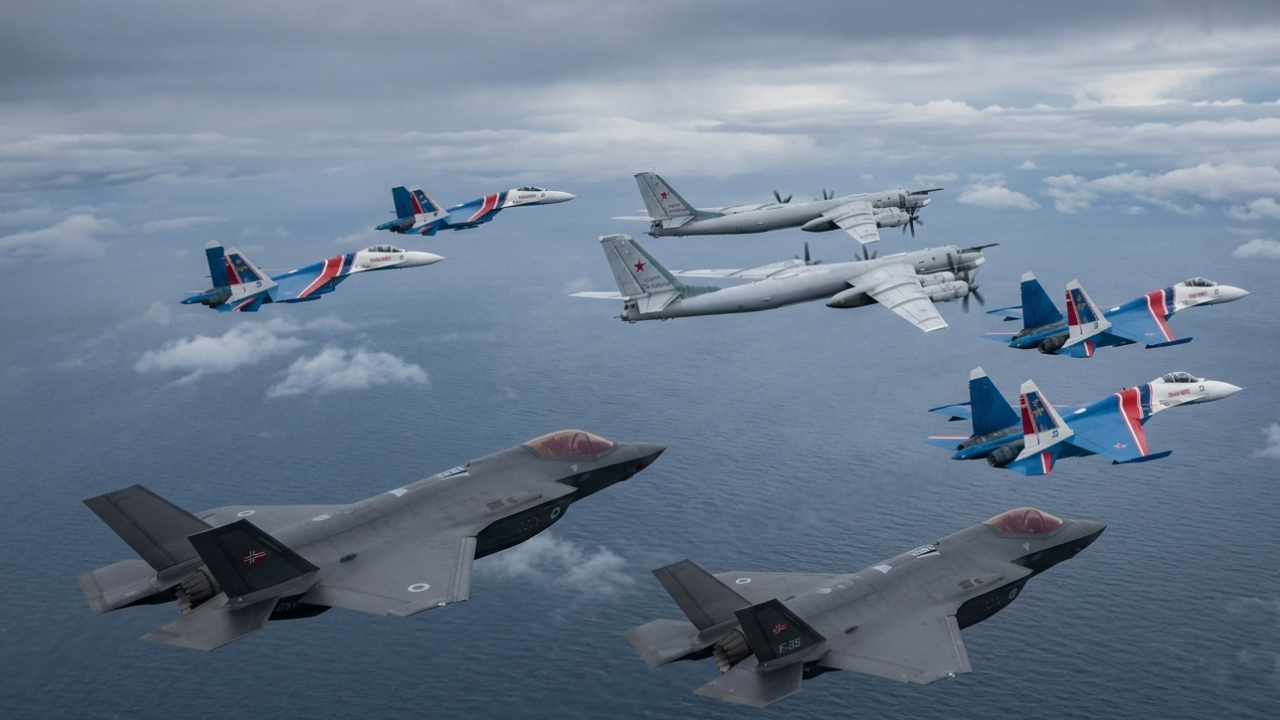
Norwegian F-35 fighters recently shadowed a formation of Russian Tu-95 strategic bombers protected by Su-35 jets from an aerobatic display team, highlighting ongoing tensions in the Arctic skies. This routine NATO air policing mission unfolded over international airspace in the Barents Sea on February 27, 2026, without any reported violations.
Incident Details
The Norwegian Armed Forces dispatched two F-35A Lightning II jets from Quick Reaction Alert duty to identify and monitor the Russian aircraft. The formation included two Tu-95 Bear-H bombers—capable of launching nuclear or conventional cruise missiles—and two Su-35 Flanker-M fighters. One Su-35 belonged to the elite “Russian Knights” aerobatic team, typically used for airshows, but this jet flew in a combat configuration armed with air-to-air missiles.
Official images released by Norway showed the F-35s maintaining a professional distance while tracking the group, ensuring no entry into NATO airspace. The entire operation lasted several hours, underscoring the vigilance required in this strategically vital region near Russia’s Kola Peninsula bases. Such intercepts have become commonplace, with Norway scrambling F-35s over 40 times in 2025 alone to monitor 53 Russian aircraft.
Strategic Context
The Barents Sea serves as a key corridor for Russian long-range aviation probing NATO’s northern flank, especially amid heightened geopolitical strains. Tu-95 bombers like these can strike targets across Europe or the Atlantic, making their escorted flights a clear signal of Moscow’s capabilities. Deploying an aerobatic team’s Su-35—often reserved for parades—suggests potential resource strains or a deliberate show of force in non-standard roles.
NATO’s enhanced presence in the High North, including the new Combined Air Operations Center in Bodø, enables rapid responses like this one. For more on NATO’s Arctic operations, see the Norwegian Armed Forces update. These missions deter incursions while gathering intelligence on Russian tactics and equipment.
Broader Implications
- Routine intercepts reinforce NATO unity and readiness without escalation.
- Russia’s use of display jets in escorts raises questions about operational flexibility.
- Arctic air policing prevents surprises in a melting ice cap opening new routes.
This event fits a pattern of increased Russian activity near Nordic borders, from the GIUK Gap to Alaska’s defenses, where U.S. jets recently tracked similar Tu-95s and Su-35s. Experts note that while flights comply with international rules, their frequency tests Allied response times and interoperability.
Norway’s F-35 fleet, with its stealth and sensor advantages, excels in these shadowing roles, outmatching older Russian platforms visually and electronically. The Norwegian Air Force emphasized the mission’s success in upholding regional stability. For visual details, check images from the Norwegian Armed Forces via Reddit.
Regional Security Outlook
As Arctic competition intensifies—with new shipping lanes and resources—incidents like this bomber intercept signal persistent friction. NATO allies, including the UK and U.S., share the burden through integrated air policing. No aggressive maneuvers occurred, but the presence of aerobatic escorts adds an unusual layer to Russia’s posturing. Key takeaways include the professionalism displayed by both sides and the critical role of advanced fighters like the F-35 in maintaining deterrence. With Russia sustaining these patrols despite sanctions and conflicts elsewhere, expect more such encounters in 2026.








Leave a comment