

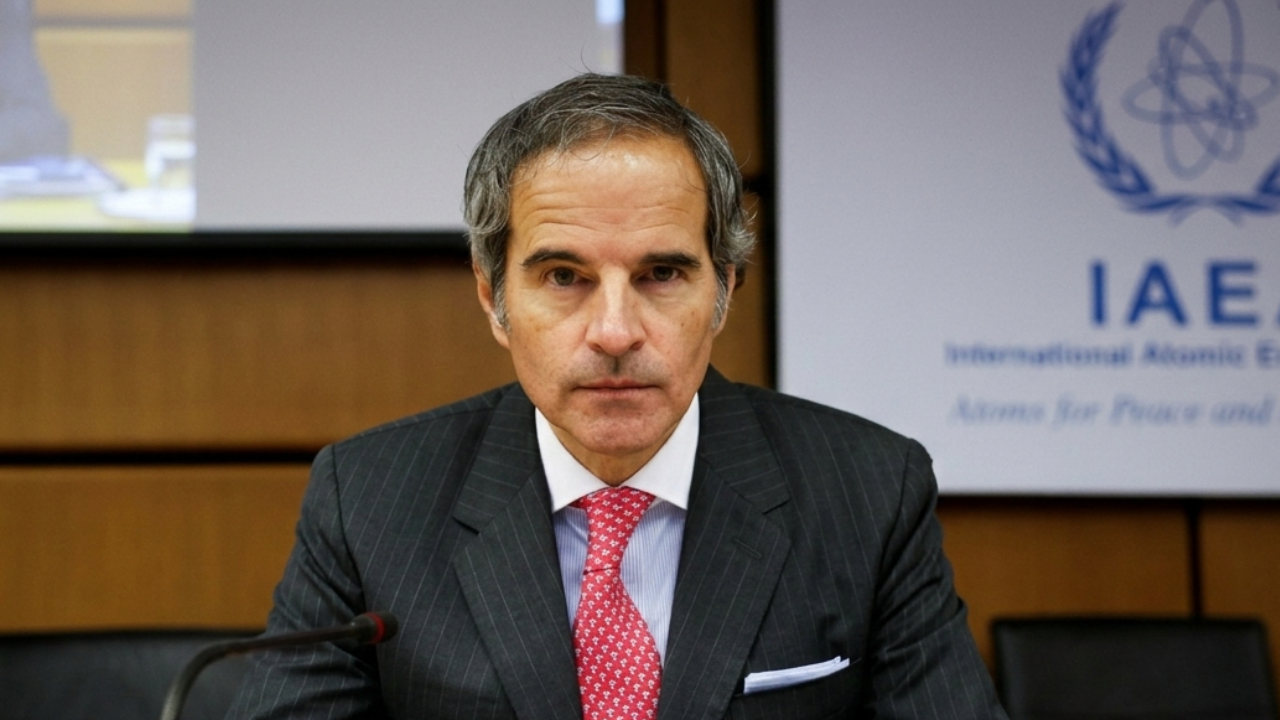
The International Atomic Energy Agency (IAEA) has disclosed alarming details about Iran’s nuclear activities, confirming that highly enriched uranium—close to weapons-grade levels—was stored in an underground tunnel complex at the Isfahan nuclear facility. This revelation, detailed in a confidential report sent to member states on February 26, 2026, marks the first time the UN nuclear watchdog has pinpointed the location of such material enriched to up to 60% purity, just shy of the 90% threshold for bomb-making fuel.
Underground Storage Sparks Global Alarm
Iran’s decision to stash this uranium underground raises serious questions about its nuclear intentions, especially amid stalled diplomacy and past military strikes. Diplomats note the tunnel entrance at Isfahan was targeted by US and Israeli forces in June 2025, yet the facility appears largely intact, suggesting robust protection for sensitive stockpiles. The IAEA estimates Iran’s pre-strike stockpile at 440.9 kg of 60% enriched uranium—enough, if further processed, for roughly 10 nuclear warheads based on agency calculations.
This development intensifies longstanding concerns over Iran’s non-compliance with safeguards. Without access to Isfahan or three other enrichment sites, inspectors can’t verify current stocks or enrichment pauses, leaving a dangerous information gap.
IAEA Demands Urgent Access
The report urges Iran to allow immediate verification, calling it “critical” to prevent proliferation risks. IAEA Director General Rafael Grossi has repeatedly warned that Tehran remains the only non-nuclear-weapon state producing near-weapons-grade material, a “serious concern” echoing prior findings. For full context on the IAEA’s latest confidential assessment, see the Reuters report here.
Tensions trace back to the unraveling of the 2015 nuclear deal, with Iran accelerating enrichment post-US withdrawal in 2018. Recent events, including undeclared nuclear traces at multiple sites, compound suspicions of a covert program lasting into the early 2000s.
Regional and Global Fallout
Israel and the US view this as a direct threat, with Jerusalem citing Iran’s stockpile as justification for last year’s precision strikes. Western powers push for UN Security Council action, while Tehran insists its program is peaceful and blames sanctions for restricted IAEA cooperation. Visit the Jerusalem Post analysis for deeper insights into the Isfahan site’s resilience.
Key implications include:
- Heightened risk of miscalculation in the Middle East.
- Pressure on President Donald Trump’s administration to revive “maximum pressure” tactics.
- Calls for snapback sanctions under the nuclear deal’s framework.
Iran’s Response and Path Forward
Iran dismissed the IAEA findings as “politically motivated,” vowing no concessions without sanction relief. Yet, with stocks unmonitored for months, the window for de-escalation narrows. Experts warn that 42 kg of 60% uranium suffices for one bomb if enriched further, underscoring the urgency.
As February 2026 unfolds, stakeholders eye upcoming talks. The IAEA’s plea for transparency could pivot toward crisis or compromise—watch Newsmax coverage for updates on diplomatic maneuvers. Iran’s nuclear opacity not only challenges global non-proliferation but tests alliances from Europe to the Gulf.




Leave a comment