

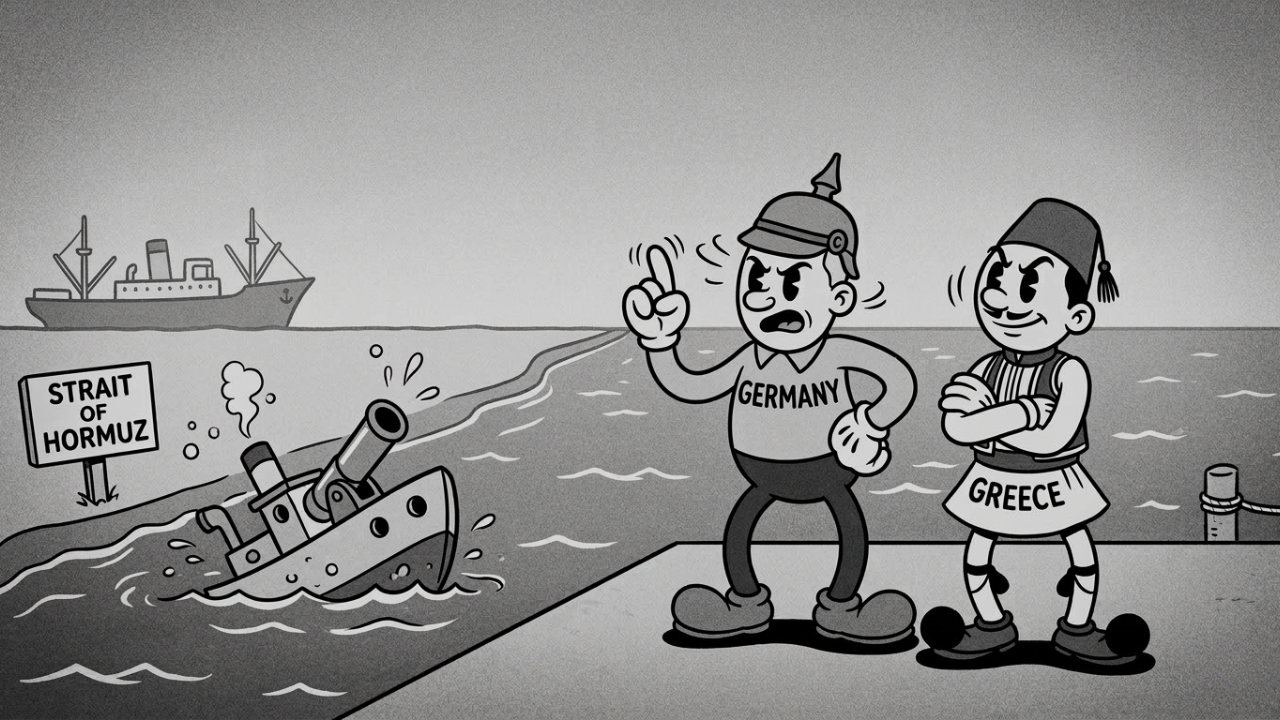
Greece has officially joined Germany in refusing to deploy military forces to secure the Strait of Hormuz, a critical global oil chokepoint now threatened by escalating tensions in the US-Israel-Iran war. This unified European stance highlights growing reluctance among NATO allies to deepen involvement in the conflict that erupted three weeks ago.
Background on the Strait Crisis
The Strait of Hormuz, through which nearly 20% of the world’s oil flows, has become a flashpoint since US and Israeli airstrikes targeted Iranian sites on February 28, 2026. Iranian forces have since disrupted commercial shipping, spiking global energy prices and disrupting trade routes vital to Europe and Asia. US President Donald Trump, seeking to maintain open passage for oil cargoes, appealed over the March 14 weekend for international naval support, warning of alliance strains for non-participants.
European leaders convened in Brussels on March 16 to weigh responses, including expanding the EU’s Operation Aspides—originally launched in 2024 against Houthi threats in the Red Sea. Yet, key players like Germany and now Greece have drawn firm lines, prioritizing de-escalation over military action.
Germany’s Firm Rejection
German Foreign Minister Johann Wadephul stated on March 15 that Berlin has “no intention” of joining any Hormuz mission, criticizing Aspides as ineffective in its current role. He advocated for negotiated security frameworks with regional neighbors once US and Israeli goals clarify, emphasizing Europe’s preference for diplomacy amid rising oil costs. This echoes Germany’s historical caution, as seen in its 2019 refusal of a similar US-led effort.
Greece’s Parallel Decision
Greek government spokesman Pavlos Marinakis confirmed on March 16 that Athens will not extend its Aspides frigate deployment from the Red Sea to the Persian Gulf. Officials cite naval overstretch from Aegean patrols against Turkey, eastern Mediterranean duties, and migration operations as key constraints. Greece’s choice underscores a broader EU aversion to entanglement in the Iran war, despite Trump’s NATO warnings.
Strategic Implications for Global Trade
This dual refusal leaves the US potentially leaning on fewer partners like France and Italy, which maintain limited Aspides roles but show no Hormuz expansion signals yet. Italian Foreign Minister Antonio Tajani has also distanced Rome from Gulf operations. With oil prices surging, the decision risks prolonged disruptions; analysts warn of supply chain ripples hitting Europe hardest, where energy dependence on Gulf imports remains high.
For deeper context on Aspides’ Red Sea scope, see the EU Naval Mission overview. The standoff tests transatlantic bonds, as Trump pushes for burden-sharing in securing this artery.
Broader EU and NATO Dynamics
Beyond Germany and Greece, EU foreign ministers debated Hormuz options without consensus for escalation. Wadephul stressed coordination with the US and Israel on their aims before any European moves. Greece’s position aligns with domestic pressures to safeguard overstretched fleets amid Turkey frictions, reflecting a pattern of selective NATO contributions.
| Country | Stance on Hormuz Mission | Key Reasons | Current Commitments |
|---|---|---|---|
| Germany | Refusal | Diplomacy over escalation; Aspides doubts | None |
| Greece | Refusal | Naval overstretch; regional priorities | Aspides (Red Sea only) |
| Italy | No extension | Avoids Gulf entanglement | Aspides (limited) |
| France | Limited Aspides role | No Hormuz signal | Red Sea patrolsbrusselssignal+1 |
Economic Fallout and Future Outlook
Global markets reel as Hormuz harassment halts one-fifth of oil shipments, fueling inflation fears in import-reliant regions like Pakistan and South Asia. Europe’s rejection may embolden Iran, prolonging the crisis into late March. Watch for Brussels follow-ups or Trump’s next alliance overtures—diplomatic breakthroughs remain the slim hope for stabilization.
- Key Hormuz facts: 21 million barrels daily; 30% of seaborne oil trade.
- Watchlist: Oil price forecasts amid US unilateral moves.
This developing story prioritizes Europe’s restraint in the Greece Germany Strait of Hormuz refusal, signaling cracks in Western unity against Iran disruptions. Updates expected as conflict enters week four. For live coverage, check Al Jazeera’s EU-Iran war tracker.







Leave a comment