

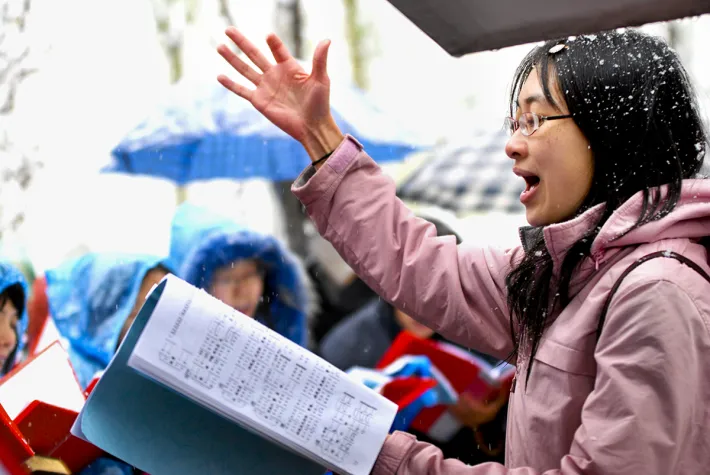
In China, Christianity exists under constant observation. While the Chinese constitution formally recognises freedom of religious belief, the reality for millions of Christians is far more restrictive. Churches are monitored, pastors are detained, religious expression is tightly regulated, and any form of faith that operates outside state control is treated as a threat. Over the past decade, and especially in recent years, the Chinese government has intensified its campaign to bring Christianity firmly under the authority of the Communist Party. For believers, this has transformed worship into an act that carries real personal risk.
State Control Over Religion
In China, religion is permitted only within strict boundaries. Churches must register with state-sanctioned bodies and operate under government supervision. Independent congregations, often referred to as house churches, are considered illegal. These communities, which exist precisely because they seek to worship freely, face the harshest treatment. Authorities argue that regulation is necessary for social stability. Critics counter that it is about ideological control. The state insists that religious loyalty must never supersede loyalty to the Party. Any religious movement perceived as influential, independent, or foreign-linked is treated with suspicion. Christianity, with its global connections and moral framework outside state ideology, fits this profile.
Surveillance as a Tool of Suppression
One of the defining features of persecution in China is surveillance. Churches are fitted with cameras. Facial recognition technology is used to track worshippers. Attendance records are monitored, and children are often barred from participating in religious activities. Pastors report being summoned for questioning, warned against preaching certain topics, or pressured to modify sermons to align with political messaging. In some churches, images of religious symbols have been replaced with portraits of political leaders. This level of monitoring has changed how Christians practise their faith. Many meet in secret, rotate locations, or keep gatherings deliberately small to avoid detection.
Crackdown on House Churches
House churches remain the primary targets of government action. Raids on private worship gatherings have increased. Leaders are detained on charges such as “illegal assembly” or “subversion”, while church properties are confiscated or shut down. In several well-documented cases, prominent pastors have received lengthy prison sentences for refusing to place their churches under state control. Their trials are often opaque, with limited access for legal counsel or family members. Human rights organisations warn that these actions are designed to dismantle independent Christian networks and discourage collective worship outside state structures. The Chinese government has been explicit about limiting religious influence on minors. Children are banned from attending church services, Sunday schools, or religious camps. Parents who defy these restrictions can face fines, harassment, or threats to employment.
Pressure on Children and Families
This policy strikes at the future of Christianity in China. By preventing faith from being passed to younger generations, authorities aim to weaken religious communities over time. Families are forced into painful choices between their faith and their children’s safety and education.
Legal Ambiguity and Fear
China’s laws governing religion are broad and loosely defined. This ambiguity allows local officials wide discretion. What is tolerated in one region may be punished severely in another. This unpredictability keeps religious communities in a constant state of anxiety. Christians often do not know when a line has been crossed until authorities intervene. The lack of transparent legal standards makes meaningful defence nearly impossible.
International Concern
China’s treatment of religious communities has drawn sustained criticism from international bodies. The United States Commission on International Religious Freedom has consistently identified China as a country of particular concern, citing systemic repression of Christians and other faith groups. Amnesty International and Human Rights Watch have documented arrests, forced closures of churches, and restrictions on religious expression. Despite this scrutiny, Chinese authorities reject accusations of persecution, framing their actions as lawful governance.
The Human Cost
For Chinese Christians, persecution is not always violent, but it is deeply intrusive. It invades private homes, personal relationships, and inner beliefs. Believers speak of exhaustion from constant vigilance and fear of betraying their faith under pressure. Pastors worry about their congregations. Parents worry about their children. Worship becomes something to hide rather than celebrate.
Conclusion
Christian persecution in China is systematic, deliberate, and rooted in the state’s demand for absolute ideological control. Faith is permitted only when it conforms, only when it obeys, and only when it remains politically harmless. For millions of Christians, this means living their faith quietly, cautiously, and often in fear. Until freedom of belief is respected as a genuine right rather than a conditional privilege, China’s Christians will remain under surveillance, their faith tolerated only at the state’s discretion.





Leave a comment