

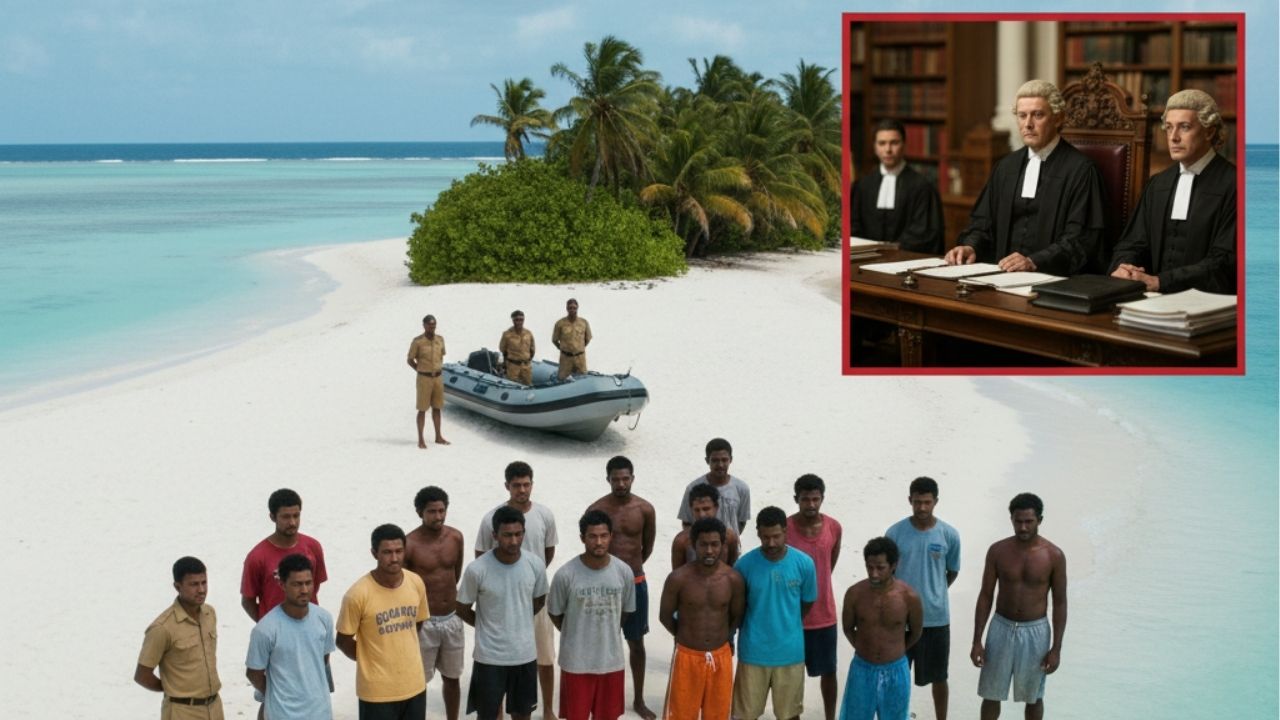
Britain has issued removal orders against four Chagossian visitors who landed on a remote atoll in the Chagos Islands, in a move that has thrust the UK’s long‑running territorial and human rights dispute over the archipelago back into the international spotlight. The incident blends immigration enforcement with high‑stakes geopolitics, coming just as London prepares to transfer sovereignty of the islands to Mauritius under a recent agreement while retaining the strategic US‑UK base on Diego Garcia.
What Triggered the Removal Orders
According to reports, four Chagossians arrived on Ile du Coin, part of the Peros Banhos atoll, earlier this month with the stated aim of beginning a permanent resettlement on their ancestral territory. British authorities quickly served them with removal and eviction notices issued under British Indian Ocean Territory (BIOT) immigration powers, warning that they were unlawfully present and must leave.
The notices reportedly state that re‑entering after removal would be a criminal offence punishable by up to three years’ imprisonment or a fine of around £3,000, or both. A UK Foreign Office spokesperson has branded the mission an “illegal, unsafe stunt,” insisting that access to the outer Chagos Islands without a valid permit is prohibited regardless of citizenship or heritage.
Legal Challenge and Temporary Block on Deportation
Lawyers acting for the men swiftly challenged the legality of the removal orders before the courts of the British Indian Ocean Territory. A judge has issued an injunction blocking their deportation for at least seven days, finding that the balance of convenience favoured the claimants and questioning delays and permit issues in how the authorities handled their case.
In his ruling, the chief justice noted that the men are approximately 120 miles from Diego Garcia and that, on the evidence presented, they pose no national‑security threat. The BIOT administration has been ordered to respond within a week, and the claimants’ legal team has signalled it is prepared to return to court if the removal orders are not withdrawn.
Geopolitical Context: Sovereignty Deal and Strategic Base
The dispute unfolds against the backdrop of a 2025 UK‑Mauritius agreement under which Britain has committed to hand over sovereignty of the Chagos archipelago while keeping the vital US‑UK military base on Diego Garcia under a 99‑year lease arrangement. The treaty, finalised in 2024 and now moving through the UK Parliament, is partly a response to international legal rulings that found Britain’s continued administration of the territory increasingly untenable under decolonisation and self‑determination norms.
Analysts note that the deal seeks to secure the legal status of the base by anchoring it in a mutually agreed framework with Mauritius, including security buffers and limits on any foreign military presence on the other islands. This has made the timing of the Chagossian landing particularly sensitive, as any move toward de facto resettlement risks complicating the implementation of the sovereignty transfer and associated security guarantees.
For a detailed legal background on the Chagos sovereignty question and related international court opinions, readers can consult resources such as the International Court of Justice advisory opinion summary hosted on the UN website.
Human Rights, Decolonisation and Chagossian Claims
The Chagos issue is rooted in the forced removal of up to 2,000 Chagossians from the archipelago in the 1960s and 1970s to make way for the Diego Garcia base, with most resettled in Mauritius and the UK. Many descendants argue that they have been denied their right of return for decades, and some see the current landing on Peros Banhos as an attempt to reclaim a birthright rather than an immigration infraction.dailymail.
British politician and Reform UK leader Nigel Farage has publicly backed the group, saying they are British passport holders trying to “reclaim their birthright” and promising to explore legal avenues to support them. Critics of the government’s stance argue that threatening prison for Chagossians returning by boat to British‑administered territory, while the UK grapples with wider asylum and migration debates, sends a damaging moral and political signal.
UK Government Position and Future Implications
The Foreign, Commonwealth & Development Office (FCDO) maintains that it recognises the deep historical and emotional significance of the islands for Chagossians and is working with Mauritius to restart officially sanctioned heritage visits. However, it insists that unsanctioned landings are dangerous and undermine both safety and the orderly implementation of the sovereignty deal.thestar.
How the UK handles this small group of visitors could set a precedent for future claims, testing London’s commitment to both international legal rulings and to addressing historic injustices against the Chagossian community. With a key security treaty, a high‑profile decolonisation case and an emotionally charged diaspora all intersecting, the standoff on a remote atoll in the Indian Ocean has become a telling measure of Britain’s evolving approach to post‑colonial responsibility and strategic necessity.
For broader context on the UK’s foreign‑policy choices in the Indian Ocean, readers may wish to explore think‑tank analysis from institutions such as Chatham House, which has examined how the Chagos decision affects Britain’s regional diplomacy and security posture.





Leave a comment