

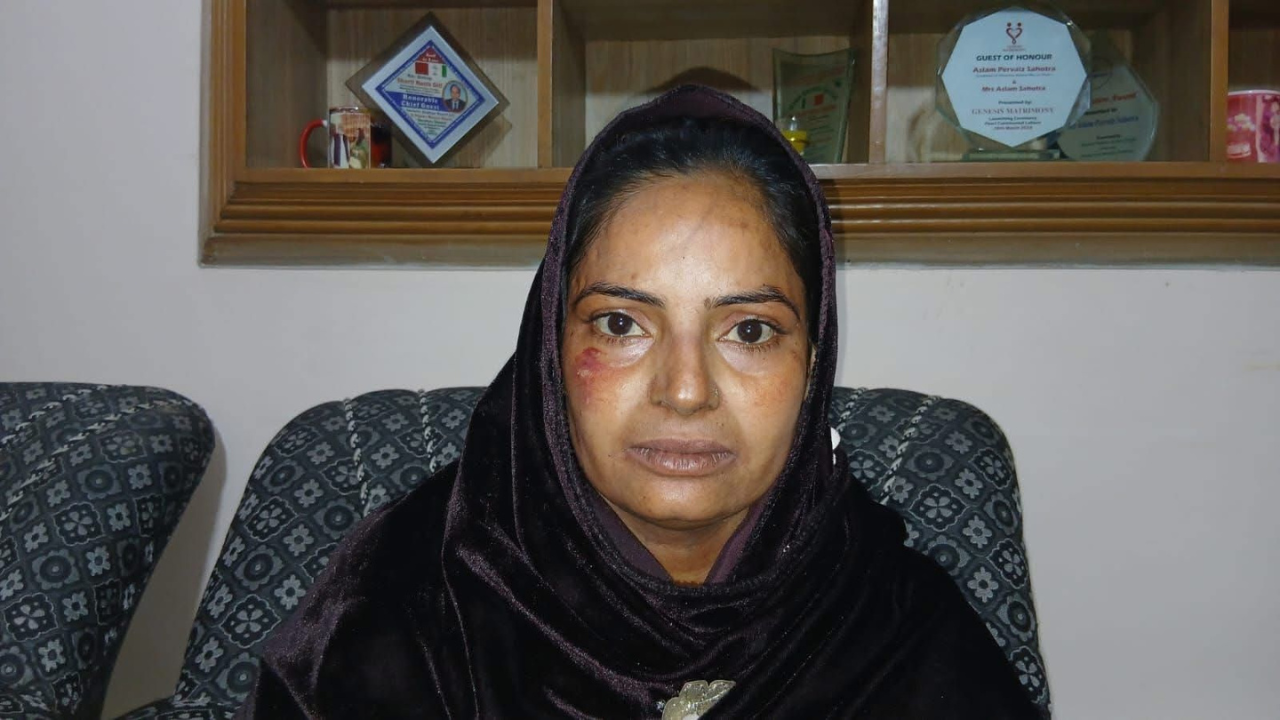
The woman in the photograph is not a criminal, a protester, or a threat to public order. She is a Christian mother in Pakistan who says she was beaten in public simply for asking for what belonged to her. Her injuries are visible. Her story, however, reflects something far deeper than a single act of violence. It reflects the everyday vulnerability faced by religious minorities, particularly Christians, in parts of Pakistan.
What Happened
According to accounts shared by local rights advocates, the woman had approached individuals to demand payment or property that was rightfully hers. Instead of a lawful response, she was allegedly assaulted in public. No immediate protection was provided. No swift accountability followed. Her faith became part of the context, whether explicitly stated or silently understood. In many such cases, victims report that their minority status discourages them from seeking help, knowing that doing so may lead to further harassment rather than justice.
A Pattern, Not an Isolated Incident
While this incident may not make international headlines, it aligns with a documented pattern. Christian communities in Pakistan, often economically marginalised, face routine discrimination in workplaces, neighbourhoods, and interactions with authorities.
Human rights organisations have repeatedly noted that Christians are disproportionately exposed to:
• Physical intimidation
• Social exclusion
• Workplace exploitation
• Weak legal protection when disputes arise
When violence occurs, victims frequently encounter pressure to remain silent. Fear of retaliation, social backlash, or false accusations under sensitive laws often prevents them from pursuing legal remedies.
The Cost of Speaking Up
For minority women, the risks are even higher. Gender and faith intersect in ways that compound vulnerability. Asking questions, asserting rights, or challenging injustice can be perceived as provocation rather than a basic civic action. In this case, the woman’s injuries serve as a reminder that even peaceful demands can be met with violence when power dynamics are uneven and accountability is weak.
The Role of the State
Pakistan’s constitution guarantees equality of all citizens. In practice, however, enforcement remains inconsistent. Rights groups argue that failure to act decisively in such cases sends a message of impunity. When attacks against minorities go unpunished, they normalise abuse and reinforce fear within already marginalised communities. Silence, whether institutional or social, becomes part of the harm.
Why This Story Matters
This is not only about one woman. It is about what her experience represents.
It represents a reality where:
• Justice is often inaccessible to minorities
• Violence can occur in public without consequence
• Victims are expected to endure rather than speak
Images like this challenge official narratives that dismiss discrimination as exaggerated or rare. They show the human cost behind policy failures and social prejudice.
Conclusion
The bruises on this woman’s face may heal. The deeper issue, however, will not resolve itself without acknowledgment and action. A society is judged not by how it treats the powerful, but by how it protects the vulnerable. Until cases like this are addressed with seriousness and fairness, claims of equal citizenship will remain incomplete. This story deserves attention not because it is sensational, but because it is ordinary. And that ordinariness is precisely the problem.





Leave a comment