

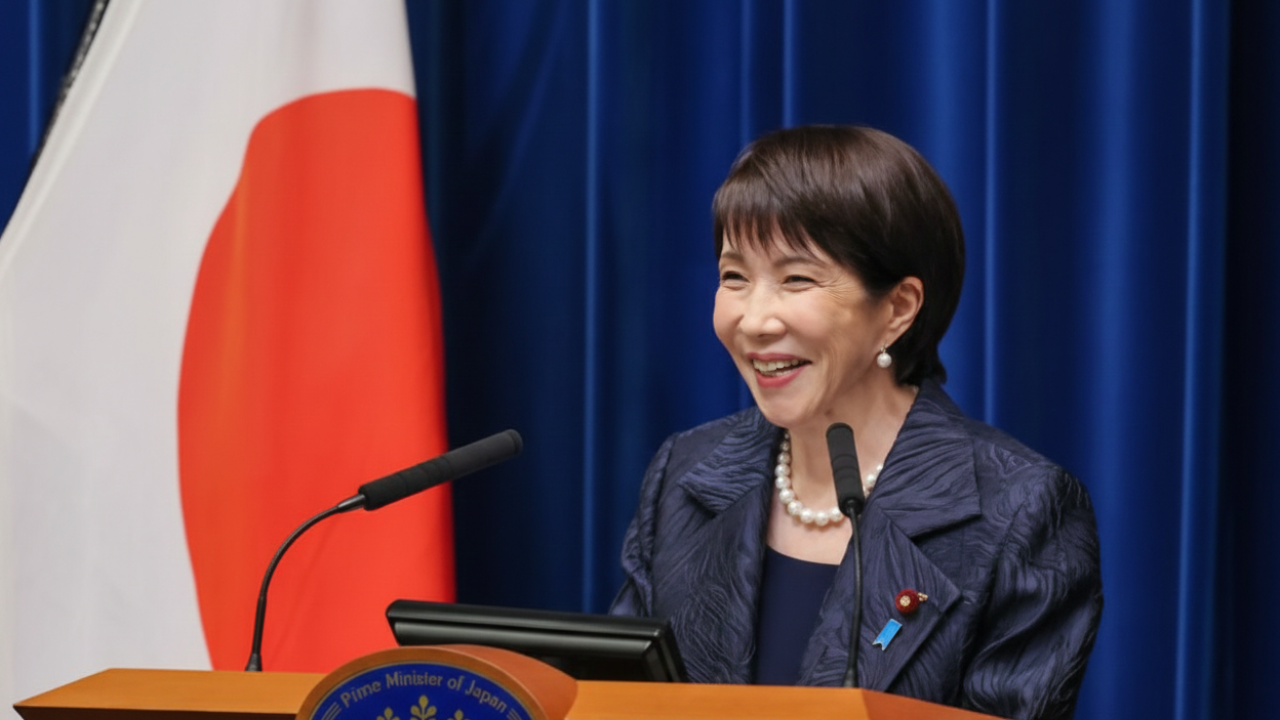
Japan’s reelected Prime Minister Sanae Takaichi is moving quickly to deepen economic ties with the United States, with a sharp focus on rare earths cooperation and broader economic security. Her strengthened mandate after a landslide snap election win positions Tokyo and Washington to align more closely on supply chains, advanced technology and critical minerals.
Takaichi’s renewed mandate and US focus
Sanae Takaichi secured a historic majority in Japan’s lower house in early February 2026, giving her Liberal Democratic Party a two‑thirds supermajority and unprecedented legislative leverage. Analysts say the result confirms strong public backing for her conservative economic and security agenda, including a more assertive diplomatic role for Japan. The election outcome also boosts her standing ahead of high‑stakes meetings with US President Donald Trump, where economic resilience and Indo‑Pacific security are expected to dominate the agenda. With this political capital, Takaichi can accelerate policies that bind Japan’s growth strategy more tightly to cooperation with the United States.
Deepening rare earths and critical minerals alliance
Rare earths and critical minerals are emerging as the centerpiece of Takaichi’s economic diplomacy with Washington. In October 2025, Japan and the United States signed a joint framework in Tokyo committing both countries to secure and diversify supplies of rare earths and other critical minerals used in clean energy, defense systems and advanced manufacturing. The framework outlines plans for coordinated financing, strategic stockpiling and joint investment in mining, processing and magnet production to reduce dependence on Chinese supply chains. Early projections suggest the partnership could unlock several billion dollars in public and private investment over the next five years, leveraging US industrial policy tools and Japan’s Green Transformation initiative.
Under the agreement, the two governments intend to build a “trusted supply” network that combines US resource capacity with Japan’s expertise in precision processing and high‑performance magnet manufacturing. Policy analysts at institutions such as CSIS and SFA (Oxford) note that this shift from raw‑material sourcing to integrated industrial capability marks a significant evolution in allied economic security strategy.
Economic security law and outward‑facing strategy
Takaichi’s push to deepen US economic ties is underpinned by Japan’s 2022 Economic Security Promotion Act, which expanded the state’s role in safeguarding supply chains and critical infrastructure. The law established four pillars: securing strategic resources such as semiconductors and rare earths, protecting vital infrastructure from threats, funding cutting‑edge technologies and tightening control over sensitive patents. In February 2026, Tokyo moved to revise the law so Japan can support “economic security‑linked” projects overseas, including port and logistics developments deemed crucial to stable supply routes. This outward‑looking shift aligns directly with Takaichi’s goal of anchoring Japanese firms in allied projects with the United States and other partners.
Businesses operating in sectors like critical minerals, batteries and advanced electronics are watching these legal changes closely, as they open doors for state‑backed financing and risk‑sharing in cross‑border projects. For corporate compliance teams and investors, legal briefings on Japan’s economic security framework offer practical guidance on how the new rules will be implemented.
Strategic implications for US–Japan economic ties
For Washington, closer economic coordination with Tokyo complements broader efforts to build resilient technology and energy supply chains among trusted partners. The critical minerals and rare earths framework dovetails with US initiatives to diversify away from single‑country dependencies in sectors ranging from electric vehicles to defense electronics. For Japan, deeper integration with the US economy offers a pathway to counter demographic headwinds and long‑term stagnation by attracting investment, securing inputs and expanding export opportunities in high‑value industries.
Economists argue that this agenda goes beyond trade liberalization and moves toward a structured “economic security alliance” built on shared standards, screening of sensitive investments and coordinated industrial strategy. Think‑tanks and policy research centers, including CSIS and PISM, highlight that the success of this approach will depend on implementation: synchronizing regulations, aligning subsidies and ensuring private‑sector participation on both sides of the Pacific.
Outlook: From framework to concrete projects
The next phase of Takaichi’s strategy will be judged on how quickly framework agreements translate into tangible projects and jobs. Upcoming bilateral ministerial meetings are expected to identify priority investments across the rare earths value chain, from mining and refining to magnet manufacturing and recycling. Japanese support for overseas infrastructure and resource projects under the revised economic security law could see firms partnering with US and Australian companies in strategically located regions. If implemented effectively, these initiatives would tighten US–Japan economic interdependence while reinforcing a wider network of Indo‑Pacific allies focused on secure, sustainable growth.
Readers interested in the broader geopolitical context of these moves can find additional analysis at policy hubs such as the Center for Strategic and International Studies (CSIS) and other international affairs research platforms, which track the evolution of US–Japan economic security cooperation and its regional impact.








Leave a comment