

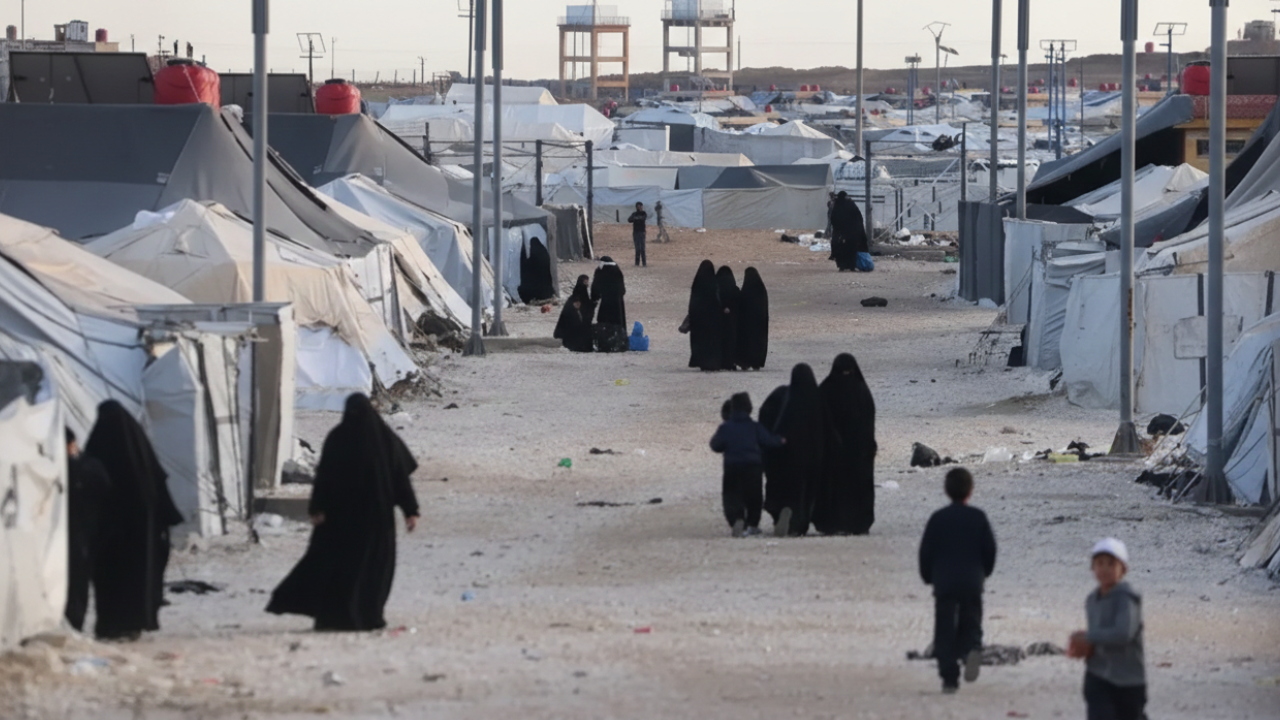
Australia has invoked rare counter-terrorism powers to temporarily ban one of its citizens from returning home from a Syrian detention camp, in a move that intensifies debate over security, civil liberties and responsibility for citizens linked to the so-called Islamic State (IS).
Australia Uses Rare Terror Law
The federal government has imposed a Temporary Exclusion Order (TEO) on an Australian citizen currently held in the al-Roj camp in northeastern Syria, preventing their return for up to two years. Home Affairs Minister Tony Burke confirmed that the order was issued on the advice of national security agencies, under legislation that has been on the books since 2019 but never publicly used until now.
Authorities say the individual is part of a group of 34 Australian women and children associated with suspected IS fighters, who attempted to leave the camp earlier this week with the aim of eventually flying back to Australia. Syrian officials, however, turned the group back to the camp due to documentation or “technical” issues, halting their journey before they could depart the country.
Who Is Affected?
The person subject to the exclusion order has not been publicly identified, but officials describe them as having links to IS through family and association. They were travelling alongside 10 other women and 23 children, many of whom are believed to be spouses, widows and children of former IS fighters who have been detained in Syria since the fall of the group’s last stronghold in 2019.
Burke stressed that security agencies had not recommended similar orders for the remaining 33 Australians in the cohort, saying they did not meet the “necessary legal thresholds” under the TEO law. Critics in the opposition have questioned this distinction, arguing that if one individual is considered a security risk, others in the same group may pose similar threats.
What Is a Temporary Exclusion Order?
Under Australia’s counter-terrorism framework, a Temporary Exclusion Order allows the Home Affairs Minister to bar a citizen aged 14 or over from returning to the country for a period of up to two years if they are assessed as a potential security threat. The measure was introduced in 2019 largely in response to concerns about foreign fighters and IS affiliates attempting to come back after the group’s territorial defeat in Iraq and Syria.
Officials argue that the TEO does not permanently strip citizenship but instead delays return while authorities prepare strict conditions for any eventual repatriation, such as monitored travel, control orders or ongoing security surveillance. Civil liberties groups and legal experts, however, warn that keeping citizens in dangerous camps abroad may breach human rights obligations and weaken the principle that a state must accept its nationals back.
For more background on TEO-style measures in other democracies, readers can refer to analysis by the Australian Strategic Policy Institute and comparative research hosted by the Brookings Institution.
Government’s Security Argument
Prime Minister Anthony Albanese has defended the use of the rarely-used powers, saying the government must balance compassion for women and children in dire conditions with the need to prevent extremist ideology from being imported back into Australian communities. He has previously described some adults in these camps as having embraced a “brutal, reactionary ideology that seeks to destroy our way of life.
Security agencies maintain they are working case-by-case, assessing whether individuals pose an unacceptable risk if allowed to return, based on intelligence, travel history and alleged connections to extremist networks. The government has also signalled it will not provide additional consular assistance to the group in Syria, despite having issued new passports to many of them to satisfy international legal obligations.
Human Rights and Legal Concerns
Human rights advocates argue that leaving Australian children in unsafe, under-resourced detention camps amounts to collective punishment and could fuel further radicalisation. Legal scholars also highlight that citizens generally have a fundamental right to re-enter their country, questioning whether broad security powers risk undermining constitutional and international law principles.
Some experts note that prosecution, deradicalisation programs and intensive monitoring inside Australia may offer a more sustainable solution than indefinite exclusion from afar. Organisations such as Human Rights Watch have repeatedly urged countries including Australia to repatriate their nationals from Syrian camps, citing deteriorating conditions and limited access to education and healthcare for children.
Intensifying Political Debate
The decision has triggered a fresh political clash in Canberra, with opposition figures demanding tougher action on all Australians linked to IS. Liberal Party Senator Jonno Duniam has suggested he is willing to support changes to strengthen laws so that more members of the group could be barred from returning, questioning why only one individual has been formally designated a risk.news.
Within the government, ministers insist they will not “breach Australian law” and will continue to rely on security agencies’ advice rather than blanket bans. The case is likely to become a key test of how far Australia is prepared to go in using extraordinary security powers, as international pressure grows for countries to take back their citizens from Syrian camps and confront the legacy of the IS caliphate at home.







Leave a comment