

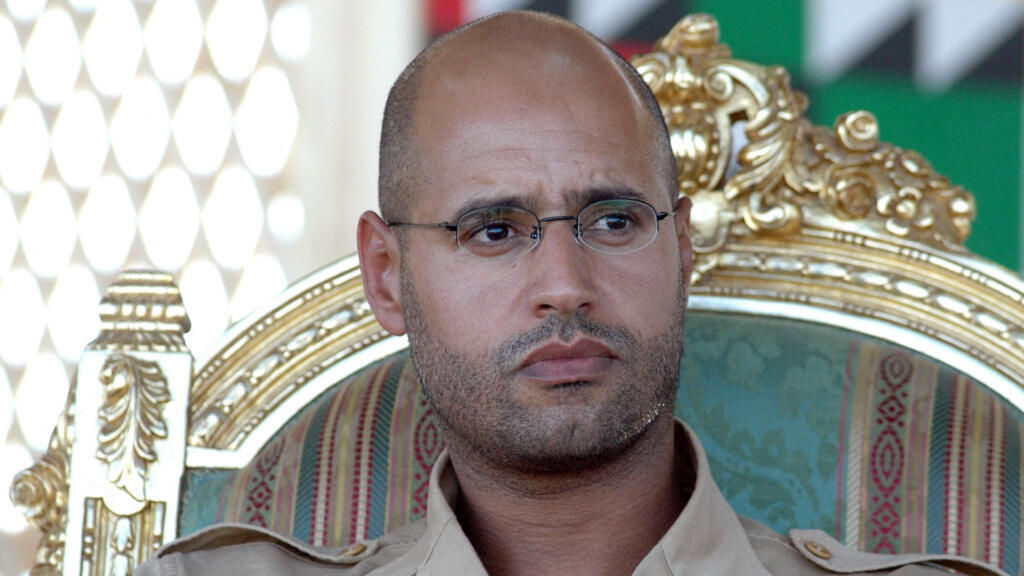
The reported killing of Saif al-Islam Gaddafi, son of former Libyan leader Muammar Gaddafi, has added a new layer of uncertainty to Libya’s already fragile political situation. The incident, which took place in early February 2026, has shocked many inside the country and drawn attention from the international community, as Saif al-Islam remained a controversial but influential figure in Libya’s divided political landscape.
According to Libyan security sources and regional media reports, Saif al-Islam was killed during an attack near his place of residence in western Libya. Details surrounding the incident remain limited, and no group has officially claimed responsibility. However, many observers believe the killing was targeted rather than random, given Saif al-Islam’s political background and the sensitive environment in which he operated.
Saif al-Islam was once seen as the possible successor to his father and played a prominent role in Libya before the 2011 uprising. During that period, he was often presented as a reform-minded figure who spoke about modernization and engagement with the international community. That image changed dramatically during the uprising, when he publicly defended his father’s rule and became closely associated with the violence that followed.
After the fall of the Gaddafi government, Saif al-Islam was captured by a local militia and held for several years. The International Criminal Court issued a warrant for his arrest over alleged crimes linked to the 2011 conflict, but Libya never handed him over. In 2017, he was released under an amnesty law, a move that remained controversial both inside and outside the country.
In recent years, Saif al-Islam had slowly re-emerged on the political scene. He presented himself as a symbol of national reconciliation and appealed to groups that felt excluded by the post-2011 political process. Some tribes and former supporters of the old government saw him as a potential unifying figure, while others viewed his return as unacceptable due to his past and the unresolved legal cases against him.
Libya remains deeply divided, with rival administrations in the east and west and numerous armed groups operating with little central control. Elections have been repeatedly delayed, and efforts to form a unified government have struggled to gain lasting momentum. In this context, Saif al-Islam’s presence was seen by some as a factor that could reshape the political balance, either by mobilizing support or by increasing tensions.
International reaction to his killing has been cautious. United Nations officials expressed concern that the incident could further destabilize Libya and undermine ongoing efforts to promote dialogue and political reconciliation. European and regional governments have called for a transparent investigation and urged Libyan actors to avoid further violence.
Analysts warn that the killing could have several consequences. It may deepen mistrust among rival factions, discourage political participation, and reinforce the influence of armed groups over civilian politics. At the same time, it removes a figure who divided opinion and whose role in Libya’s future remained uncertain.
For ordinary Libyans, the incident is another reminder of how fragile security remains more than a decade after the fall of the Gaddafi regime. With no clear path toward stable governance, the death of Saif al-Islam Gaddafi highlights the ongoing challenges Libya faces as it struggles to move beyond conflict and toward lasting peace.




Leave a comment