

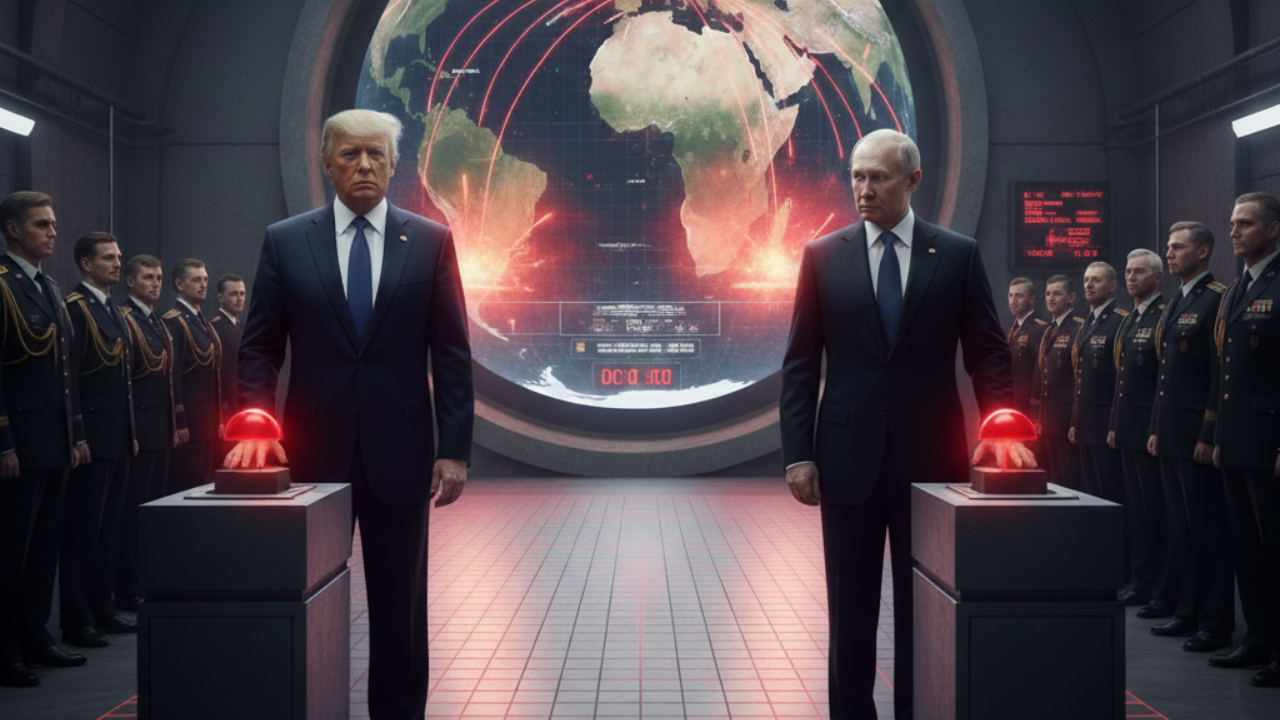
The expiration of the last remaining nuclear arms control treaty between the United States and Russia has raised serious concerns across the world, with experts warning that a new era of nuclear competition could be beginning. The treaty, known as New START, officially expired in early February 2026, leaving the two largest nuclear powers without any binding limits on their strategic nuclear weapons for the first time in decades.
New START was signed in 2010 and placed caps on the number of deployed nuclear warheads and delivery systems such as intercontinental ballistic missiles, submarines, and heavy bombers. It also allowed on-site inspections and regular data sharing, which helped both sides maintain transparency and reduce the risk of misunderstandings. The agreement was widely seen as a key pillar of global nuclear stability.
Although the treaty had been extended once in 2021, efforts to negotiate a replacement or further extension failed amid worsening political relations, especially after the war in Ukraine and rising tensions between Russia and the West. As a result, the treaty expired without a successor in place.
US officials have expressed concern about the loss of verification measures, saying that inspections and data exchanges were important tools for building trust and avoiding miscalculation. American leaders have stated that while the United States does not currently plan to rapidly expand its nuclear arsenal, the absence of legal limits creates long-term uncertainty.
Russia has also acknowledged the treaty’s expiration, with officials saying they regret its end but blaming the breakdown on what they describe as hostile Western policies. Moscow has said it will act responsibly but has also emphasized its right to take any steps necessary to protect its national security.
International reaction has been swift. The United Nations secretary-general warned that the world is entering a dangerous period, as more than 90 percent of global nuclear weapons are held by the US and Russia. Without agreed limits, other nuclear-armed countries may feel less pressure to restrain their own programs, potentially weakening the global non-proliferation system.
Security experts point out that while building new nuclear weapons takes time and money, the political signal sent by the treaty’s collapse is troubling. It suggests that decades of arms control efforts, dating back to the Cold War, are being undone. The lack of transparency also increases the risk of misunderstanding, especially during times of crisis.
There is also growing concern that future arms control talks will be more complicated. The United States has argued that any new agreement should include China, whose nuclear arsenal is growing, while China has so far rejected joining formal talks, saying its stockpile is much smaller. Russia, for its part, has said future negotiations must take into account broader security issues, including missile defense and conventional forces.
Despite the gloomy outlook, some diplomats and analysts believe the treaty’s expiration could eventually push all sides back to the negotiating table. They argue that the risks of an unchecked arms race are too high and that even rival powers have a shared interest in preventing nuclear catastrophe.
For now, however, the world is left without a formal framework to manage the most destructive weapons ever created. As geopolitical tensions remain high, the end of the US–Russia nuclear arms treaty marks a sobering moment, reminding the international community how fragile global security arrangements can be when trust breaks down.



Leave a comment