

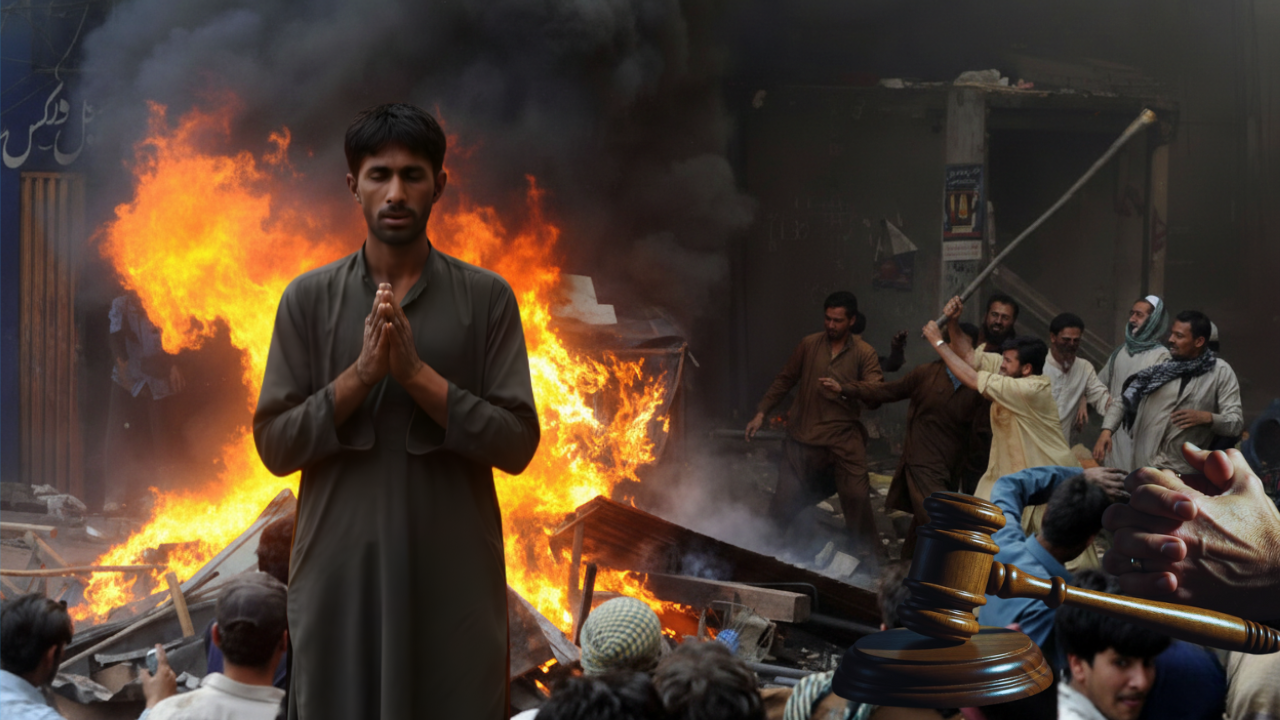
In Pakistan, being Christian often means living with a quiet but constant sense of vulnerability. Christians make up a small minority of the population, yet they are disproportionately affected by laws, social prejudice, and mob violence. While Pakistan’s constitution promises equality, the lived reality for many Christians tells a different story. Persecution here is rarely one single event. It is a chain of pressures that begins with discrimination, escalates through legal abuse, and sometimes ends in irreversible tragedy.
A Legal Framework That Enables Abuse
At the heart of the problem lies Pakistan’s blasphemy laws, particularly sections 295-B and 295-C of the Penal Code. These provisions carry severe penalties, including life imprisonment and death. In theory, they are meant to protect religious sentiments. In practice, they have become tools that can be misused with alarming ease.
Human rights organisations have documented how accusations are often made without credible evidence. A personal dispute, a workplace argument, or a neighbourhood grudge can quickly be reframed as blasphemy. Once an accusation is made, the accused person’s life is effectively over, regardless of the outcome in court. Arrests are swift, while trials can take years, sometimes decades. For Christians, this legal reality creates a permanent state of fear. Even an allegation, unproven and unsupported, is enough to trigger imprisonment, mob violence, or forced displacement.
The Power of Mob Pressure
One of the most disturbing aspects of persecution in Pakistan is the role of public pressure. Courts, police officers, and even defence lawyers often operate under fear. Judges know that acquitting someone accused of blasphemy can provoke violent backlash. Lawyers defending the accused have been threatened or killed. Police stations have been attacked by mobs demanding immediate punishment.
This environment undermines the rule of law. Trials are delayed, evidence is ignored, and defendants are kept in custody for their own “protection”. In reality, this protective custody becomes a long-term prison sentence without conviction. International observers have repeatedly warned that justice in blasphemy cases is shaped not by evidence but by fear of public reaction.
Social Discrimination Beyond the Courts
Persecution does not begin or end in the courtroom. Christians in Pakistan face discrimination in everyday life. Many are confined to low-paid, hazardous jobs such as sanitation work and brick kiln labour. Children are bullied in schools, labelled as unclean, or pressured to convert. Entire communities are segregated, living in areas with limited access to clean water, healthcare, and education. Churches often require police protection during major religious events like Christmas or Easter, not as a precaution but as a necessity. Even peaceful worship can attract hostility. This social marginalisation reinforces the idea that Christians are outsiders, tolerated but not truly equal.
Violence and Collective Punishment
When blasphemy accusations turn violent, entire Christian neighbourhoods can be punished. Homes are burned, churches vandalised, and families forced to flee. These attacks are often framed as spontaneous public outrage, but they are frequently organised and carried out with impunity. What follows is usually silence. Arrests are rare. Compensation, if promised, is delayed or never delivered. The affected families are left to rebuild their lives on their own, often under threat of further violence. The message is clear: being Christian can make an entire community expendable.
Fear of Reform
Many within Pakistan acknowledge that the blasphemy laws are abused, yet reform remains politically untouchable. Politicians who have spoken about changing these laws have faced assassination or threats. Civil society voices are silenced by intimidation. Media outlets tread carefully, aware that even reporting can trigger backlash.
This fear has created a dangerous stalemate. The laws remain unchanged, misuse continues, and minorities continue to suffer. International bodies have urged Pakistan to introduce safeguards such as penalties for false accusations and protection for judges and lawyers. These recommendations, however, remain largely unimplemented.
International Scrutiny and Reality on the Ground
Pakistan is regularly highlighted in global reports on religious freedom. The United States Commission on International Religious Freedom has repeatedly recommended that Pakistan be designated a country of particular concern. Amnesty International and Human Rights Watch have documented patterns of abuse and prolonged detention without fair trial. Yet for Christians on the ground, these reports offer little immediate relief. International pressure has not translated into structural change. Accusations continue. Arrests continue. Fear continues.
The Human Cost
Behind legal debates and policy reports are real people. Families sell their belongings to pay legal fees. Children grow up visiting parents in prison. Elderly accused persons die before their cases are resolved. Even acquittal does not bring safety. Many who are cleared are forced into hiding or exile. For Pakistan’s Christians, persecution is not always loud or dramatic. Often, it is slow, quiet, and exhausting. It is the knowledge that one accusation can undo an entire life.
Conclusion
Christian persecution in Pakistan is sustained by a combination of legal vulnerability, social prejudice, and institutional fear. It thrives in an environment where accusations are easy to make, but justice is hard to obtain. Until meaningful safeguards are introduced and minorities are protected not just in law but in practice, Pakistan’s Christians will continue to live with uncertainty. Their faith, instead of being a personal belief, remains a risk they carry every day.



1 Comment