

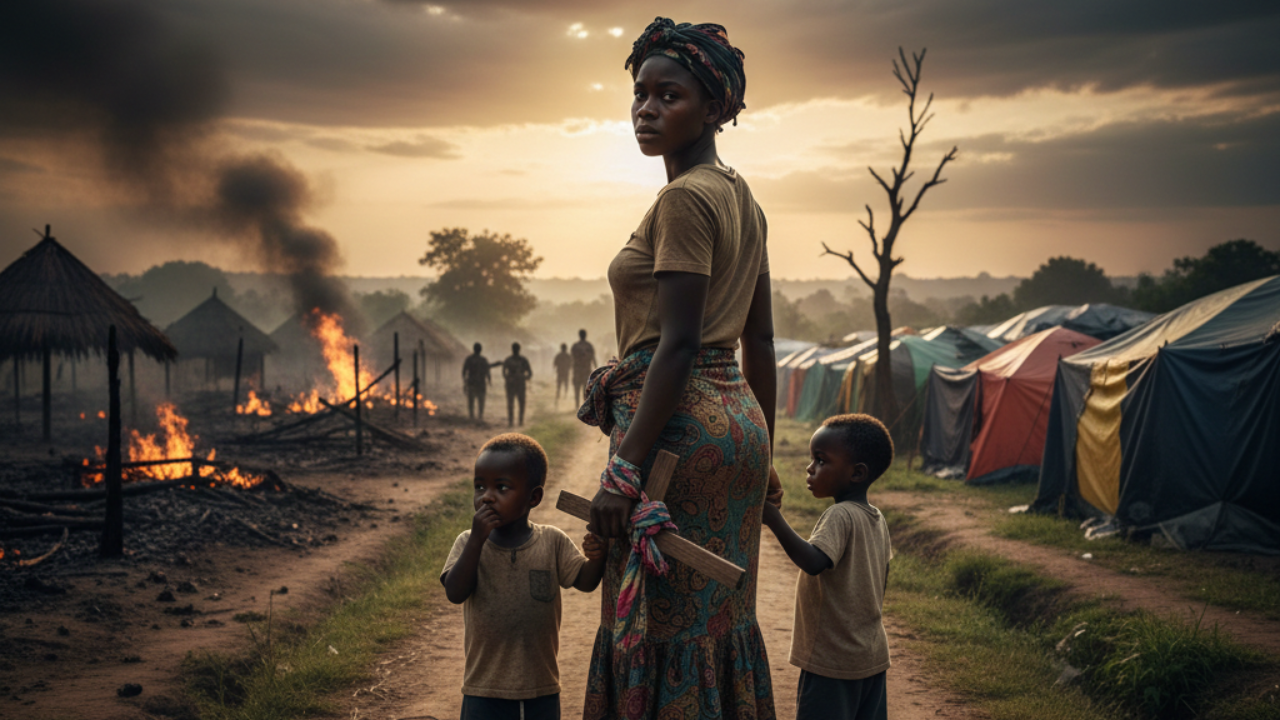
Nigeria today stands at the centre of one of the most severe and prolonged crises of Christian persecution in the world. For millions of Christians across the country, particularly in the north and the Middle Belt, faith has become a daily risk. Villages are attacked, churches are burned, families are displaced, and entire communities live with the constant fear that they may be next.
What makes the Nigerian situation especially troubling is not only the scale of the violence, but also its persistence. Year after year, international watchdogs continue to list Nigeria as the country where the highest number of Christians are killed for their faith. Yet despite global attention and repeated warnings, meaningful protection for vulnerable communities remains elusive.
A Pattern That Is No Longer Isolated
Attacks on Christians in Nigeria are not random or isolated incidents. They follow a pattern that has developed over more than a decade. Armed groups target Christian villages, often at night, using military-grade weapons. Homes are set on fire, crops destroyed, and survivors forced to flee with little more than what they can carry.
According to Open Doors, Nigeria has consistently ranked among the most dangerous countries for Christians. Its World Watch List reports that thousands of Christians are killed annually in Nigeria, accounting for a majority of faith-related killings worldwide. This level of violence has made ordinary acts of worship, such as attending Sunday church services, potentially life-threatening.
Who Is Responsible?
The violence in Nigeria comes from multiple sources, but two groups dominate.
First are Islamist extremist organisations such as Boko Haram and Islamic State West Africa Province (ISWAP). These groups openly reject Western education and Christianity, viewing Christians as legitimate targets. Churches, pastors, and Christian schools have frequently been attacked or destroyed by these militants.
Second are armed Fulani militias and criminal bandit groups, particularly active in Nigeria’s Middle Belt. While land disputes and resource competition are often cited as causes, human rights organisations have documented how Christian farming communities are disproportionately targeted. Villages with Christian populations are attacked repeatedly, while nearby communities are left untouched.
International Christian Concern and Human Rights Watch have both warned that the religious dimension of these attacks is too often downplayed, allowing perpetrators to escape accountability.
Life After the Attacks
For survivors, the violence does not end once the gunfire stops. Entire families are displaced and forced into overcrowded camps for internally displaced persons. Access to clean water, food, education, and healthcare is limited. Children grow up without schooling, and farmers lose their land and livelihoods.
Christian leaders report that many displaced families are afraid to return home, even years later. Churches that once served as centres of community life lie in ruins. The trauma lingers long after international headlines fade.
Government Response and Silence
The Nigerian government has repeatedly stated that the violence affects all communities and is not specifically targeted at Christians. While insecurity does impact many Nigerians, critics argue that this narrative ignores clear patterns of religious targeting.
The United States Commission on International Religious Freedom (USCIRF) has repeatedly raised concerns about Nigeria’s failure to protect religious minorities. In its reports, USCIRF highlights weak prosecutions, poor security responses, and a lack of political will to confront extremist violence.
Despite promises of reform, arrests and convictions remain rare. This culture of impunity emboldens attackers and deepens fear among Christian communities.
International Concern, Limited Action
Nigeria has been designated a “Country of Particular Concern” by the United States in the past due to severe violations of religious freedom. Lawmakers in the UK and Europe have also debated the situation, warning that continued inaction risks further destabilisation.
Yet for many Nigerian Christians, international concern has not translated into safety on the ground. Villages continue to be attacked, and families continue to mourn their dead.
The Human Cost
Behind every statistic is a name, a family, and a story. Pastors are killed in front of their congregations. Mothers bury their children. Survivors speak of living with constant anxiety, unsure whether they will survive another night.
Faith, which should be a source of comfort, has become a reason for persecution.
Conclusion
Christian persecution in Nigeria is not a hidden crisis. It is well-documented, ongoing, and devastating. What is missing is sustained action, accountability, and protection for those most at risk.
Until the violence is confronted honestly and victims are prioritised over political convenience, Nigeria’s Christians will continue to live under threat, praying not only for peace, but for survival.





Leave a comment